


The Washington Department of Ecology is working to develop a programmatic environmental impact statement for SAF that will provide a foundation for future project-level environmental reviews. A public comment period is open through Nov. 5.

The U.K. Department for Transport on Oct. 16 confirmed it will implement a revenue certainty mechanism for SAF in the form of an aviation fuel supplier levy. The agency is currently seeking public comments regarding implementation details.

The Renewable Fuels Association on Oct. 28 thanked President Trump and administration officials for recent trade announcements important to U.S. farmers and the ethanol producers who partner with them.

The Renewable Fuels Association on Oct. 28 congratulated member company Southwest Iowa Renewable Energy on the production of its two-billionth gallon of ethanol. The 140 MMgy facility is located in Council Bluffs, Iowa.

More than two dozen federal lawmakers on Oct. 20 sent a letter to U.S. Treasury Secretary Scott Bessent urging his agency to finalize guidance for the 45Z clean fuel production credit, as amended by the One Big Beautiful Bill earlier this year.

U.S. Trade Representative Jamieson Greer announced new trade agreements between the U.S. and four countries in Southeast Asia—Malaysia, Cambodia, Vietnam, and Thailand. Growth Energy has applauded the announcement.

Growth Energy CEO Emily Skor on Oct. 24 applauded the U.S. Trade Representative’s announcement of a Section 301 investigation into China’s implementation of its commitments under the Phase One Agreement.
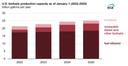
The pace of capacity additions for U.S. biofuel production slowed in 2024, with production capacity increasing by a modest 3% from the start of 2024 to the start of 2025, according to the EIA's latest biofuels production capacity reports.

Phase II of a Nebraska Engineering study evaluating the use of E30 use in a fleet of state vehicles launched in 2023. As of mid-2025, nearly 94 state vehicles have logged hundreds of thousands of miles on E30 with no observable negative effects.

In September, U.S. Grains & BioProducts Council Director in China Manuel Sanchez traveled to Mongolia to evaluate opportunities for the export of U.S. distillers dried grains with solubles (DDGS) and sorghum.

Valero Energy Corp. on Oct. 23 released Q3 results, reporting a profitable three-month period for its ethanol segment on record high production. Valero’s renewable diesel segment, which also includes SAF, reported a loss for the quarter.
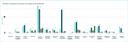
The Global CCS Institute on Oct. 9 released its Global Status of CCS 2025 report, which shows progress in the CCS sector continues despite global headwinds, with seven new biofuel and bioenergy CCS projects currently under construction.

UNICA, the Brazilian sugarcane industry association, has announced sugarcane processing was up during the second half of September. Total ethanol production has continued to trend down from last year, but corn ethanol production is up.
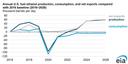
The U.S. is on track to export a record amount of fuel ethanol for the second year in a row in 2025, driven by growing international demand. This growing market for exports is supporting increased U.S. fuel ethanol production.
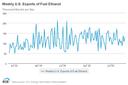
U.S. fuel ethanol production expanded by nearly 4% the week ending Oct. 17, according to data released by the U.S. Energy Information Administration on Oct. 22. Stocks of fuel ethanol fell by 3% and exports were up 20%.

The U.S. Energy Information Administration is proposing to update current disclosure rules for biofuel feedstock consumption as part of a proposed three-year extension of its Petroleum Supply Reporting System.

Global Ethanol Summit 2025, hosted by the USGBC and supported by Growth Energy, the RFA, BASF and USGBC members culminated on Oct. 22 with a focus on trade and economic growth highlighting the theme “ethanol is affordable.”

The Global Ethanol Summit continued Oct. 21 emphasizing the theme “ethanol is compatible” with three panels and three flash talk sessions on biofuel uses including SAF, sustainable maritime fuel and other emerging markets.

The call for presentation abstracts for the 19th annual International Biomass Conference & Expo is now open. The event will take place in Nashville, Tennessee, March 31 – April 2, 2026. Abstracts can be submitted through Nov. 21.
API pulls support for E15 legislation

October 21, 2025
The American Petroleum Institute on Oct. 21 reversed course on E15 legislation, announcing that it now opposes the Nationwide Consumer and Fuel Retailer Choice Act of 2025, a bill that aims to allow permanent nationwide sales of E15.

The National Farmer Union is urging the White House and congressional leadership to dedicate resources toward expanding use of ethanol, biodiesel and SAF as part of any effort to provide assistance to struggling U.S. agricultural producers.

Insigniam, a global consulting firm specializing in organizational breakthrough, innovation, and transformation, has partnered with KAAPA Ethanol to drive its next phase of growth and build a unified culture across its expanding business.

Attendees of the Global Ethanol Summit 2025 settled in for the first full day of programming on Oct. 20, which featured three keynote speakers, a panel and two flash talks focused on the day’s theme, “Ethanol is renewable and available.”

Over 450 international buyers and end-users of ethanol and its co-products from more than 40 countries gathered in Washington, D.C. for the U.S. Grain & Bioproduct Council’s Global Ethanol Summit 2025.
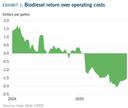
CoBank on Oct. 15 released its latest quarterly insights report, predicting the U.S. EPA will likely delay final action on its proposed Renewable Fuel Standard RVOs and small refinery exemption (SRE) reallocation proposals until early 2026.

The United Nations’ International Maritime Organization on Oct. 17 announced it would delay a vote on its proposed Net Zero Framework for one year. In the interim, UN member states will continue to work towards consensus on the framework.
In a keynote address on Oct. 20 at the U.S. Grains & Bioproducts Council’s Global Ethanol Summit in Washington, Renewable Fuels Association President and CEO Geoff Cooper offered a look at ethanol’s future by way of its past.

In her keynote address to the USGBC’s annual Global Ethanol Summit, Growth Energy CEO Emily Skor expressed optimism for the future of bioethanol, while highlighting the positive impact that pro-bioethanol policies have on agriculture.

The Minnesota Bio-Fuels Association (MN Bio-Fuels) is urging retailers to apply for $4 million in available biofuel infrastructure grant funding from the Minnesota Department of Agriculture before the application deadline on Oct 23.

If Congress passed legislation that allowed for year-round, nationwide access E15, corn use in ethanol could increase by 50% at full implementation, supporting a higher market price for corn and energy stability for Americans.
Advertisement

@ Copyright 2026 - BBI International - All rights reserved.