

MIT Energy Initiative launches study of sustainable fuels for hard-to-decarbonize transportation

By Massachusetts Institute of Technology
June 10, 2026
Earlier this year, the MIT Energy Initiative (MITEI) launched a major study to examine the sustainable fuel options for aviation, international shipping, long-haul trucking, and freight rail. The two-year study will be complete in 2028.

A researcher at the University of Wisconsin-Madison has published a paper that demonstrates hybrid combinations of lignocellulosic feedstock pretreatment methods can achieve high glucose yields with reduced energy consumption.

A new study from South Dakota State University's Ness School of Management and Economics found that farmland values rose by 44% after changes to U.S. energy policies sparked the ethanol industry's initial boom.

A catalyst developed by a Washington State University research team efficiently converts abundant, renewable ethanol into valuable molecules needed for production of plastics, fuels, and everyday products.

The U.S. Department of Defense’s Defense Advance Research Projects Agency on Feb. 13 announced plans to support research to develop novel catalysts to enable the conversion of biomass into chemicals.

Researchers at the University of Wisconsin’s Great Lakes Bioenergy Research Center are developing toolkits for investigating microbial DNA to identify and tweak genes that can boost production of biofuels and plant-based chemicals.

Using a tiny, acid-tolerant yeast, scientists have demonstrated a cost-effective way to make disposable diapers, microplastics, and acrylic paint more sustainable through biomanufacturing.

Southern Illinois University Edwardsville has appointed Praveen V. Vadlani as executive director of the National Corn-to-Ethanol Research Center. Vadlani will also hold a tenured faculty appointment as a professor in SIUE’s Department of Chemistry.

Andrea Eveland, Ph.D., principal investigator and member at the Donald Danforth Plant Science Center, will lead a multi-institutional project to deepen the understanding of sorghumand its response to environmental challenges.

New research show using agricultural biomass for bioenergy and biobased materials increases food security while enhancing resilient and competitive agriculture.
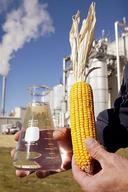
California residents will soon get some price relief at the pump and reductions in harmful vehicle emissions, thanks in part to a landmark University of California Riverside vehicle emissions study that was completed in 2023.

Researchers at the Idaho National Laboratory have developed computer models that apply to processing bioenergy crops using equipment traditionally used by the food, minerals and pharmaceuticals industries.

New research has found cover crops that are viable in Washington’s normal “off season” don’t hurt the soil and can be sold as a biofuel source. The study evaluated four cover crops that were grown for multiple years.

With support from Minnesota Corn, University of Minnesota Professor of Chemical Engineering Paul Dauenhauer is exploring the corn-to-methanol pathway for biofuels, which could be used to produce SAF.
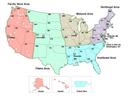
Iowa officials and lawmakers are calling on U.S. Agriculture Secretary Brooke Rollins to relocate the USDA’s Agricultural Research Service projects to Ames, Iowa, as part of the agency’s ongoing reorganization plan.

On Jan. 30, Rep. Nikki Budzinski, D-Ill, visited the National Corn-to-Ethanol Research Center at Southern Illinois University Edwardsville to tour the ethanol research pilot plant that specializes in advancing biofuels.

New research at Iowa State University shows that using advanced planting techniques can triple the amount of biomass produced by the perennial, bioenergy crop miscanthus in its establishment year.
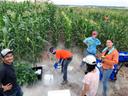
Breakthrough research seeks to better pinpoint and predict corn trait performance, while new hybrids enhance inherent sustainability, reduce yield loss and improve accessibility.
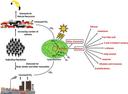
A recent study presents exciting breakthroughs in bioengineering cyanobacteria for ethanol production. Utilizing genetic and metabolic modifications, the researchers achieved significant improvements in ethanol yields.

Using technology developed by researchers working with ORNL’s Center for Bioenergy and Dartmouth College, Terragia Biofuel is targeting commercial biofuel production, including ethanol, from lignocellulose.

Growth Energy recently worked with the Energy Futures Initiative Foundation, led by former U.S. Secretary of Energy Ernest J. Moniz, on new research detailing pathways to further decarbonize bioethanol.

New research from the University of Illinois Urbana-Champaign demonstrates that near-infrared (NIR) spectroscopy and machine learning can provide quick, accurate, and cost-effective product analysis of corn kernels and sorghum biomass.

USDA Agricultural Research Service scientists have devised an approach for using genetically modified baker’s yeast to prevent a top cause of costly ethanol plant shutdowns—namely, contamination by unwelcome bacteria.

At the National Ethanol Conference in San Diego, the Renewable Fuels Association presented its 2024 Award of Excellence to Dr. Michael Wang, an Argonne National Laboratory distinguished fellow and senior scientist.

Georgia Tech researchers have engineered one of the world’s first yeast cells able to harness energy from light, expanding our understanding of the evolution of this trait — and paving the way for advancements in biofuel production and cellular aging.

A team of USDA ARS, university and industry scientists has spotted a new genetic vulnerability to tolpyralate herbicide in 49 varieties of corn, marking the first report of the weed control posing a danger to the staple crop.
Advertisement

@ Copyright 2026 - BBI International - All rights reserved.