


The U.S. DOE on June 12 released an update of its 45ZCF-GREET model, which is used to calculate fuel emissions rates for the 45Z clean fuel production credit. Release of the model provides much-needed certainty for the U.S. renewable fuel industry.
IATA: Brazil’s opportunity to be a SAF powerhouse

By International Air Transport Association
June 12, 2026
The International Air Transport Association highlighted Brazil’s opportunity to become a sustainable aviation fuel (SAF) powerhouse as its 82nd Annual General Meeting gathered in Rio de Janeiro, Brazil.
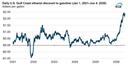
Compliance credits for biomass-based diesel and ethanol have doubled in value since the start of this year. The credits, known as RINs, have increased in price, mostly because of higher U.S. biofuel blending targets.
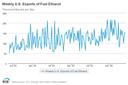
U.S. fuel ethanol production levels for the week ending June 5 were unchanged when compared to the previous week, according to data released by the U.S. EIA on June 10. Ethanol stocks fell by 1% and exports were up 15%.

The U.S. Energy Information Administration maintained its forecasts for 2026 and 2027 fuel ethanol production in its latest Short-Term Energy Outlook, released June 9. The forecasts for ethanol exports and domestic consumption were also maintained.

The U.S. exported 173.62 million gallons of ethanol and 1.02 million metric tons of distillers grains in April, according to data released by the USDA FAS on June 9. Exports of both products were down when compared to the previous month.

The International Air Transport Association on June 6 announced its analysis shows global SAF production is expected to reach approximately 2.4 million metric tons (792.6 million gallons) this year, accounting for 0.8% of total aviation fuel use.

Technip Energies, Airbus, Safran and Tereos entered into an agreement to create Rebound, a joint venture to develop a SAF biorefinery at the Port of Dunkirk, in Northern France. The AtJ project will produce approximately 160,000 tons of SAF annually.

USGBC staff members in May traveled to Indonesia to conduct a series of site visits to key dairy and feedlot operations to assess market opportunities and strengthen engagement with the local livestock sector.

The July issue of Ethanol Producer Magazine explores fermentation, markets, policy, feedstock use and the industry’s remarkable near-term outlook.
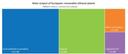
Production and use of renewable ethanol from ePURE members and other EU producers reduced GHG emissions by an average of nearly 82% compared to fossil fuels in 2025, according to newly certified data.

Yeast and enzyme developers are rising to ethanol producers’ challenge for higher throughput without lowering batch yields.

Carbon Direct has released Sustainable Agricultural Biomass Sourcing for CDR: A Buyer's Guide — one of the first globally applicable frameworks for sourcing agricultural residues as feedstock for carbon dioxide removal (CDR) projects.
Since 2020, the ethanol industry has seen a steady resurgence in demand. As a result, producers are being asked to deliver more: pushing plants, processes and feedstocks further than ever before.

UNICA, the Brazilian sugarcane industry association, has announced ethanol production continued to trend higher during the second half of April. Corn ethanol production was up more than 9% when compared to the same period of last year.

KBR, a Texas-based engineering, science and technology company, on May 28 announced that Latvia-based NorSAF has selected its proprietary PureSAF technology for its proposed 100,000-metrict-ton-per-year sustainable aviation fuel (SAF) plant.

The International Air Transport Association and the International Civil Aviation Organization are partnering to advance transparency and integrity in tracking progress and accelerating the development and deployment of SAF.
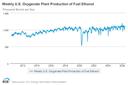
U.S. fuel ethanol production expanded by 2% the week ending May 29, according to data released by the U.S. Energy Information Administration on June 3. Weekly ending stocks of fuel ethanol fell by more than 1% and exports expanded by more than 32%.

Growth Energy CEO Emily Skor on June 3 delivered keynote remarks at the 42nd annual International Fuel Ethanol Workshop & Expo, highlighting recent victories for America’s ethanol industry and outlining the path ahead for continued growth.

BBI International awarded Jenny Forbes, Pauline Teunissen, Jim Ramm and Chuck Woodside, along with two recipients of the Kathy Bryan Memorial Scholarship, during the general session of the 42nd Annual Fuel Ethanol Workshop & Expo.

The USGBC in May hosted the U.S. Feed Grains and Sustainability Conference in Tokyo, Japan. During the event, the USGBC shared U.S. feed grains’ sustainable production practices and tools available to help customers import U.S. agricultural goods.

To capture future opportunities, producers must plan for ever-changing compliance requirements.

The Office of the U.S. Trade Representative on June 1 released initial findings regarding its investigation of Brazil’s unfair trade practices and has proposed to apply 25% tariffs on nearly all Brazilian goods exported to the U.S.

Iowa Gov. Kim Reynolds on June1 signed a bill that exempts fuel blends containing more than 85% ethanol from the state’s motor vehicle excise tax when the fuel is used exclusively to fuel agricultural equipment.

A full-page advertisement appearing three times in the Des Moines Register, starting June 2, recognizes Iowa lawmakers for leading the fight to pass year-round E15 legislation through the House of Representatives.
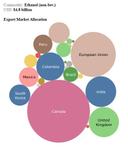
The USDA Foreign Agricultural Service on May 13 released its 2025 U.S. Agricultural Export Yearbook report, which shows the value of U.S. ethanol exports expanded by 11% last year. The value of distillers grains exports fell by 11%.
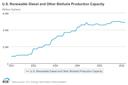
Total operatable U.S. biofuel capacity dipped slightly in March, with reductions for both ethanol and biodiesel, according to data released by the U.S. EIA on May 29. Capacity for renewable diesel and associated fuels held steady.
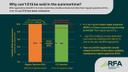
With the summer gasoline season officially starting June 1, the RFA again thanked President Donald Trump and EPA Administrator Lee Zeldin for taking decisive action to allow continued sales of lower-cost, cleaner-burning E15 this summer.

In May, the U.S. Grains & BioProducts Council signed a memorandum of understanding (MOU) with the Taiwan Sugar Corp. to jointly promote the development of ethanol in the region through mutual knowledge exchange and technical cooperation.

New federal incentives and emerging carbon management strategies are expanding the role of freight rail beyond ethanol to support the broader low-carbon fuels supply chain.
Advertisement

@ Copyright 2026 - BBI International - All rights reserved.