

IATA: Brazil’s opportunity to be a SAF powerhouse

By International Air Transport Association
June 12, 2026
The International Air Transport Association highlighted Brazil’s opportunity to become a sustainable aviation fuel (SAF) powerhouse as its 82nd Annual General Meeting gathered in Rio de Janeiro, Brazil.
MIT Energy Initiative launches study of sustainable fuels for hard-to-decarbonize transportation

By Massachusetts Institute of Technology
June 10, 2026
Earlier this year, the MIT Energy Initiative (MITEI) launched a major study to examine the sustainable fuel options for aviation, international shipping, long-haul trucking, and freight rail. The two-year study will be complete in 2028.

U.S. Agriculture Secretary Brooke Rollins on June 4 confirmed that release of the USDA’s feedstock guidelines to inform 45Z clean fuel production credit implementation “is imminent” with release scheduled for “this summer.”

The International Air Transport Association on June 6 announced its analysis shows global SAF production is expected to reach approximately 2.4 million metric tons (792.6 million gallons) this year, accounting for 0.8% of total aviation fuel use.

Technip Energies, Airbus, Safran and Tereos entered into an agreement to create Rebound, a joint venture to develop a SAF biorefinery at the Port of Dunkirk, in Northern France. The AtJ project will produce approximately 160,000 tons of SAF annually.

KBR, a Texas-based engineering, science and technology company, on May 28 announced that Latvia-based NorSAF has selected its proprietary PureSAF technology for its proposed 100,000-metrict-ton-per-year sustainable aviation fuel (SAF) plant.

The International Air Transport Association and the International Civil Aviation Organization are partnering to advance transparency and integrity in tracking progress and accelerating the development and deployment of SAF.

In May, the U.S. Grains & BioProducts Council signed a memorandum of understanding (MOU) with the Taiwan Sugar Corp. to jointly promote the development of ethanol in the region through mutual knowledge exchange and technical cooperation.

All Nippon Airways and Japan Airlines on May 27 released a report, "Toward Net Zero CO2 Emissions from Air Transport in 2050," outlining the current state of SAF in Japan and the actions needed to support aviation decarbonization.

Aemetis Inc. announced on May 21 that the Capital Programs & Climate Financing Authority in California has adopted an initial resolution related to potential future issuance of up to $1.1 billion of tax-exempt bonds for Aemetis projects.

More than 1.93 billion RINs were generated under the RFS in April, up 3% when compared to the same month of last year, according to data released by the U.S. EPA on May 21. Total RIN generation for the first four months of 2026 reached 7.51 billion.
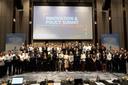
In May, the U.S. Grains & BioProducts Council’s regional office for Southeast Asia & Oceania (SEA&O) traveled to Da Nang, Vietnam to participate in the Asia Sustainable Aviation Fuel (SAF) Association’s Innovation & Policy Summit.
USGBC staff, members promote ethanol at Singapore energy conferences

By U.S. Grains & BioProducts Council
May 18, 2026
The U.S. Grains & BioProducts Council’s Southeast Asia & Oceania office recently participated in two international biofuel events in Singapore to promote U.S. ethanol as a fueling solution for the on-road, marine and aviation sectors across Asia.

North Sea Port has announced LanzaTech’s will develop Europe’s first commercial plant for sustainable aviation fuel (SAF) based on alcohol-to-jet technology at its site in Ghent, Belgium. The facility will also produce renewable diesel.

Gevo Inc. on May 7 confirmed the company has received nonbinding indications of interest from multiple parties regarding efforts to finance its proposed AtJ project in North Dakota. Efforts to boost ethanol production capacity are also progressing.
Aemetis Inc. on May 7 released Q1 results, reporting a 27% increase in revenues with growth across its ethanol, RNG and biodiesel segments. Plans for a proposed renewable diesel and SAF plant continue to be impacted by 45Z guidance delays.
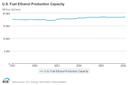
U.S. fuel ethanol production capacity expanded in February, according to data released by the U.S. EIA. Biodiesel production capacity and production capacity for renewable diesel and associated biofuels remained steady.

Lummus Technology has announced GPS Renewables has selected its ethanol-to-jet technology for National Thermal Power Corp.’s Project at Pudimadaka, Andhra Pradesh, India. This is the first commercial license of Lummus' integrated ETJ technology.

Valero Energy Corp. on April 30 released first quarter financial results, reporting a profitable three-month period for both its ethanol segment and Diamond Green Diesel joint venture, which produces renewable diesel and SAF.

Kentucky Gov. Andy Beshear on April 27 signed legislation that creates a tiered tax credit for SAF that allows taxpayers to claim up to $3 per gallon in incentives. The credit is slated to be in effect from Jan. 1, 2029, through the end of 2034.

The government of India on April 23 announced it has amended its Aviation Turbine Fuel regulations to allow SAF to be blended with fossil-based jet fuel. The change aims to reduce emissions and keep India aligned with the global supply chain.

Rep. Mariannette Miller-Meeks, R-Iowa, pressed U.S. Energy Secretary Chris Wright on his support for biofuels and the administration’s request to reduce DOE funding for renewable fuels by 98% during an April 16 congressional hearing.

The Minnesota House of Representatives Taxes Committee on April 8 heard testimony in support of a bill that aims to expand and extend the state’s existing sustainable aviation fuel (SAF) tax credit, which was established in 2023.

A 2025 annual report published by Egypt-based petrochemicals company Echem details progress on the development of a $570 million sustainable aviation fuel (SAF) facility and $193 million ethanol plant.

The U.S. EPA has approved a fuel pathway filed by Summit Next Gen LLC for the production of renewable diesel and SAF from undenatured sugarcane ethanol. The pathway was approved on Jan. 6 and publicly released by the agency on April 20.

Gevo, an advanced biofuels company based in Colorado, has licensed two patented catalyst technologies from the U.S. Department of Energy’s Oak Ridge National Laboratory for use in the production of sustainable aviation fuel (SAF).
Gevo Inc. on April 15 withdrew its application for a U.S. Department of Energy loan guarantee to support its proposed alcohol-to-jet project. The company signaled its intent to continue developing a 30 MMgy SAF project in North Dakota.
Nearly 1.93 billion RINs were generated under the RFS in March, up 1% when compared to March 2025, according to data released by the U.S. EPA on April 16. Total RIN generation for the first three months of the year reached nearly 4.9 billion.

The California Senate Budget and Fiscal Review Committee’s Subcommittee 2 on Resources, Environmental Protection and Energy on April 9 heard testimony focused on California. Gov. Gavin Newsom’s proposed SAF tax credit.

Honeywell on April 14 announced that Petrobras has selected Honeywell UOP’s ethanol-to-jet (ETJ) process technology for a 10,000-barrel-per-day SAF project at its REPLAN refinery in São Paulo, Brazil.
Advertisement

@ Copyright 2026 - BBI International - All rights reserved.