


U.S. Agriculture Secretary Brooke Rollins on June 4 confirmed that release of the USDA’s feedstock guidelines to inform 45Z clean fuel production credit implementation “is imminent” with release scheduled for “this summer.”
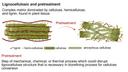
A researcher at the University of Wisconsin-Madison has published a paper that demonstrates hybrid combinations of lignocellulosic feedstock pretreatment methods can achieve high glucose yields with reduced energy consumption.

The RNG Coalition on June 1 filed a lawsuit in the U.S. Court of Appeals for the D.C. Circuit challenging the U.S. EPA’s decision to partially waive the 2025 cellulosic renewable volume obligation (RVO) in its recent RFS “Set 2” rule.

A recent study on the optimal blend ratio of corn and sorghum to produce D3 cellulosic RINS offers confirmation and new insight.

More than 1.93 billion RINs were generated under the RFS in April, up 3% when compared to the same month of last year, according to data released by the U.S. EPA on May 21. Total RIN generation for the first four months of 2026 reached 7.51 billion.

Rep. Mariannette Miller-Meeks, R-Iowa, pressed U.S. Energy Secretary Chris Wright on his support for biofuels and the administration’s request to reduce DOE funding for renewable fuels by 98% during an April 16 congressional hearing.
Nearly 1.93 billion RINs were generated under the RFS in March, up 1% when compared to March 2025, according to data released by the U.S. EPA on April 16. Total RIN generation for the first three months of the year reached nearly 4.9 billion.

Closing a Critical Gap in Biomass Characterization

A recent industry survey provides a snapshot of the corn kernel fiber production segment, including factors in decision-making, operational details, production volumes and more.
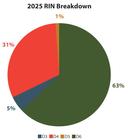
In 2025, 23.25 billion RINs were distributed under the RFS. One standout data point included a significant increase in D3 RINs coming from cellulosic ethanol—93% over the 2024 total.

The U.S. EPA on March 27 announced the RFS cellulosic waiver credit (CWC) price for 2025 has been set at $1.91, up from $1.61 for 2024. The CWCs are being made available due to the agency’s decision to reduce the 2025 cellulosic RVO.
How Corn Kernel Fiber Ethanol Reshaped the Industry
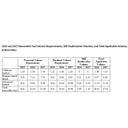
The U.S. EPA on March 27 finalized the 2026 and 2027 RFS RVOs at levels higher than originally proposed. The increase is attributed to the decision delay implementation of provisions penalizing imported fuels and feedstocks until 2028 or later.
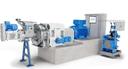
SAFFiRE Renewables has selected ANDRITZ to supply key refining technology for its new pilot plant in Liberal, Kansas, that will convert agricultural residues into cellulosic ethanol. Startup is planned for early 2027.
Nearly 1.65 billion RINs were generated under the RFS in February, down 10% when compared to the same month of last year. Total RIN generation for the first two months of 2026 reached 3.44 billion, down 2% when compared to the same period of 2025.
The U.S. EPA on Feb. 19 released data showing nearly 1.68 billion renewable identification numbers (RINs) were generated under the Renewable Fuel Standard in January, down 9% when compared to 1.84 billion RINs generated in January 2024.

The U.S. Department of Defense’s Defense Advance Research Projects Agency on Feb. 13 announced plans to support research to develop novel catalysts to enable the conversion of biomass into chemicals.

The Idaho National Laboratory is collaborating with Terragia Biofuel Inc. to use preprocessing technologies at the Biomass Feedstock National User Facility (BFNUF) as the company evaluates its new biomass conversion technology.

The March issue of Ethanol Producer Magazine focuses on ethanol distillation, dehydration and evaporation; the potential market for marine biofuels; and U.S. EPA compliance for corn kernel fiber ethanol production.
A former U.S. EPA inspector explains how and why corn kernel fiber D3 RIN producers should prepare for potential inspections.

LanzaTech Global Inc. has been awarded a contract by Spray Engineering Devices Ltd. to build a next generation ethanol facility using sugarcane bagasse for the production of sustainable fuels and chemicals in India.

The New Mexico Environmental Improvement Board on Jan. 22 unanimously adopted regulations implementing a Clean Transportation Fuel Program, making New Mexico the fourth U.S. state to adopt a clean fuel standard.
The U.S. EPA on Jan. 15 released data showing nearly 23.25 billion renewable identification numbers (RINs) were generated under the Renewable Fuel Standard in 2025, down more than 8% when compared to 2024.

ASTM International has developed a standard (E3503) that will address a specific need in the ethanol industry: measuring corn kernel fiber conversion for various applications, including regulatory pathways.
LanzaTech Global Inc. has announced successful operational results at the municipal solid waste (MSW) to ethanol pilot plant in Kuji City, Iwate, Japan owned and operated by longstanding partner, SEKISUI CHEMICAL CO. LTD.
The U.S. EPA on Dec. 18 released data showing 1.78 billion RINs were generated under the RFS in November, down from 2.05 billion generated during the same month of 2024. Total RIN generation for the first 11 months of 2025 reached 21.11 billion.

Reps. Sharice Davids, D-Kan.; Mike Flood, R-Neb.; Troy Carter, D-La.; and Tracey Mann, R-Kan., on Dec. 9 introduced legislation that aims to reinstate the 45Z clean fuel production credit premium for SAF and extend the 45Z credit through 2033.

The U.S. Department of Energy on Dec. 1 announced it has renamed the National Renewable Energy Laboratory as the National Laboratory of the Rockies. The change is effective immediately, according to the agency.
The U.S. EPA on Nov. 20 released data showing more than 1.98 billion renewable identification numbers (RINs) were generated under the RFS in October, down from 2.17 billion generated during the same month of last year.

Blue Biofuels has announced the completion of its Phase 2 SBIR grant awarded by the U.S. DOE. The grant has enabled Blue Biofuels to advance the scale-up of its patented cellulose-to-sugar (CTS) technology toward full commercialization.
Advertisement

@ Copyright 2026 - BBI International - All rights reserved.