


The U.S. DOE on June 12 released an update of its 45ZCF-GREET model, which is used to calculate fuel emissions rates for the 45Z clean fuel production credit. Release of the model provides much-needed certainty for the U.S. renewable fuel industry.

The USGBC’s regional office for Latin America in May held the second edition of Aquacumbre in Guayaquil, Ecuador, a trade-oriented event that introduces the technical and nutritional excellence of U.S. products in aquaculture feed applications.
IATA: Brazil’s opportunity to be a SAF powerhouse

By International Air Transport Association
June 12, 2026
The International Air Transport Association highlighted Brazil’s opportunity to become a sustainable aviation fuel (SAF) powerhouse as its 82nd Annual General Meeting gathered in Rio de Janeiro, Brazil.

The USDA maintained its forecast for 2026-’27 corn use in ethanol in its latest World Agricultural Supply and Demand Estimates report, released June 11. The estimate for 2025-’26 corn use in ethanol was revised down.

U.S. Agriculture Secretary Brooke Rollins reiterated support for E15 and confirmed that release of USDA feedstock guidance related to the 45Z clean fuel production credit is imminent during a June 10 hearing held by the Senate Agriculture Committee.

The US ethanol sector believes the push for year-round E15 access has substantial momentum after years of policy fights, Emily Skor, CEO of Growth Energy, said in an interview.
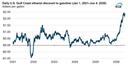
Compliance credits for biomass-based diesel and ethanol have doubled in value since the start of this year. The credits, known as RINs, have increased in price, mostly because of higher U.S. biofuel blending targets.
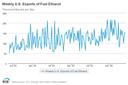
U.S. fuel ethanol production levels for the week ending June 5 were unchanged when compared to the previous week, according to data released by the U.S. EIA on June 10. Ethanol stocks fell by 1% and exports were up 15%.

The U.S. Energy Information Administration maintained its forecasts for 2026 and 2027 fuel ethanol production in its latest Short-Term Energy Outlook, released June 9. The forecasts for ethanol exports and domestic consumption were also maintained.
MIT Energy Initiative launches study of sustainable fuels for hard-to-decarbonize transportation

By Massachusetts Institute of Technology
June 10, 2026
Earlier this year, the MIT Energy Initiative (MITEI) launched a major study to examine the sustainable fuel options for aviation, international shipping, long-haul trucking, and freight rail. The two-year study will be complete in 2028.

The U.S. exported 173.62 million gallons of ethanol and 1.02 million metric tons of distillers grains in April, according to data released by the USDA FAS on June 9. Exports of both products were down when compared to the previous month.
U.S. Agriculture Secretary Brooke Rollins on June 4 confirmed that release of the USDA’s feedstock guidelines to inform 45Z clean fuel production credit implementation “is imminent” with release scheduled for “this summer.”

The International Air Transport Association on June 6 announced its analysis shows global SAF production is expected to reach approximately 2.4 million metric tons (792.6 million gallons) this year, accounting for 0.8% of total aviation fuel use.

Technip Energies, Airbus, Safran and Tereos entered into an agreement to create Rebound, a joint venture to develop a SAF biorefinery at the Port of Dunkirk, in Northern France. The AtJ project will produce approximately 160,000 tons of SAF annually.

USGBC staff members in May traveled to Indonesia to conduct a series of site visits to key dairy and feedlot operations to assess market opportunities and strengthen engagement with the local livestock sector.

The July issue of Ethanol Producer Magazine explores fermentation, markets, policy, feedstock use and the industry’s remarkable near-term outlook.

Japan’s Ministry of Economy, Trade and Industry has released proposed default greenhouse gas (GHG) emissions values for Brazilian corn ethanol, Thai sugarcane ethanol and Thai cassava ethanol, according to a report filed with the USDA.

A researcher at the University of Wisconsin-Madison has published a paper that demonstrates hybrid combinations of lignocellulosic feedstock pretreatment methods can achieve high glucose yields with reduced energy consumption.
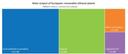
Production and use of renewable ethanol from ePURE members and other EU producers reduced GHG emissions by an average of nearly 82% compared to fossil fuels in 2025, according to newly certified data.

Renewable Fuels Association President and CEO Geoff Cooper calls on the Senate to pass E15 legislation.

USGBC Senior Manager of Global Ethanol Export Development Ankit Chandra in May traveled to Panama City, Panama to participate in Maritime Week Americas 2026 along with fellow U.S. ethanol industry stakeholders.

Yeast and enzyme developers are rising to ethanol producers’ challenge for higher throughput without lowering batch yields.

Policymakers in the European Union have been changing their tone when it comes to biofuels, including ethanol.

Carbon Direct has released Sustainable Agricultural Biomass Sourcing for CDR: A Buyer's Guide — one of the first globally applicable frameworks for sourcing agricultural residues as feedstock for carbon dioxide removal (CDR) projects.
Since 2020, the ethanol industry has seen a steady resurgence in demand. As a result, producers are being asked to deliver more: pushing plants, processes and feedstocks further than ever before.

UNICA, the Brazilian sugarcane industry association, has announced ethanol production continued to trend higher during the second half of April. Corn ethanol production was up more than 9% when compared to the same period of last year.

KBR, a Texas-based engineering, science and technology company, on May 28 announced that Latvia-based NorSAF has selected its proprietary PureSAF technology for its proposed 100,000-metrict-ton-per-year sustainable aviation fuel (SAF) plant.

USGBC Senior Marketing Specialist Javier Chávez and USGBC Marketing Specialist Eduardo Martinez Gonzalez led a team of Mexican feed nutritionists to an educational seminar at the University of Nebraska.

The International Air Transport Association and the International Civil Aviation Organization are partnering to advance transparency and integrity in tracking progress and accelerating the development and deployment of SAF.

Ethanol checks all the boxes for clean alternative fuels in ocean-going vessels.
Advertisement

@ Copyright 2026 - BBI International - All rights reserved.