


Global upheaval, E15 tailwinds, landmark RVOs and other factors push ethanol into the most promising environment the industry has seen in years.
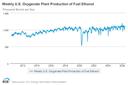
U.S. fuel ethanol production expanded by 2% the week ending May 29, according to data released by the U.S. Energy Information Administration on June 3. Weekly ending stocks of fuel ethanol fell by more than 1% and exports expanded by more than 32%.

The RNG Coalition on June 1 filed a lawsuit in the U.S. Court of Appeals for the D.C. Circuit challenging the U.S. EPA’s decision to partially waive the 2025 cellulosic renewable volume obligation (RVO) in its recent RFS “Set 2” rule.

The American Fuel & Petrochemical Manufacturers on May 29 filed a lawsuit in the U.S. Court of Appeals for the D.C. Circuit challenging the U.S. EPA’s Renewable Fuel Standard “Set 2” rule, which was finalized by the agency in March.

Sen. Chuck Grassley, R-Iowa, on June 1 reminded his colleagues that the E15 legislation currently under consideration by the U.S. Senate would not mandate the use of E15. Rather the bill would allow for increased consumer choice.

Growth Energy CEO Emily Skor on June 3 delivered keynote remarks at the 42nd annual International Fuel Ethanol Workshop & Expo, highlighting recent victories for America’s ethanol industry and outlining the path ahead for continued growth.

BBI International awarded Jenny Forbes, Pauline Teunissen, Jim Ramm and Chuck Woodside, along with two recipients of the Kathy Bryan Memorial Scholarship, during the general session of the 42nd Annual Fuel Ethanol Workshop & Expo.

The USGBC in May hosted the U.S. Feed Grains and Sustainability Conference in Tokyo, Japan. During the event, the USGBC shared U.S. feed grains’ sustainable production practices and tools available to help customers import U.S. agricultural goods.

E85 conversion kits, E15 vapor recovery system certifications and new sustainability requirements are all key to growing ethanol use in the Golden State.

To capture future opportunities, producers must plan for ever-changing compliance requirements.

A recent study on the optimal blend ratio of corn and sorghum to produce D3 cellulosic RINS offers confirmation and new insight.

The Office of the U.S. Trade Representative on June 1 released initial findings regarding its investigation of Brazil’s unfair trade practices and has proposed to apply 25% tariffs on nearly all Brazilian goods exported to the U.S.

Iowa Gov. Kim Reynolds on June1 signed a bill that exempts fuel blends containing more than 85% ethanol from the state’s motor vehicle excise tax when the fuel is used exclusively to fuel agricultural equipment.

Growth Energy on June 2 urged Ohio lawmakers to advance a bill that would give drivers on the Ohio Turnpike greater access to E15, a fuel blend made with 15% homegrown ethanol that sells for 30 cents less per gallon on average.

A full-page advertisement appearing three times in the Des Moines Register, starting June 2, recognizes Iowa lawmakers for leading the fight to pass year-round E15 legislation through the House of Representatives.
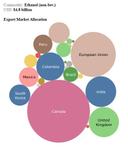
The USDA Foreign Agricultural Service on May 13 released its 2025 U.S. Agricultural Export Yearbook report, which shows the value of U.S. ethanol exports expanded by 11% last year. The value of distillers grains exports fell by 11%.
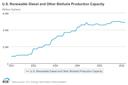
Total operatable U.S. biofuel capacity dipped slightly in March, with reductions for both ethanol and biodiesel, according to data released by the U.S. EIA on May 29. Capacity for renewable diesel and associated fuels held steady.

U.S. biofuel producers consumed 30.193 billion pounds of feedstock in March, up nearly 12% when compared to February and up 6% when compared to March 2025, according to data released by the U.S. Energy Information Administration on May 29.
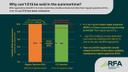
With the summer gasoline season officially starting June 1, the RFA again thanked President Donald Trump and EPA Administrator Lee Zeldin for taking decisive action to allow continued sales of lower-cost, cleaner-burning E15 this summer.

In May, the U.S. Grains & BioProducts Council signed a memorandum of understanding (MOU) with the Taiwan Sugar Corp. to jointly promote the development of ethanol in the region through mutual knowledge exchange and technical cooperation.

New federal incentives and emerging carbon management strategies are expanding the role of freight rail beyond ethanol to support the broader low-carbon fuels supply chain.

Growth Energy on May 29 urged the U.S. Treasury Department today to finalize its guidance for the 45Z clean fuel production tax credit in a way that increases flexibility and maximizes the incentive’s impact.

Nebraska Ethanol Board on May 19 joined Nebraska Gov. Jim Pillen in proclaiming May as Renewable Fuels Month. The state’s 24 ethanol plants produce more than 2 billion gallons of renewable fuel annually.

BASF and Arva on May 26 announced a strategic collaboration to help biofuel producers and farmers capture the full value of the 45Z clean fuel production credit once the implementing regulations are finalized.
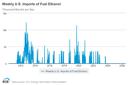
U.S. fuel ethanol production fell by 2% the week ending May 22, according to data released by the U.S. Energy Information Administration on May 28. Ethanol stocks expanded slightly while exports fell by 32%.

The USDA increased its forecast for fiscal year 2026 ethanol exports values in its latest Outlook for U.S. Agriculture Trade, released May 28. The agency currently predicts 2026 ethanol export values will be up 11% when compared to the previous year.
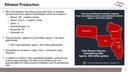
Rex American Resources Inc. released fiscal first quarter results on May 28, reporting the capacity expansion at its One Earth Energy LLC facility in Illinois remains on track for completion later this year.

ACE on May 28 urged Treasury and IRS to swiftly finalize practical and workable regulations implementing the Section 45Z clean fuel production credit, emphasizing the importance of fully recognizing low-carbon farming practices within the program.

In May, the container ship Eco Levant, operated by X-Press Feeders, was bunkered with ethanol in the port of Rotterdam. It was the first time in Rotterdam that a bunker vessel supplied ethanol to a sea-going vessel.

All Nippon Airways and Japan Airlines on May 27 released a report, "Toward Net Zero CO2 Emissions from Air Transport in 2050," outlining the current state of SAF in Japan and the actions needed to support aviation decarbonization.
Advertisement

@ Copyright 2026 - BBI International - All rights reserved.