

MIT Energy Initiative launches study of sustainable fuels for hard-to-decarbonize transportation

By Massachusetts Institute of Technology
June 10, 2026
Earlier this year, the MIT Energy Initiative (MITEI) launched a major study to examine the sustainable fuel options for aviation, international shipping, long-haul trucking, and freight rail. The two-year study will be complete in 2028.

USGBC Senior Manager of Global Ethanol Export Development Ankit Chandra in May traveled to Panama City, Panama to participate in Maritime Week Americas 2026 along with fellow U.S. ethanol industry stakeholders.

Ethanol checks all the boxes for clean alternative fuels in ocean-going vessels.
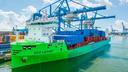
In May, the container ship Eco Levant, operated by X-Press Feeders, was bunkered with ethanol in the port of Rotterdam. It was the first time in Rotterdam that a bunker vessel supplied ethanol to a sea-going vessel.

The Netherlands imported $535 million of U.S. biofuels last year. Regulatory changes that came into force on Jan. 1, 2026, could boost demand for both U.S. biofuels and feedstocks, according to a report filed with the USDA.

Denmark-based global shipping company Maersk on May 7 announced it successfully completed the first sailing on 100% ethanol during the first quarter of 2026 using one of the company’s dual-fuel methanol vessels.

WinGD’s first ethanol-fueled X-DF-M/E engines have been ordered for two ore carriers to be built for Chinese owner Shandong Shipping Corp. and to operate under long-term charters for Brazil-headquartered global mining company Vale.
USGBC staff, members promote ethanol at Singapore energy conferences

By U.S. Grains & BioProducts Council
May 18, 2026
The U.S. Grains & BioProducts Council’s Southeast Asia & Oceania office recently participated in two international biofuel events in Singapore to promote U.S. ethanol as a fueling solution for the on-road, marine and aviation sectors across Asia.
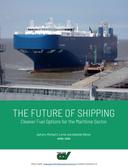
The case for adopting lower-carbon alternative maritime shipping fuels is strong and getting stronger, according to a report released today by the NGO Energy Vision: The Future of Shipping: Cleaner Fuel Options for the Maritime Sector.

The American Biofuels Maritime Initiative, which includes members representing the ethanol and biogas industries, on April 23 sent a letter to U.S. Secretary of State Marco Rubio calling for strong U.S. leadership in IMO negotiations.
The global maritime industry's transition away from heavy fuel oil is no longer a question of if but of when — and with what fuels. The U.S. biofuels industry is exceptionally well-positioned to serve this transition in the near to medium term.

The global maritime sector is massive. Its annual fuel consumption is roughly three times larger than global ethanol production. But today, virtually no renewable fuels are used in maritime.

At the recent CMA Shipping conference in Stamford, the U.S. Grains & BioProducts Council engaged with stakeholders across the alcohol fuels ecosystem, including the Methanol Institute, to explore opportunities for collaboration.

As demand for renewable products and energy security rises globally, ethanol is finding a home in on-road transportation, sustainable aviation fuel, clean chemicals, household energy and maritime fuels
The U.S. government is advocating against the adoption of the UN International Maritime Organization’s proposed Net Zero Framework, stating it “would have dire economic consequences for the shipping industry, energy producers, and global consumers.”

The global maritime sector is massive. Its annual fuel consumption is roughly three times larger than global ethanol production. But today, virtually no renewable fuels are used in maritime.

In February, the U.S. Grains & BioProducts Council conducted a maritime fuels mission in Panama with a delegation of ethanol industry leaders and USGBC members including Hagan Rose of Eco-Energy, Doug Berven of POET and Mark Heckman of Edeniq.

Everllence and Vale – one of the world’s leading producers of iron ore, copper and nickel, and one of the largest logistics operators in Brazil – have signed a cooperation agreement regarding the development of ethanol as a marine fuel.

Global maritime shippers, new stakeholder groups and cutting-edge engine makers are realizing ethanol-based marine opportunities.
New initiative promotes US biofuels for maritime market
By American Biogas Council and the Renewable Fuels Association,
December 11, 2025
The American Biofuels Maritime Initiative, a unified group of bioenergy stakeholders co-chaired by the American Biogas Council and the Renewable Fuels Association, announced its official launch on Dec. 11

The European Commission on Nov. 5 unveiled its Sustainable Transport Investment Plan, an initiative that aims to rapidly accelerate the energy transition in aviation and marine sectors, including through the use of SAF and marine biofuels.
Advertisement

@ Copyright 2026 - BBI International - All rights reserved.