

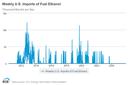
U.S. fuel ethanol production expanded slightly the week ending Oct. 10, according to data released by the U.S. Energy Information Administration on Oct. 16. Ethanol stocks were down slightly, and exports fell by approximately 22%.

The U.S. EPA on Oct. 16 released data showing more than 1.92 billion RINs were generated under the RFS in September, down approximately 9% when compared to last year. Total RIN generation for the first nine months of 2025 reached 17.13 billion.
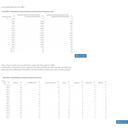
The U.S. EPA on Oct. 16 published updated small refinery exemption (SRE) data, reporting that seven new SRE petitions have been filed under the Renewable Fuel Standard during the past month. A total of 30 SRE petitions are now pending.

UNICA, the Brazilian sugarcane industry association, has announced sugarcane processing was up during the first half of September. Domestic ethanol sales and export sales were also up significantly during the two-week period.

Green Plains Inc. on Oct. 14 announced the successful startup of its carbon capture and storage (CCS) equipment in York, Nebraska, marking a key milestone in the expansion of its carbon capture capabilities.

Vale and locomotive manufacturer Wabtec Corp. announced on Oct. 13 a partnership to develop studies on a dual-fuel engine that can use both diesel and a mixture of diesel and ethanol. The studies and tests are expected to take place by 2027.

The November issue of Ethanol Producer Magazine focuses on on-site CCS projects, RFS policy, and CI reduction.

Gevo Inc. on Oct. 14 announced the U.S. Department of Energy’s Loan Programs Office has granted the company an extension of the conditional commitment for the $1.46 billion loan guarantee for its proposed sustainable aviation fuel (SAF) project.

The U.S. EIA maintained its forecasts for 2025 and 2026 fuel ethanol production in its latest Short-Term Energy Outlook, released Oct. 7. The 2025 and 2026 forecasts for fuel ethanol blending and exports were also unchanged.
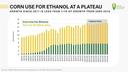
Increasing use of ethanol supports a higher market price for corn and energy stability for Americans. As a financial crisis looms, farmers need market-driven demand at a price that returns value to the farm, according to NCGA.

ACE's annual conference addresses E15 legislation, the 45Z clean fuel production credit and RFS blending obligations.

The U.S. Grains & BioProducts Council discusses ways to leverage ethanol to reduce emissions in the marine sector.

ePURE has submitted its reply to the EU public consultation on the CO2 emissions standards for cars and vans regulation. The comments describe how biobased fuels, including ethanol, can help decarbonization road transportation.

In September, U.S. Grains & BioProducts Council staff and members traveled to Japan to participate in the 2025 U.S. Bioethanol Supply Conference, meet Japanese industry stakeholders and visit key sites in the transportation and energy sectors.

Scientists at ORNL conducted a meticulous analysis of the compounds released by plant roots into their surrounding environment. The analysis yielded an abundance of data that can guide research aiming to improve the way we grow energy and food crops.

Updates and insight from ethanol producers navigating the road to on-site or nearby carbon capture and sequestration operations.

Japan Airlines Co. Ltd. (JAP) on Oct. 8 announced it has invested in MORISORA Bio Refinery LLC to advance sustainable aviation fuel (SAF) produced from domestically sourced woody biomass bioethanol.

A team of agricultural economists, environmental scientists and policy experts envisions a path toward a carbon-neutral agricultural future by expanding the reach of policies designed to promote low-carbon biofuels for transportation and aviation.

Blue Biofuels has announced the completion of its Phase 2 SBIR grant awarded by the U.S. DOE. The grant has enabled Blue Biofuels to advance the scale-up of its patented cellulose-to-sugar (CTS) technology toward full commercialization.

Lincolnway Energy and Whitefox Technologies on Oct. 7 announced the successful installation and startup of its Whitefox ICE membrane dehydration system at Lincolnway’s ethanol plant in Nevada, Iowa.
Using first-generation agricultural biomass to produce biobased energy and materials in Europe results in important benefits for food security, biodiversity, agriculture and climate-change mitigation, according to a new expert paper.

Representatives of Kilpatrick explore the evolving landscape of SAF financing and contract structures, focusing on the U.S. market, offering insights for industry stakeholders seeking to navigate this complex environment.

Industry insiders pause to reflect on the defining force of the Renewable Fuel Standard while continuing forward momentum.
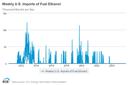
U.S. fuel ethanol production expanded by nearly 8% the week ending Oct. 3, according to data released by the U.S. Energy Information Administration on Oct. 8. Weekly ending stocks of fuel ethanol were down slightly and exports were up nearly 57%.
Iowa officials and lawmakers are calling on U.S. Agriculture Secretary Brooke Rollins to relocate the USDA’s Agricultural Research Service projects to Ames, Iowa, as part of the agency’s ongoing reorganization plan.

With the commencement of CO2 shipments on the Tallgrass Trailblazer pipeline, the Iowa Renewable Fuels Association said Iowa has officially lost its “crown” as the best place in the world to produce corn ethanol.

Ethanol producers and industry experts gathered at the American Coalition for Ethanol’s 2025 conference to learn, celebrate and collaborate. Photos by American Coalition for Ethanol

Sen. Deb Fischer, R-Neb., on Oct. 6 called on President Trump and federal lawmakers to revitalize the farm economy by enacting the Nationwide Consumer and Fuel Retailer Choice Act, a bill that would enable year-round sales of E15.

Aemetis Inc. on Oct. 7 announced that it is advancing decarbonization at its 65 MMgy ethanol plant in Keyes, California, with a $30 million energy efficiency upgrade with integration of a mechanical vapor recompression (MVR) system.

Iowa Secretary of Agriculture Mike Naig on Oct. 7 announced that the Iowa Renewable Fuels Infrastructure Program board has approved an additional 48 grants, totaling more than $1.86 million, to support biofuel infrastructure projects.
Advertisement

@ Copyright 2026 - BBI International - All rights reserved.