


Chippewa Valley Ethanol Co.'s long history in the ethanol industry is intertwined with innovation and diversification.
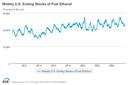
U.S. fuel ethanol production expanded 3% to a record high 1.123 million barrels per day the week ending Oct. 31, according to data released by the U.S. EIA on Nov. 5. Stocks of fuel ethanol were up 1% while exports fell 39%.

Green Plains Inc. on Nov. 5 confirmed that its network of ethanol plants operated at more than 101% capacity utilization during the third quarter, with carbon capture systems currently operational at all three of the company’s Nebraska facilities.
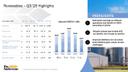
The Andersons on Nov. 5 reported strong third quarter financial and operational results for its renewables segment on strong ethanol demand. The company’s ethanol plants continued to run efficiently, resulting in higher yields and gallons produced.

The European Commission on Nov. 5 unveiled its Sustainable Transport Investment Plan, an initiative that aims to rapidly accelerate the energy transition in aviation and marine sectors, including through the use of SAF and marine biofuels.

Gevo Inc. announced the contracted sales of its remaining Section 45Z clean fuel production credits for 2025 from its Gevo North Dakota facility, totaling $30 million, to Stifel Financial Corp. and Capital Community Bank.

A new report from Life Cycle Associates, Advances in Estimation of Land Use Change Emissions Associated with Ethanol, shows that CARB’s decade-old estimate of hypothetical ILUC associated with ethanol is obsolete and should be revised.

ICM Inc., a leading U.S. process technology provider for ethanol production, and Mitsubishi Heavy Industries Ltd., a global engineering and technology leader, have entered into a strategic alliance to accelerate innovation in ethanol dehydration.

From new products to better yeast performance, precision fermentation could help ethanol producers rethink and revamp their sugar streams.
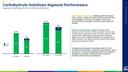
ADM on Nov. 4 released Q3 financial results, reporting a profitable three-month period for its ethanol operations on improved margins. Overall company operations, however, were negatively impacted by biofuel policy and trade uncertainty.

The U.S. EPA on Oct. 29 announced it will reopen a comment period related to a proposed extension of an information collection request (ICR) focused on provisions regarding biointermediates under the Renewable Fuel Standard.
Gevo Inc. is pleased to announce that it has completed the sale transaction of Agri-Energy, LLC, a wholly owned subsidiary of Gevo, to A.E. Innovation LLC. The transaction includes Agri’s 18 MMgy ethanol plant and a portion of the adjacent land.
LanzaJet Inc. has awarded the front-end engineering and design (FEED) for Project Speedbird to Fluor Corp. The commercial-scale ethanol-to-jet facility in Teesside, U.K., will produce approximately 30 MMgy of sustainable aviation fuel (SAF).

Green methanol from waste CO2 could create new opportunities while transforming an idled ethanol plant in Minnesota.

Officials in Nebraska and Iowa have expressed concerns that the U.S. EPA’s planned repeal of its Greenhouse Gas Reporting Program could negatively impact the ability of biofuel producers to access 45Q and 45Z tax credits.

The attorneys general of Iowa, Nebraska and South Dakota have asked leadership at four federal agencies to investigate small refiners that may be manipulating the RFS small refinery exemption (SRE) program to achieve a financial “windfall.”
Gevo Inc. announced the production and delivery of certified carbon dioxide removal credits, known as CORCs under the Puro.earth standard, to Biorecro North America LLC. The CORCs were generated for CCS at Gevo’s North Dakota plant.

The European Union Aviation Safety Agency published the first ReFuelEU Aviation Annual Technical Report, laying out the initial picture of how SAF are being supplied, purchased and used across the European Union.

The Strategic Value of Long-Term Contractor Partnerships

Representatives of the U.S. biofuels industry urged the U.S. EPA to fully reallocate RVOs waived via small refinery exemptions (SREs) under the RFS in comments filed with the agency ahead of an Oct. 31 deadline.

USGBC Chairman Mark Wilson and Council members traveled to London to join a mission including U.S. Department of Agriculture Secretary Brooke Rollins that focused on expanding ethanol use in on-road and aviation fuel.

The RFA has announced the addition of two innovative companies, Lapis Carbon Solutions and Golgix AI, as new associate members. Their respective expertise is in carbon capture, utilization, and storage (CCUS) and production intelligence solutions.

Rep. Mike Thompson, D-Calif., on Oct. 28 introduced a bill that aims to reinstate many of the renewable energy tax credits eliminated by the One Big Beautiful Bill, including the reinstatement of the 45Z clean fuel production credit “special rate” for SAF.
The RFA on Oct. 30 thanked Reps. Randy Feenstra, R-Iowa; Nikki Budzinski, D-Ill., and 47 other members of the House and Senate, who called on the U.S. EPA to reallocate all waived renewable fuel volumes from recently approved SREs.

The Renewable Fuels Foundation is now offering scholarships for college students interested in attending the 2026 National Ethanol Conference, taking place in Orlando February 24–26. Applications are due Jan. 16.
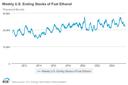
U.S. fuel ethanol production fell by 2% the week ending Oct. 24, according to date released by the U.S. Energy Information Administration on Oct. 29. Weekly ending stocks of fuel ethanol were up 2% and exports were up nearly 35%.

Cultura Technologies on Oct. 29 announced that its newly formed brand, CreditCrop, has joined the Clean Fuel Credit Consortium, a multi-company collaboration with Verdova, Vericap, and JAG Group Inc.

More than 450 international buyers and end-users of ethanol and its co-products from more than 40 countries attended the Global Ethanol Summit 2025, where they engaged with experts on global ethanol opportunities and connected with industry partners.

The International Biomass Conference & Expo and the American Boiler Manufacturers Association BOILER Expo are joining forces in 2026 for an unprecedented colocation event in Nashville, Tennessee, March 31 – April 2, 2026.

The Washington Department of Ecology is working to develop a programmatic environmental impact statement for SAF that will provide a foundation for future project-level environmental reviews. A public comment period is open through Nov. 5.
Advertisement

@ Copyright 2026 - BBI International - All rights reserved.