


From work to reconnect with China to new export destinations around the world, the global opportunity for U.S. ethanol and DDGS is unlike ever before.

The U.S. exported 209.87 million gallons of ethanol and 919,855 metric tons of distillers grains in February, according to data released by the USDA on April 2. Exports of both products were up when compared to February 2025.

Illinois Gov. JB Pritzker on April 2 sent a letter to leaders of the Senate Committee on Environment and Public Works and the House Committee on Energy and Commerce urging swift passage of legislation allowing year-round E15 sales.
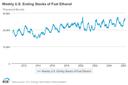
U.S. fuel ethanol production fell by nearly 4% the week ending March 27, according to data released by the U.S. Energy Information Administration on April 1. Stocks of fuel ethanol were down more than 4% and exports expanded by 3%.
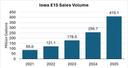
E15 accounted for 27% of total gasoline sales in Iowa in 2025, according to data released on March 31 by the Iowa Department of Revenue. The data show that more than 410 million gallons of E15 were sold in the state last year, up 60% from 2024.

USGBC leadership traveled to El Salvador and Guatemala to join a USDA Trade Reciprocity for U.S. Manufacturers and Producers Mission to bolster trade relationships for exports of U.S. corn and its co-products including ethanol and DDGS.

At the recent CMA Shipping conference in Stamford, the U.S. Grains & BioProducts Council engaged with stakeholders across the alcohol fuels ecosystem, including the Methanol Institute, to explore opportunities for collaboration.

As demand for renewable products and energy security rises globally, ethanol is finding a home in on-road transportation, sustainable aviation fuel, clean chemicals, household energy and maritime fuels

USGBC Senior Manager of Global Ethanol Export Development Ankit Chandra spoke at the Sustainable Aviation Futures Latin America in São Paulo, Brazil, highlighting ethanol’s expanding role in global SAF value chains.

Amid higher prices at the pump and volatile world energy markets, an overwhelming majority of registered voters support expansion of the lower-cost E15 fuel blend and legislation to make the fuel permanently available year-round and nationwide.

The newly announced trade agreement between the EU and Australia is the latest blow to Europe’s renewable ethanol industry and agriculture sector at large, who are already reeling from the EU-Mercosur deal.

Evos Rotterdam has commenced the realization of a major expansion project for low-carbon methanol and ethanol storage, following a signing ceremony held at the Port of Rotterdam. The project is expected to become operational early 2028.
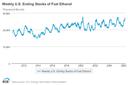
U.S. fuel ethanol production expanded by more than 2% the week ending March 20, according to data released by the U.S. Energy Information Administration on March 25. Stocks of fuel ethanol were up 3% and exports were down 32%.

The U.S. EPA on March 25 issued a temporary fuel waiver to allow nationwide sales of E15 to continue through the summer driving season. The agency issued similar waivers in 2022, 2023, 2024 and 2025.
U.S. Trade Representative Jamieson Greer and Ecuadorian Minister of Production, Foreign Trade and Investment Luis Alberto Jaramillo on March 13 signed the U.S.-Ecuador Agreement on Reciprocal Trade, which includes a tariff rate quota for ethanol.

The USGBC’s 2025 Annual Report is now available. The document features events and programs USGBC staff in its 10 offices around the world organized to deliver wins for U.S. producers of barley, corn, sorghum and their co-products.
Legislation introduced in the Minnesota Legislature in mid-March aims to establish a biofuel incentive program that would provide eligible fuel retailers with a payment of 5 cents per gallon for the sale E11-E15 blends.

The global maritime sector is massive. Its annual fuel consumption is roughly three times larger than global ethanol production. But today, virtually no renewable fuels are used in maritime.

The U.S. Grains & BioProducts Council recently developed a set of infographics with statistics about U.S. agricultural exports in marketing year (MY) 2024/2025 and explainers on ethanol storage and infrastructure compatibility.
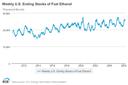
U.S. fuel ethanol production fell by 3% the week ending March 13, according to data released by the U.S. Energy Information Administration on March 18. Stocks of fuel ethanol were up 3% while exports were down 7%.

Increased corn ethanol production in Brazil is driving a significant increase in the production of DDGs and DDGS. As the Brazilian government and industry stakeholders work to develop export markets, global competition could increase.

BBI International and Ethanol Producer Magazine are pleased to announce the preliminary agenda for the 2026 International Fuel Ethanol Workshop & Expo, taking place June 2–4 in St. Louis, Missouri.

Produced by BBI International, the Sustainable Fuels Summit, Carbon Capture & Storage Summit and Ethanol 101 expand FEW into a comprehensive platform for biofuels innovation, carbon management and industry education.
European renewable ethanol producers are calling for increased safeguards in the EU’s proposed revision of the Generalized Scheme of Preferences for trade, which grants preferential tariffs to certain countries.

In February, USGBC staff and members joined the USDA’s Foreign Agricultural Service and USDA Under Secretary Luke J. Lindberg for an Agricultural Trade Mission to Jakarta, Indonesia, to promote U.S. ethanol and coarse grain products.

Advanced Biofuels Canada Association President Fred Ghatala on March 12 released a statement highlighting the stabilizing role of biofuels amidst current global crude oil supply shocks.
The U.S. exported 212.07 million gallons of ethanol and 1.01 million metric tons of distillers grains in January, according to data released by the USDA on March 12. Exports of both products were up when compared to January 2025.
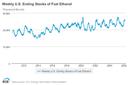
U.S. fuel ethanol production expanded by nearly 3% the week ending March 6, according to data released by the U.S Energy Information Administration on March 11. Stocks of fuel ethanol were down 3% and exports fell by 13%.

The U.S. Energy Information Administration increased its forecast for 2026 and 2027 fuel ethanol production in its latest Short-Term Energy Outlook, released March 10. The agency’s estimate for 2025 fuel ethanol production was also revised up.

UNICA, the Brazilian sugarcane industry association, has announced ethanol production was up during the second half of January. More than 90% of the ethanol produced during the two-week period was manufactured from corn feedstock.
Advertisement

@ Copyright 2026 - BBI International - All rights reserved.