


Kansas Gov. Laura Kelly on April 27 signed SB 82, a legislative tax package that, in part, creates a new 5-cent-per-gallon non-refundable income tax credit for each gallon of E15 or higher-ethanol blend fuel sold at retail within the state.

European Commission President Ursula von der Leyen has confirmed to MEPs that the EU should consider allowing higher ethanol blending in petrol in order to de-fossilize Europe’s car fleet more effectively. Von der Leyen specifically mentioned E20.
ePURE, together with a coalition of organizations representing the biofuels value chain, has issued a joint declaration urging EU heads of state to unlock the full potential of biofuels in the response to the current energy crisis.

Minnesota’s ethanol industry remained a major economic driver in 2025, contributing $1.9 billion to the state's gross domestic product, according to a new study by the University of Minnesota Extension.

The case for adopting lower-carbon alternative maritime shipping fuels is strong and getting stronger, according to a report released today by the NGO Energy Vision: The Future of Shipping: Cleaner Fuel Options for the Maritime Sector.

The American Biofuels Maritime Initiative, which includes members representing the ethanol and biogas industries, on April 23 sent a letter to U.S. Secretary of State Marco Rubio calling for strong U.S. leadership in IMO negotiations.

The government of India on April 23 announced it has amended its Aviation Turbine Fuel regulations to allow SAF to be blended with fossil-based jet fuel. The change aims to reduce emissions and keep India aligned with the global supply chain.

Pearson Fuels reached a milestone in mid-April, delivering E85 to its 500th station. The average price of E85 in California during March was $2.50 per gallon below gasoline, offering substantial relief to flex fuel vehicle owners.
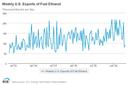
U.S. fuel ethanol production fell by more than 7% the week ending April 17, according to data released by the U.S. Energy Information Administration on April 22. Stocks of fuel ethanol were up nearly 1% and exports expanded by 12%.

The USDA’s America First Trade Promotion Program grant recipients were announced on April 16, and the U.S. Grains & BioProducts Council was among those agricultural organizations to receive an allocation.

The Minnesota House of Representatives Taxes Committee on April 8 heard testimony in support of a bill that aims to expand and extend the state’s existing sustainable aviation fuel (SAF) tax credit, which was established in 2023.
ePURE: Latest EU data show continued bias against biofuels is slowing down transport decarbonization

The EU remains needlessly over-reliant on fossil fuels for transport, thanks in part to policies that discourage the use of sustainable crop-based biofuels to reduce emissions, according to an analysis of European Commission data.

UNICA, the Brazilian sugarcane industry association, has released ethanol production and sales data for the first half of March, reporting that sugarcane milling began to increase ahead of the start of the 2026-’27 harvest season.

As Indonesia moves toward implementing ethanol blending as part of its broader energy transition strategy, the USGBC recently partnered with Pertamina New & Renewable Energy to formalize collaboration through a MOU signing in Jakarta.
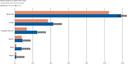
U.S. ethanol exports in marketing year (MY) 2025/2026 now total more than 1 billion gallons, up 13% year over year, and on pace to surpass last year’s record of 2.1 billion gallons, according to a recent data release from the USDA.
The global maritime industry's transition away from heavy fuel oil is no longer a question of if but of when — and with what fuels. The U.S. biofuels industry is exceptionally well-positioned to serve this transition in the near to medium term.
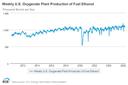
U.S. fuel ethanol production was up slightly the week ending April 10, according to data released by the U.S. Energy Information Administration on April 15. Stocks of fuel ethanol expanded by more than 2% while exports fell by 60%.

The U.S. Grains & BioProducts Council’s regional office in Latin America (LTA) recently engaged with pork industry leaders and nutritionists to share the value of U.S. distiller’s dried grains with solubles (DDGS) in feed diets.

The California Assembly Transportation Committee on April 7 voted unanimously to advance a bill that aims to allow California drivers to legally install federally approved E85 conversion kits in their vehicles.

The California Senate Budget and Fiscal Review Committee’s Subcommittee 2 on Resources, Environmental Protection and Energy on April 9 heard testimony focused on California. Gov. Gavin Newsom’s proposed SAF tax credit.

The USGBC recently participated in the USDA Reciprocity for U.S. Manufacturers and Producers trade mission to Vietnam, where the delegation engaged with key coarse grain and co-product stakeholders in Ho Chi Minh City and Hanoi.

The global maritime sector is massive. Its annual fuel consumption is roughly three times larger than global ethanol production. But today, virtually no renewable fuels are used in maritime.
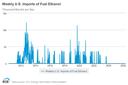
U.S. fuel ethanol production expanded by nearly 4% the week ending April 3, according to data released by the U.S. Energy Information Administration on April 8. Ethanol stocks were up slightly while exports of fuel ethanol expanded by 65%.
The Greater Washington Region Clean Cities Coalition and the Maryland Biofuels Task Force on March 31 stated that recent federal action by the U.S. EPA provides Maryland with a timely opportunity to establish a Clean Fuel Standard.

The U.S. Energy Information Administration maintained its forecasts for 2026 and 2027 fuel ethanol production in its latest Short-Term Energy Outlook, released April 7. The forecasts for 2027 ethanol exports and consumption were revised up.

In March, the USGBC and North Dakota Corn welcomed stakeholders from Ghana, Japan, Kenya, Mexico, Mozambique and Nigeria for an ethanol procurement course designed to help importers acquire U.S. ethanol in their markets.

Michigan Gov. Gretchen Whitmer on April 2 issued an executive order declaring an energy emergency and temporarily suspending state-level RVP requirements for gasoline, in line with federal E15 and E10 emergency waivers issued by the EPA in March.
The European Commission’s new recommendation that the EU could increase its use of biofuels as a way to boost energy security is another reminder of the strategic importance of renewable ethanol in an increasingly uncertain geopolitical climate.

U.S. ethanol is crossing the Pacific to Japan, its low carbon intensity, affordable cost and abundant supply driving it to outpace Brazilian ethanol imports into the country.

The Iowa Department of Revenue has released the 2025 Retailers Motor Fuel Gallons Annual Report, showing E15 sales increased 60% in only one year to over 410 million gallons sold. At the end of 2025, almost half of Iowa fuel stations offered E15.
Advertisement

@ Copyright 2026 - BBI International - All rights reserved.