


Caramuru, a Brazilian agribusiness company, on Aug. 16 announced it has begun selling soybean-based ethanol produced at its processing complex in Sorriso, Mato Grosso, a city located in the west-central region of the country.

The U.S. Department of Energy's national laboratories are helping companies advance sustainable aviation fuel (SAF) technologies by offering customizable pilot plants, laboratory equipment, and even supercomputers.

The U.S. EPA’s Science Advisory Board is scheduled to discuss draft commentary on the agency’s recently finalized Renewable Fuel Standard “set” rule during a public meeting scheduled to be held Sept. 21-22 in Washington, D.C.
Summit Carbon Solutions submits revised pipeline permit application to North Dakota PUC

By Erin Voegele
August 21, 2023
Summit Carbon Solutions on Aug. 19 announced it has submitted a petition for reconsideration for the company’s pipeline permit application to the North Dakota PUC. Summit said the petition addresses previously raised concerns.

Vietnam has revised the Most-Favored-Nation (MFN) tariff on ethanol, reducing it from 15 to 10 percent. The new tariff rate went into effect on July 15, 2023, and applies to both undenatured and denatured ethanol.

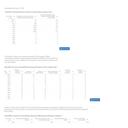
More than 1.98 billion RINs were generated under the RFS in July, up from 1.71 billion generated during the same month of last year. Total RIN generation for the first seven months of 2023 reached 13.4 billion.
EPA: No new SREs filed under the RFS
August 18, 2023
The U.S. EPA published updated small refinery exemption (SRE) data on Aug. 17, reporting that no new SRE petitions have been filed under the Renewable Fuel Standard in the past month. Only two SRE petitions remain pending.

Braskem and SCG Chemicals are forming a joint venture that aims to produce bio-ethylene from bio-ethanol dehydration and to commercialize I’m green biobased polyethylene (PE), using the EtE EverGreen technology.

In late July, the U.S. Grains Council’s Mexico office sponsored a pet food seminar where industry representatives in the country learned more about the use of sorghum and DDGS as ingredients for pet food.


The role of biofuels in the transition from a fossil-based economy to carbon neutrality has been the subject of intense and often misinformed debate, but optimism is growing that Europe could soon move to a more constructive discussion.
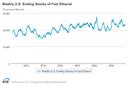
U.S. fuel ethanol production was up nearly 5 percent the week ending Aug. 11, according to data released by the U.S. Energy Information Administration on Aug. 16. Ethanol stocks were up more than 2 percent, with exports up more than 14 percent.

The Surface Transportation Board is soliciting nominations to fill six vacancies on its Rail Energy Transportation Advisory Committee. One of those vacancies is to be filled by a biofuel producer or feedstock provider.

Growth Energy filed a motion to intervene in the U.S. Court of Appeals for the District of Columbia Circuit in Center for Biological Diversity (CBD) v. EPA et al. (Case No. 23-1277). CBD is challenging the EPA’s RFS “set” rule.

On the first anniversary of the IRA becoming law, the RFA released a new inventory of announcements, press releases, and news articles regarding investments RFA members are making to reduce the CI of the renewable fuels and bioproducts they produce.

Growth Energy marked the one-year anniversary of the Inflation Reduction Act by releasing new data on the economic, employment, and agriculture market potential of the bill’s Section 45Z clean fuel production tax credit.
Facing the Future Head On

August 16, 2023
The ethanol industry is acknowledging and participating in the low-carbon energy transition. Higher blends of ethanol can lower GHG emissions from traditional vehicles right now and can be paired with EV hybrids in the future.

UNICA, the Brazilian sugarcane industry association, announced that mills in the south-central region of the country processed a record volume of sugarcane during the second half of July. Ethanol production and ethanol sales were also up.

The U.S. Department of Energy’s Bioenergy Technologies Office has awarded $2.5 million in funding to four projects that aim to advance lab-developed clean bioenergy technologies towards commercialization.

University of Central Florida researchers have achieved new record-setting power density for ethanol fuel cells, helping advance the technology as a competitor to fossil fuels and electric car batteries.
EV Devotees Hate this One Weird Trick to Reduce Carbon Pollution

By Ron Lamberty
August 15, 2023
The American Coalition for Ethanol tested the fuel efficiency of a hybrid electric flex-fuel vehicle for 24,867 miles, determining that the average lifecycle greenhouse gas emissions were comparable to an electric vehicle.

Gevo Inc. released second quarter financial results on Aug. 10, reporting that its RNG business continues to ramp up production and indicating that the company is pivoting to a modularized approach for its alcohol-to-jet (ATJ) technology.

The U.S. EPA has announced it will hold a public webinar on Sept. 7 to discuss the implementation of new regulatory provisions included in the final Renewable Fuel Standard “set” rule, which was released on June 21.

ACE on Aug. 14 called on U.S. President Joe Biden to ensure the U.S. EPA promptly finalizes its proposed regulation to eliminate the 1-psi Reid RVP waiver for gasoline containing 10 percent ethanol in eight states.
IRS to Decide the Future of Low-Carbon Aviation

By Emily Skor
August 14, 2023
The SAF tax credit created by the Inflation Reduction Act currently relies on a lifecycle emissions model used in Europe that ignores the reality of American agriculture. Growth Energy CEO Emily Skor calls on the IRS to adopt U.S. DOE’s GREET model, which harnesses actual data on U.S. agricultural practices.

The USDA maintained its forecast for 2023-’24 corn use in ethanol in its latest World Agricultural and Demand Estimates report, released Aug. 11. Corn production for 2023-’24 is currently expected to be the second highest on record.

USDA’s National Agricultural Statistics Service released its latest Crop Production report on Aug. 11, predicting 2023 corn production will be up 10 percent when compared to last year, reaching 15.1 billion bushels.

The U.S. EIA maintained its forecasts for 2023 and 2024 fuel ethanol production in its latest Short-Term Energy Outlook, released Aug. 8. The forecast for 2023 ethanol blending was also maintained, but the 2024 blending forecast was revised down.

Fluid Quip Technologies announced on Aug. 9 that it will provide the world’s first wheat-based Maximized Stillage Co-products (MSC) system, to Ensus U.K. Limited’s ethanol facility in Teesside, a subsidiary of CropEnergies AG.
The Renewable Fuels Association is welcoming its newest producer member, CIE Norfolk in Norfolk, Nebraska. The biorefinery produces 50 million gallons of ethanol each year. CIE purchased the facility from Louis Dreyfus in late 2022.
Advertisement

@ Copyright 2026 - BBI International - All rights reserved.