


A new study by economists at UC Berkeley and the U.S. Naval Academy found California drivers could save 20 cents per gallon if the state allowed gas stations to sell E15 fuel – a blend of 15% ethanol and 85% gasoline approved in all 49 other states.

The U.S. exported 154.39 million gallons of ethanol and 1.01 million metric tons of distillers grains in May, according to data released by the USDA on July 3. Exports of both products were up when compared to the same period of last year.

The OMB on July 5 published its 2024 Unified Agenda and Regulatory Plan, which outlines rulemakings and other actions under development by federal agencies related to the RFS, biofuel infrastructure, CO2 pipeline safety, and wood heating.

Eight of the nation’s top agricultural, biomass, and greenhouse gas (GHG) lifecycle scientists filed an amicus brief on July 3 that challenged the faulty assumptions underpinning a number of attacks on the RFS.

Leading experts in agricultural economics and biofuels lifecycle analysis urged the D.C. Circuit Court last week to reject erroneous claims made by the Center for Biological Diversity in its lawsuit challenging EPA’s 2023-2025 RFS volumes.

ePURE, the European renewable ethanol association, elected Antonio Vallespir as its new president for a two-year term. Vallespir, the CEO of Vertex Bioenergy, had previously served as ePURE’s vice-president.

The U.S. has enough biomass potential to produce 35 billion gallons per year of aviation biofuel by 2050, a new report confirms. Oak Ridge National Laboratory’s John Field provided biomass feedstock production expertise within the report.

LanzaJet on June 25 announced an investment from MUFG.The investment enables LanzaJet to continue building its capability and capacity to deploy its proprietary ethanol to sustainable aviation fuel (SAF) process technology.

The U.S. Grains Council, in partnership with Iowa Corn, escorted a group of Vietnamese government officials and fuel industry professionals on a tour of the U.S. ethanol value during June to support the country’s growing demand for fuel ethanol

In June, USGC staff brought teams of international pork association leaders to Des Moines, Iowa, for the World Pork Expo to familiarize them with U.S. producers and build a foundation for future feed grain sales.

The U.S. DOE Clean Fuels & Products Shot Summit Q&A is now available. Stakeholders across government, industry, academia, and non-profit organizations attended the event to learn about the Shot’s objectives, progress, priorities, and future plans.

The South Dakota Governor’s Office of Economic Development is accepting applications for the Blender Pump Grant program to encourage the use of ethanol blended fuels. The program has been allowed $500,000. Applications are due Aug. 31.

The USDA’s NASS estimates that 91.5 million acres of corn will be planted in the U.S. for 2024, down 3% or 3.17 million acres when compared to last year, according to the agency’s annual Acreage report, which was released June 28.

Growth Energy on June 27 filed a motion to intervene in a case brought by the American Fuel & Petrochemical Manufacturers against the U.S. EPA. The case aims to force EPA to lower the 2023 cellulosic biofuel blending obligations under the RFS.

The Michigan legislature on June 27 passed a $83 billion fiscal year (FY) 2025 budget package that includes a 5-cent-per-gallon tax credit for E15 fuel. Growth Energy has spoken out in support of the legislation’s E15 provisions.

Kemin Industries, a global ingredient manufacturer, has acquired Archangel Inc., a company specializing in antimicrobials for fermentative biofuel production. The acquisition enhances Kemin’s portfolio of antimicrobial solutions.

LanzaTech Global Inc. and LanzaJet Inc. are launching CirculAir, a new joint offering to convert waste, carbon, and renewable power into sustainable aviation fuel (SAF) and immediately accelerate decarbonization of the aviation industry globally.
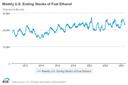
U.S. fuel ethanol production fell by 1% the week ending June 21, according to data released by the U.S. Energy Information Administration on June 26. Ethanol stocks were also down approximately 1%, with exports down 5%.

The USDA on June 26 awarded nearly $100 million in loans and grants to 473 projects under the Renewable Energy for America Program. Commonwealth Agri-Energy LLC and Redfield Energy LLC were among those selected for grant awards.

The USDA on June 26 launched a RFI seeking public comments on procedures for quantifying, reporting and verifying the effect of climate-smart farming practices on the GHG emissions associated with U.S.-grown biofuel feedstocks.
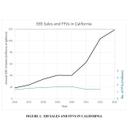
Increased use of lower-carbon liquid fuels in light-duty vehicles would lead to larger and faster reductions in GHG emissions than EPA’s recently finalized EV-forcing tailpipe emissions standards, according to a new study.

Aemetis Inc. on June 26 announced that its Aemetis Biogas subsidiary completed a key milestone of constructing and operating dairy digesters with a capacity to produce more than 300,000 MMBtu of renewable natural gas (RNG) per year.
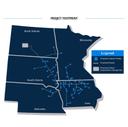
Summit Carbon Solutions LLC on June 25 achieved a major milestone with the Iowa Utilities Board’s approval of its baseline CO2 pipeline project. Several conditions must be met before Summit is issued a permit and construction can begin.
The U.S. DOE on June 17 awarded funding to two bioenergy projects. One focuses on the use of organic acids captured from anaerobic digester broth and the other focuses on the integrated processing and hyrothermal pretreatment of corn stover.

New Energy Blue and ARCO/Murray are partnering to build cellulosic ethanol plants across the American Midwest. The first project will be the flagship New Energy Freedom biorefinery in Mason City, Iowa, which is expected to break ground this year.
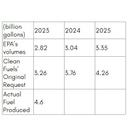
Clean Fuels Alliance America on June 25 filed a formal petition asking the U.S. EPA to reconsider RFS volumes for 2024 and 2025. The agency set biomass-based diesel and overall advanced volumes significantly below actual production of the fuels.

The USDA recently released its Grain Crushings and Co-Products Production report for June, reporting that corn use for fuel ethanol production in April was up slightly when compared to the same month of last year.
The Sustainable Aviation Fuel (SAF) Coalition has welcomed 10 new companies and organizations involved in the development and deployment of SAF into its membership, bringing its total count to more than 50.
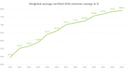
Production and use of renewable ethanol from ePURE members and other EU producers reduced greenhouse-gas (GHG) emissions by an average of 79.1% compared to fossil fuels in 2023, according to newly certified data.

LanzaTech Global Inc. on June 20 announced an increase in its holdings of LanzaJet Inc., a leading sustainable aviation fuel technology provider and fuels producer. LanzaTech now owns approximately 36% of LanzaJet.
Advertisement

@ Copyright 2026 - BBI International - All rights reserved.