

U.S. farm groups are urging the Biden administration to maximize the benefits of the 45Z clean fuels production tax credit by ensuring only fuels made using domestically produced feedstocks are eligible and improving climate-smart ag provisions.

The USGC sponsored the Global Bioenergy Partnership’s Bioenergy Week in Rome, Italy, in June where international biofuel stakeholders and policymakers recognized the efficiency and sustainability practices of biofuel production.

Ethanol holds promise as an SAF feedstock, due in no small part to its availability of supply relative to lipid feedstocks, which are feeling global pressure.
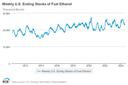
U.S. fuel ethanol production expanded by nearly 5% the week ending July 12, reaching a near-record high, according to data released by the U.S. EIA on July 17. Ethanol stocks fell by 2% and exports were down nearly 62%.

King Charles announced that the U.K. Parliament will soon introduce a bill to support the production of SAF via a revenue support mechanism during his July 17 speech that formally opened a new session of the British Parliament.

The Missouri Agricultural and Small Business Development Authority on July 16 announced applications are available for the Biofuel Infrastructure Incentive Program (BIIP). Applications are due Oct. 15.
On July 17, Clean Fuels Alliance America delivered a formal notice of intent to sue the U.S. EPA for its failure to issue timely 2026 Renewable Fuel Standards. EPA is required to finalize volumes 14 months before the start of the compliance year.
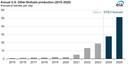
Production capacity of sustainable aviation fuel (SAF) in the U.S. could increase from around 2,000 barrels per day (b/d) to nearly 30,000 b/d in 2024 if all announced capacity additions come on line.

Advised by several former CEOs from big-name companies, Avina Clean Hydrogen is on an ambitious lateral pursuit in Illinois: sustainable aviation fuel production via ETJ.

ADM and South Korea-based LG Chem on July 12 announced they will not move forward with the development of previously announced joint venture projects to produce lactic acid and polylactic acid (PLA), citing skyrocketing construction costs.
American Airlines consumed 2.7 million gallons of SAF in 2023, according to its 2023 Sustainability Report. While that volume of SAF use was up 4% when compared to 2022, it accounted for less than 1% of total fuel use during the year.

Vale and Komatsu have signed a pioneering agreement to develop and test, in partnership with Cummins, Dual Fuel haul trucks, powered by a mixture of ethanol and diesel. They will be the world's first trucks of their size to run on ethanol.
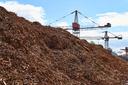
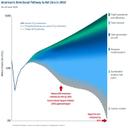
A new U.S. DOE report helps answer a basic—but big—question about the future of the U.S. SAF industry: Is there enough biomass feedstock to meet the nation’s goals?
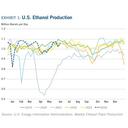
CoBank maintained its positive outlook for U.S. ethanol production in its latest Quarterly Research Report, released July 11, with higher margins and a strong export market continuing to benefit ethanol producers.

CF Industries Holdings Inc. and POET LLC on July 15 announced a collaboration to pilot the use of low-carbon ammonia fertilizer to reduce the carbon intensity of corn production and ethanol. The project is expected to kick off this fall.

Gevo Inc. announced on July 15 that its renewable natural gas (RNG) business achieved an annualized production rate of approximately 402,000 MMBtu in May, exceeding the previous record, which was set in March.

In June, the industry gathered in Minnesota for the largest, longest-running ethanol conference in the world. After four decades, the FEW remains a can’t-miss early summer event for ethanol plant personnel and the companies that support them. Photos: BBI/Sarah Morreim

The USDA maintained its forecast for 2024-’25 corn use in ethanol production in its latest WASDE report, released July 12. The agency increased its forecast for corn production and reduced its forecast for corn prices.
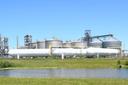
ZFS Riga LLC, a new affiliate of Michigan-based Zeeland Farm Services Inc., has purchased an idle 55 MMgy corn ethanol plant located in Riga Township, Michigan, from Valero Energy. There are no immediate plans to resume ethanol production.
ARPA-E awards $36M to develop technologies to lower GHG from ethanol production, reduce operating costs for US farmers

By Advanced Research Projects Agency-Energy
July 11, 2024
The Advanced Research Projects Agency-Energy (ARPA-E) on July 11 announced up to $36 million in funding to develop technologies to lower nitrous oxide (N2O) emissions by 50% from the cultivation of corn and sorghum used for U.S. ethanol production.

USGC staff and representatives traveled to Vancouver, Canada, in June to join Advanced Biofuels Canada in hosting a sustainable aviation fuel (SAF) policy roundtable on the sidelines of a USDA agribusiness trade mission.
IATA: South Africa has vast potential for SAF production

By International Air Transport Association
July 11, 2024
The International Air Transport Association has called on South Africa to mobilize its experience, resources, and infrastructure to accelerate the development of sustainable aviation fuel (SAF) production.
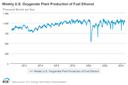
U.S. fuel ethanol production fell by nearly 1% the week ending July 5, according to data released by the U.S. Energy Information Administration on July 10. Stocks of fuel ethanol were up slightly while exports were up more than 73%.

Growth Energy on July 10 celebrated another round of applications for the USDA’s Higher Blends Infrastructure Incentive Program (HBIIP), writing more than half of all applications submitted by site count.

The European Union Aviation Safety Agency (EASA) is supporting the scale up of sustainable aviation fuels (SAF), via the now operating EU SAF Clearing House, as a critical step forward in reducing aviation emissions.

The U.S. Energy Information Administration reduced its forecasts for 2024 and 2025 fuel ethanol production in its latest Short-Term Energy Outlook, released July 9. The forecasts for ethanol blending were maintained.

UNICA, the Brazilian sugarcane industry association, has released data showing that sugarcane processing, ethanol production and ethanol sales were up during the first half of June when compared to the same period of 2023.
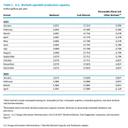
U.S. operable biofuels production capacity increased in April, with gains for ethanol, biodiesel and renewable diesel, according to data released by the U.S. EIA on June 28. Feedstock consumption was down from the previous month.

Japan is working to develop standards for SAF according to a report filed with the USDA FAS's Global Agricultural Information Network on July 5. The government is expecting to begin drafting SAF legislation later this year.

Green Plains Inc. and joint venture partner Tharaldson Ethanol on July 9 announced that the world’s largest MSC system to date at Tharaldson’s 175 million-gallon biorefinery in Casselton, North Dakota is producing and shipping on-spec product.
Advertisement

@ Copyright 2026 - BBI International - All rights reserved.