

Vertimass seeks to diversify ethanol market opportunities for ethanol producers by commercializing its unique single-step CADO technology for making SAF, gasoline, LPG and chemicals.
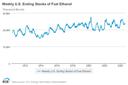
U.S. fuel ethanol production fell nearly 4% the week ending Aug. 2, according to data released by the U.S. Energy Information Administration on Aug. 7. Ethanol stocks were down 1% and exports were up more than 262%.
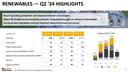
The Andersons Inc. released second quarter results on Aug. 6, reporting strong performance for its renewables segment on improved ethanol margins supported by lower corn basis and strong export demand.

Green Plains Inc. released Q2 financial results on Aug. 6, reporting progress with the clean sugar, high protein coproduct and CCS projects. Market fundamentals are looking strong going into the second half of 2024, according to the company.

Michigan Milk Producers Association and Canadian Dairy Distillery on Aug. 6 celebrated the groundbreaking of their innovative $41 million ethanol plant in Constantine, Michigan. The 2.2 MMgy facility will take in milk permeate as feedstock.

Aemetis Inc., a renewable natural gas and renewable fuels company focused on low and negative carbon intensity products that replace fossil fuels, on Aug. 1 announced Q2 2024 revenues were up 48% when compared to the same period of 2023.
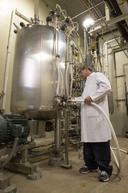
With minimal investment, NCERC’s validated process doubles the conversion of corn fiber cellulose in the feedstock from 20% to 40%, delivering a 2% total ethanol increase.

An IFF scientist outlines how enzymes can help producers maximize distillers corn oil extraction in fermentation.

ImagoAI Inc. has announced a new collaboration with the USDA that aims to transform the landscape of mycotoxins testing by developing a handheld mycotoxins test that delivers results in less than 30 seconds.
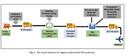
Biofuel generated from logging residues could make switching to sustainable aviation fuel (SAF) more cost-efficient and carbon friendly than previously thought, according to new research from the University of Georgia.

To support the development of ethanol blending programs in Mexico, the USGC organized a trade team of oil and gas industry leaders to help them better understand the production process, transport logistics and benefits of ethanol.

Farmers who want to gain a better understanding of their carbon intensity score can take advantage of a simple calculator developed by an economist with Iowa State University Extension and Outreach.
The RFA has scheduled a Food Safety Modernization Act training program on Preventive Controls for Animal Food compliance, tailored specifically for the ethanol industry. The 20-hour course will be held Aug. 27-29 in Des Moines, Iowa.

The National Renewable Energy Laboratory, in partnership with the U.S. Department of Energy Bioenergy Technologies Office, released the first two parts of the Sustainable Aviation Fuel (SAF) State-of-Industry Report.
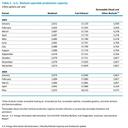
Operable U.S. biofuel capacity expanded in May, with gains for ethanol, biodiesel and renewable diesel, according to data released by the U.S. Energy Information Administration on July 31. Feedstock consumption was down.

Sens. Sherrod Brown, D-Ohio, and Roger Marshall, R-Kan., and 13 of their colleagues are urging Treasury Secretary Janet Yellen to restrict the 45Z Clean Fuel Production Credit to fuels made from domestic feedstocks.

Verbio has commenced the commercial production of corn-based ethanol at its 60 MMgy biorefinery facility in Nevada, Iowa. The facility also has the capacity to produce 2.3 million MMbtu of RNG.

Flex fuel vehicle drivers can reap substantial savings on Aug. 5 in celebration of Pearson Fuel's first national E85 Day. More than 200 Pearson Fuels retail stations will offer E85 for $1.85 per gallon from 8:30am Aug. 5 to 8:30am on Aug. 6.

The Surface Transportation Board on July 15 announced that it will hold an in-person public hearing on Sept. 16 and 17, 2024, to gather information about recent trends and strategies for growth in the freight rail industry.
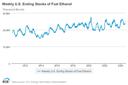
U.S. fuel ethanol production reached a record high of 1.109 million barrels per day the week ending July 26, up slightly from the previous record of 11.08 million barrels per day set late 2017, according to data released by the U.S. EIA on July 31.

Growth Energy on July 31 filed a notice of intent to sue the U.S. EPA regarding the agency’s anticipated failure to meet its statutory deadline for issuing the 2026 Renewable Volume Obligation under the Renewable Fuel Standard.

Fluid Quip Technologies on July 30 announced the successful completion and commissioning of the world’s largest MSC System to date at Tharaldson Ethanol’s 175 million-gallon biorefinery in Casselton, North Dakota.

U.S. Grains Council staff, members and partners recently traveled to Gujarat, India to explore the possibility of exporting distiller’s dried grains with solubles (DDGS) to the Indian dairy industry as a nutritious supplement to cattle diets.

Green Impact Partners Inc. has finalized the carbon credit pathways under the Alberta Technology Innovation and Emissions Reduction program for its flagship project, the Future Energy Park, to be located in Calgary, Alberta.
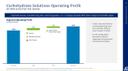
ADM on July 30 released second quarter results, reporting improved ethanol margins supported by robust demand for fuel ethanol in both domestic and export markets. Stronger margins are currently expected to continue into the third quarter.

U.S. Grains Council members are gathered in Salt Lake City, Utah, for the organization’s 64th Board of Delegates Meeting, held July 29-31. Market development activities for ethanol and distillers grains were among the topics addressed at the event.

Sixteen retail service stations throughout the state have received grant funding from the Minnesota Department of Agriculture to increase access to and sales of motor fuel blends containing at least 15% ethanol.

UNICA, the Brazilian sugarcane industry association, has reported that sugarcane processing during the first half of July was negatively impacted by rain. Ethanol production was down during the two-week period, but sales were up.

Thailand’s newly proposed National Energy Plan is expected to set a target for sustainable aviation fuel (SAF) starting in 2026, according to a report filed with the USDA. The plan also includes targets for ethanol and biodiesel.
RFA urges flex fuel vehicles for California emissions goals

By Renewable Fuels Association
July 30, 2024
The Renewable Fuels Association is urging CARB to require that all new vehicles with internal combustion engines sold within the state be flex-fuel capable, to achieve California’s carbon emissions goals.
Advertisement

@ Copyright 2026 - BBI International - All rights reserved.