

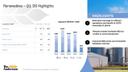
The Andersons Inc. on May 6 reported its renewable segment achieved strong Q1 performance with efficient plant operations and record production. Ethanol margins were solid during the period on increased demand and higher gasoline prices.

Novonesis on May 5 reported 7% organic sales growth for the first quarter. Sales growth was supported by increased demand from first- and second-generation ethanol producers. Sales to the biodiesel industry also contributed.

Growth Energy on May 6 released new data showing that fuel retailers sold nearly 2.5 billion gallons of E15 in 2025, underscoring the growing demand for a lower-cost fuel option that could save drivers more than $150 million this summer alone.

Renewable Fuels Month highlights the importance of renewable biofuels, such as ethanol and biodiesel. The month of May marks the beginning of the summer driving season, making it an ideal time to fuel up on clean and cost-saving biofuels.

Two MRV providers have teamed up to offer full-service date collection and verification for 45Z and other market compliance programs.

Emerging process technologies support reductions in energy use and carbon intensity across the ethanol production process.

The U.S. exported 217.77 million gallons of ethanol and 1.03 million metric tons of distillers grains in March, according to data released by the USDA on May 5. Exports of both products were up when compared to the previous month and March 2025.

ADM on May 5 reported Q1 operating profit for its carbohydrate solutions business segment increased 48%, primarily due to strengthening ethanol margins. Operating profit for the company’s dry mill ethanol plants nearly quadrupled.

Praj Industries has announced the establishment of an Advanced Precision Fermentation Lab at Praj Matrix to drive next-generation biotechnology and accelerate India’s transition to high-performance, low-carbon biomanufacturing.

New chemistry, advanced monitoring, AI and more dominate process water services among providers in 2026.

For more than 45 years, The Alcohol School has educated ethanol and distilled spirits plant staff of all levels and job descriptions on the technical details of their processes—an academic-level understanding of how a plant works.

For many producers, the value of the 45Z credit that can claim may depend on the use of energy attribute certificates (EACs), also commonly referred to as renewable energy certificates (RECs).
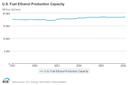
U.S. fuel ethanol production capacity expanded in February, according to data released by the U.S. EIA. Biodiesel production capacity and production capacity for renewable diesel and associated biofuels remained steady.

U.S. biofuels producers consumed an estimated 27.136 billion pounds of feedstock in February, down 6% when compared to the previous month, but up 4% when compared to February 2025, according to data released by the U.S. EIA.

In mid-April, USGBC Regional Ethanol Manager for the EU, the U.K. and Canada Stephanie Larson and USGBC ethanol sector members met with public and private representatives in Portugal and the U.K. to improve U.S. ethanol’s market presence.

Lummus Technology has announced GPS Renewables has selected its ethanol-to-jet technology for National Thermal Power Corp.’s Project at Pudimadaka, Andhra Pradesh, India. This is the first commercial license of Lummus' integrated ETJ technology.

Across the ethanol industry, many dehydration units operate in a stable state, all the while quietly eroding profitability every single day.

How High-Oil E+ Technology Is Transforming Agriculture and Energy.

Novonesis has signed an agreement with Meihua to acquire a production facility in Rayong, Thailand for around $50 million, increasing the company’s footprint in Southeast Asia and strengthening its ability to serve customers worldwide.

Cleaner burning fuels, like ethanol, can reduce the human and environmental dangers of traditional cooking fuels. The USGBC is actively developing awareness of ethanol’s potential among international policymakers and consumers.

Valero Energy Corp. on April 30 released first quarter financial results, reporting a profitable three-month period for both its ethanol segment and Diamond Green Diesel joint venture, which produces renewable diesel and SAF.

The House on April 30 passed the 2026 Farm Bill by a vote of 224 to 200. The bill includes several bioenergy provisions but does not include language enabling year-round E15 sales. A vote on a stand-alone E15 bill is expected May 13.

CPM|Crown has announced the expansion of its industry-leading equipment and service offering to include a full portfolio of conveyor solutions, strengthening CPM|Crown’s ability to deliver integrated, end-to-end systems.

Sumitomo Corp. has announced its study on ethanol exports from the Kingdom of Thailand to Japan was selected for a government grant. The study examines the feasibility of establishing a stable supply of ethanol from Thailand to Japan.

On April 29, the USDA announced an expanded partnership with the Export-Import Bank of the United States (EXIM) to increase domestic agricultural production and exports, while reducing the agricultural trade deficit. Alongside

U.S. fuel ethanol production fell by 3% the week ending April 24, according to data released by the U.S. Energy Information Administration on April 29. Stocks of fuel ethanol fell by 4% while exports were up nearly 87%.

Lawmakers on April 29 pivoted their efforts to pass legislation enabling year-round E15 sales. Rather than including E15 language in the 2026 Farm Bill, separate E15 legislation is expected to be brought to vote and later attached to the Farm Bill.

Kentucky Gov. Andy Beshear on April 27 signed legislation that creates a tiered tax credit for SAF that allows taxpayers to claim up to $3 per gallon in incentives. The credit is slated to be in effect from Jan. 1, 2029, through the end of 2034.

CropEnergies is welcoming the U.K. government’s decision to provide an estimated EUR 115 million to help keep its U.K.-based ethanol plant in a ready to operate standby mode. The facility idled in September 2025 due to economic pressures.

BASF and Nutrien Ltd. have announced a collaboration that aims to make it easier for farmers to participate in low-CI biofuel programs, including those supported under the 45Z clean fuel production credit.
Advertisement

@ Copyright 2026 - BBI International - All rights reserved.