

President Donald Trump on April 13 signed the Small Business Innovation and Economic Security Act. The legislation reauthorizes the Small Business Innovation Research (SBIR) and Small Technology Transfer (STTR) programs.

The National Corn-to-Ethanol Research Center has appointed Praveen Vadlani to lead it into a new era.

Converting sugarcane waste to biofuel could become more environmentally friendly and cost effective, thanks to a joint project at The University of Queensland and the Indian Institute of Technology Delhi.

The U.S. Senate and U.S. House of Representatives in March each voted in favor of a bill to reauthorize the Small Business Innovation Research and Small Technology Transfer programs. The legislation currently awaits action from President Trump.
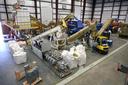
The Idaho National Laboratory is collaborating with Terragia Biofuel Inc. to use preprocessing technologies at the Biomass Feedstock National User Facility (BFNUF) as the company evaluates its new biomass conversion technology.
At PNNL, AI is accelerating the US bioeconomy
By Pacific Northwest National Laboratory
February 11, 2026
PNNL researchers are using AI to help accurately predicting how organisms’ characteristics respond to not only their genes, but also their environments (a nascent field called “predictive phenomics”).
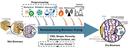
South Dakota Mines is partnering with Idaho National Laboratory on two-year project focused on improving biomass drying. The project combines advanced AI developed by Mines with cutting-edge research at INL.

The USDA on Dec. 30 announced new research and development priorities for 2026. One of the five new priorities focuses on market expansion and creating new uses for U.S. agricultural products, including for use in biofuel and bioenergy.

Michelin, IFPEN, and Axens are pleased to announce significant advancements in the BioButterfly project, supported by ADEME, Région Nouvelle Aquitaine and Bordeaux Metropole, which aims to produce biobased butadiene from bioethanol.

U.S. Secretary of Energy Chris Wright launched a new chapter to secure American leadership in autonomous biological discovery on Dec. 4 alongside scientists and private partners at Pacific Northwest National Laboratory.
The U.S. Department of Energy on Dec. 1 announced it has renamed the National Renewable Energy Laboratory as the National Laboratory of the Rockies. The change is effective immediately, according to the agency.

Blue Biofuels has announced the completion of its Phase 2 SBIR grant awarded by the U.S. DOE. The grant has enabled Blue Biofuels to advance the scale-up of its patented cellulose-to-sugar (CTS) technology toward full commercialization.
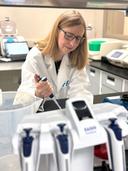
Behind the scenes with IFF’s biofuel team and its work to bring new yeasts, yeast blends, AI and next-gen research to the ethanol industry.

Scientists at Washington State University have found a new way to produce sugar from corn stalks and other crop waste, potentially opening a new pathway to sustainable biofuels. The experimental process used ammonium sulfite-based alkali salts.

Brazilian ethanol producer Raizen on Jan. 17 announced its pilot-scale second generation ethanol plant in Piracicaba, São Paulo, will discontinue recurring operations on April 1 and transition to a testing and R&D facility.
On Jan. 10, the U.S. DOE Advanced Research Projects Agency-Energy (ARPA-E) announced $38 million for nine projects to develop technologies that reduce synthetic nitrogen fertilizer use in corn and sorghum farming.

Ethanol Producer Magazine and BBI International are now accepting speaker presentation proposals for the 2025 International Fuel Ethanol Workshop & Expo (FEW). The event is scheduled for June 9-11, 2025, in Omaha, Nebraska.
DOE Agile BioFoundry and ABPDU partner with industrial microbes to successfully scale up biobased process

By Gayle Bentley, Technology Manager, Conversion Technologies, U.S. Department of Energy
October 30, 2024
U.S. DOE researchers have scaled up a process that converts ethanol into a valuable precursor for consumer products, such as paints, coatings, and diapers. The researchers worked with industry partner Industrial Microbes to develop the process.
The U.S. DOE has awarded Small Business Innovation Research and Small Business Technology Transfer Phase II funding to six bioenergy projects, including those focused on low-carbon liquid biofuels for aviation, marine and rail transportation.
SAF Magazine and the Commercial Aviation Alternative Fuels Initiative announced the preliminary agenda for the North American SAF Conference and Expo, being held Sept. 11-13 at the Saint Paul RiverCentre in St. Paul, Minnesota.

Hydrosome Labs has announced a new technology to improve precision fermentation, a process that involves the customization of yeast and/or bacteria to produce specific molecules for use in a wide variety of applications, including biofuels.

Researchers at the National Renewable Energy Laboratory Computational Science Center are hard at work enabling the conversion of biomass to fuels and products at industrial scale.

Building a 500,000-square-foot plant next to an ADM wet mill in southeastern Minnesota, Solugen is poised to make a big impact on the biomanufacturing sector.

The POET Bioproducts Center at South Dakota State University has opened its doors to support innovation in bioprocessing, expand the bioeconomy, and prepare a new generation of bioproduct manufacturing professionals.
Advertisement

@ Copyright 2026 - BBI International - All rights reserved.