


The call for presentation abstracts for the 18th Annual International Biomass Conference & Expo, produced by Biomass Magazine, is now open. The event will take place March 18-20, 2025, at the Cobb Galleria Centre in Atlanta, Georgia.

SAF offers a significant opportunity for growth in the biofuel sector and a new revenue stream for farmers, but realizing that potential will depend on the establishment of favorable policies and adequate incentives, according to CoBank.
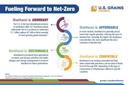
The USGC recently released a set of infographics designed to share the environmental and financial benefits of ethanol, the carbon reduction assessment models for SAF and a map displaying ethanol blending policies around the world.

Valero Energy Corp. released Q3 financial results on Oct. 24, reporting increased production for both its ethanol and renewable diesel segments. Valero’s SAF project is expected to be fully operational before the end of the year.

Rep. Brad Schneider, D-Ill., on Oct. 22 introduced the Expanding Clean Fuel Production Act. The bill aims to extend the 45z clean fuel production credit for 10 additional years, through 2037. The credit is currently in place through 2027.
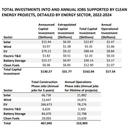
E2 on Oct. 15 released a new analysis on the Inflation Reduction Act’s impact along with a survey of more than 900 businesses that indicates repealing or rolling back the IRA’s provisions would result in losses, layoffs and closures.

The U.S. Treasury Department and IRS on Oct. 18 issued additional guidance for the 40B SAF tax credit. The new guidance, Notice 2024-74, addresses the use of an updated 40BSAF-GREET 2024 model released by the U.S. Department of Energy in October.

Gevo Inc. on Oct. 16 announced it has received a conditional commitment for a loan guarantee with disbursements totaling $1.46 billion from the U.S. Department of Energy Loan Programs Office for its Net-Zero 1 project (NZ1) in South Dakota.

Growth Energy on Oct. 15 sent a letter to the Internal Revenue Service urging the agency to follow the best available science when crafting its long-awaited guidance on the 45Z Clean Fuel Production Credit.

The aviation sector is seeking solutions like SAF to decrease GHG emissions. The USGC is responding by ramping up efforts and engagement within the global aviation community to advocate for U.S. industry access.
DOE: Optimizing a waste-to-fuel future for aviation

By Karthikeyan K. Ramasamy, Laboratory Relationship Manager, Pacific Northwest National
October 03, 2024
With waste-to-fuel SAF becoming an increasingly viable technology, researchers at PNNL are exploring ways to optimize infrastructure and siting decisions for producing, transporting, storing, and using those fuels in the U.S.

Comstock Inc. has announced the execution of an exclusive license agreement and cooperative research and development agreement with NREL involving technologies developed by NREL and MIT for conversion of lignocellulosic biomass into SAF.

U.S. Sens. Jerry Moran, R-Kan.; Tammy Duckworth, D-Ill.; John Boozman, R-Ark.; and Amy Klobuchar, D-Minn.; recently launched the Senate Sustainable Aviation Caucus to promote the longevity of the aviation industry and the renewable fuels industry.

The International Air Transport Association has announced it will create the Sustainable Aviation Fuel (SAF) Matchmaker to link airlines and SAF suppliers. The initiative is expected to launch during the first quarter of 2025.
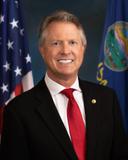
Sen. Roger Marshall, R-Kan., and Rep. Tracey Mann, R-Kan., on Sept. 24 introduced Farmer First Fuel Incentives Act, a bill that aims to extend the 45Z credit through 2034 and restrict the credit to fuels made from domestically produced feedstock.

Less than two weeks after Fulcrum BioEnergy Inc. and affiliated companies filed for Chapter 11 bankruptcy protection, the assets of Fulcrum Sierra Biofuels LLC and Fulcrum Bioenergy Inc. are being offered for sale at auction.
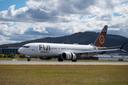
Fiji Airways is collaborating with The Fiji Sugar Corp. Ltd. (FSC) and Lee Enterprises Consulting to evaluate the feasibility of sustainable aviation fuel (SAF) production in Fiji. The collaboration is funded by The Asian Development Bank.
Comstock Inc. on Sept. 18 announced the execution of a binding agreement between Comstock Fuels Corp. and SACL Pte. Ltd. related to three biofuel sites under development in Australia to produce 300 MMgy of SAF and renewable fuels.
Fulcrum BioEnergy Inc. and affiliated companies Fulcrum Seirra Holdings and Fulcrum Sierra Finance Co. on Sept. 9 filed voluntary petitions for Chapter 11 bankruptcy in the U.S. Bankruptcy Court for the District of Delaware.

Summit Next Gen LLC has closed on its site acquisition for the future development of its previously announced SAF production platform. The 60-acre site is located on the Houston Ship Channel in Texas.

Valerie Sarisky-Reed, director of the U.S. Department of Energy’s Bioenergy Technologies Office, discusses ways her agency is doing its part to strengthen America’s bioeconomy and supply chain to support clean energy innovation.

Gevo Inc. on Sept. 12 announced it has entered into a definitive agreement to acquire the ethanol production plant and CCS assets of Red Trail Energy LLC for $210 million. Gevo plans to add net-zero SAF production capacity to the site.

Agricultural Secretary Tom Vilsack announced the release of a SAF Grand Challenge fact sheet on Sept. 11 at the North American SAF Conference & Expo. The DOE also opened a $12 million funding opportunity to support integrated biorefineries.
More than three dozen members of the U.S. House of Representatives are urging the U.S. Treasury Department to ensure only fuels manufactured from domestically sourced feedstocks qualify for the upcoming 45Z Clean Fuel Production Credit.
The Sustainable Aviation Fuel (SAF) Coalition submitted comments in response to requests for stakeholder comments on energy credits and incentives from the Supply Chain Tax Team of the U.S. House of Representatives’ Committee on Ways and Means.

LanzaTech Global Inc. has signed a master license agreement with SEKISUI CHEMICAL CO. LTD. to deploy, at commercial scale, a jointly developed platform that converts syngas derived from MSW and industrial solid waste into ethanol.
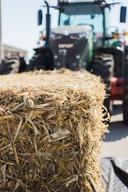
SAFFiRE Renewables LLC broke ground on its pilot plant at Conestoga Energy’s Arkalon Energy facility in Liberal, Kansas, marking a significant step in SAFFiRE’s journey to transform corn stover into an abundant low carbon feedstock for SAF.

Growth Energy Members Conestoga Energy and SAFFiRE Renewables broke ground yesterday on a new facility that will eventually produce cellulosic bioethanol from corn stover—then convert that bioethanol into sustainable aviation fuel (SAF).
SAF Magazine has announced the six companies selected to pitch to a group of investors at Pitch Day at the 2024 North American SAF Conference & Expo, taking place Sept. 11-13 at the Saint Paul RiverCentre in Saint Paul, Minnesota.

The government of Brazil on Aug. 22 announced it will offer R$6 billion ($1.09 billion) to support the development of biorefineries to produce sustainable aviation fuel (SAF) and sustainable marine fuels.
Advertisement

@ Copyright 2026 - BBI International - All rights reserved.