


The Washington Department of Ecology is working to develop a programmatic environmental impact statement for SAF that will provide a foundation for future project-level environmental reviews. A public comment period is open through Nov. 5.

The U.K. Department for Transport on Oct. 16 confirmed it will implement a revenue certainty mechanism for SAF in the form of an aviation fuel supplier levy. The agency is currently seeking public comments regarding implementation details.

The Renewable Fuels Association on Oct. 28 thanked President Trump and administration officials for recent trade announcements important to U.S. farmers and the ethanol producers who partner with them.

More than two dozen federal lawmakers on Oct. 20 sent a letter to U.S. Treasury Secretary Scott Bessent urging his agency to finalize guidance for the 45Z clean fuel production credit, as amended by the One Big Beautiful Bill earlier this year.

U.S. Trade Representative Jamieson Greer announced new trade agreements between the U.S. and four countries in Southeast Asia—Malaysia, Cambodia, Vietnam, and Thailand. Growth Energy has applauded the announcement.

Growth Energy CEO Emily Skor on Oct. 24 applauded the U.S. Trade Representative’s announcement of a Section 301 investigation into China’s implementation of its commitments under the Phase One Agreement.

The Global Ethanol Summit continued Oct. 21 emphasizing the theme “ethanol is compatible” with three panels and three flash talk sessions on biofuel uses including SAF, sustainable maritime fuel and other emerging markets.

The call for presentation abstracts for the 19th annual International Biomass Conference & Expo is now open. The event will take place in Nashville, Tennessee, March 31 – April 2, 2026. Abstracts can be submitted through Nov. 21.

The National Farmer Union is urging the White House and congressional leadership to dedicate resources toward expanding use of ethanol, biodiesel and SAF as part of any effort to provide assistance to struggling U.S. agricultural producers.

Attendees of the Global Ethanol Summit 2025 settled in for the first full day of programming on Oct. 20, which featured three keynote speakers, a panel and two flash talks focused on the day’s theme, “Ethanol is renewable and available.”

Over 450 international buyers and end-users of ethanol and its co-products from more than 40 countries gathered in Washington, D.C. for the U.S. Grain & Bioproduct Council’s Global Ethanol Summit 2025.
CoBank on Oct. 15 released its latest quarterly insights report, predicting the U.S. EPA will likely delay final action on its proposed Renewable Fuel Standard RVOs and small refinery exemption (SRE) reallocation proposals until early 2026.

The United Nations’ International Maritime Organization on Oct. 17 announced it would delay a vote on its proposed Net Zero Framework for one year. In the interim, UN member states will continue to work towards consensus on the framework.
In a keynote address on Oct. 20 at the U.S. Grains & Bioproducts Council’s Global Ethanol Summit in Washington, Renewable Fuels Association President and CEO Geoff Cooper offered a look at ethanol’s future by way of its past.

In her keynote address to the USGBC’s annual Global Ethanol Summit, Growth Energy CEO Emily Skor expressed optimism for the future of bioethanol, while highlighting the positive impact that pro-bioethanol policies have on agriculture.

The Minnesota Bio-Fuels Association (MN Bio-Fuels) is urging retailers to apply for $4 million in available biofuel infrastructure grant funding from the Minnesota Department of Agriculture before the application deadline on Oct 23.

If Congress passed legislation that allowed for year-round, nationwide access E15, corn use in ethanol could increase by 50% at full implementation, supporting a higher market price for corn and energy stability for Americans.

The U.S. EPA on Oct. 16 released data showing more than 1.92 billion RINs were generated under the RFS in September, down approximately 9% when compared to last year. Total RIN generation for the first nine months of 2025 reached 17.13 billion.
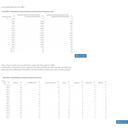
The U.S. EPA on Oct. 16 published updated small refinery exemption (SRE) data, reporting that seven new SRE petitions have been filed under the Renewable Fuel Standard during the past month. A total of 30 SRE petitions are now pending.

The November issue of Ethanol Producer Magazine focuses on on-site CCS projects, RFS policy, and CI reduction.

Gevo Inc. on Oct. 14 announced the U.S. Department of Energy’s Loan Programs Office has granted the company an extension of the conditional commitment for the $1.46 billion loan guarantee for its proposed sustainable aviation fuel (SAF) project.
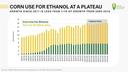
Increasing use of ethanol supports a higher market price for corn and energy stability for Americans. As a financial crisis looms, farmers need market-driven demand at a price that returns value to the farm, according to NCGA.

ACE's annual conference addresses E15 legislation, the 45Z clean fuel production credit and RFS blending obligations.

ePURE has submitted its reply to the EU public consultation on the CO2 emissions standards for cars and vans regulation. The comments describe how biobased fuels, including ethanol, can help decarbonization road transportation.

A team of agricultural economists, environmental scientists and policy experts envisions a path toward a carbon-neutral agricultural future by expanding the reach of policies designed to promote low-carbon biofuels for transportation and aviation.

Representatives of Kilpatrick explore the evolving landscape of SAF financing and contract structures, focusing on the U.S. market, offering insights for industry stakeholders seeking to navigate this complex environment.

Industry insiders pause to reflect on the defining force of the Renewable Fuel Standard while continuing forward momentum.
Iowa officials and lawmakers are calling on U.S. Agriculture Secretary Brooke Rollins to relocate the USDA’s Agricultural Research Service projects to Ames, Iowa, as part of the agency’s ongoing reorganization plan.

With the commencement of CO2 shipments on the Tallgrass Trailblazer pipeline, the Iowa Renewable Fuels Association said Iowa has officially lost its “crown” as the best place in the world to produce corn ethanol.

Ethanol producers and industry experts gathered at the American Coalition for Ethanol’s 2025 conference to learn, celebrate and collaborate. Photos by American Coalition for Ethanol
Advertisement

@ Copyright 2026 - BBI International - All rights reserved.