


UNICA, the Brazilian sugarcane industry association, has released data showing sugarcane processing and ethanol production were down in early December. Ethanol sales were up during the two-week period.

Brazil’s ethanol production—both sugarcane and corn—is expanding significantly, predominantly to fulfill the demands of the country’s increasing blending mandate.
BASF offers ethanol producers an innovative tool for tracking low CI feedstocks, enabling them to access potential tax credits and partner with farmers and their trusted agronomic advisors.
UNICA, the Brazilian sugarcane industry association, has announced sugarcane processing was down during the second have of November. Ethanol production was also down for the two-week period, but sales were up for the full month.

The USDA recently released its Grain Crushings and Co-Products Production report for December, reporting that corn use for fuel ethanol production in October was up 3% when compared to the previous month.

The U.S. DOE has announced $52 million in funding for six university and industry projects to advance the production of low carbon intensity, purpose-grown energy crops critical to accelerating a clean energy bioeconomy.

The USDA increased its forecast for 2024-’25 corn use in ethanol production in its latest World Agricultural Supply and Demand Estimates report, released Dec. 10. The forecast for season-average corn prices was unchanged.

The USDA on Dec. 6 delivered an interim final rule setting technical guidelines for climate-smart agriculture crops used as biofuel feedstocks to the White House OMB. OMB review marks a final step before a rule is promulgated.

New deep-dive videos about the U.S. Department of Energy Bioenergy Technologies Office's 2023 Billion-Ton Report (BT23) are now available to help users access and apply the report findings and associated online data resources.
UNICA, the Brazilian sugarcane industry association, has announced that sugarcane processing was down during the first half of November. Ethanol production was also down for the two-week period, but ethanol sales were up.
Breakthrough research seeks to better pinpoint and predict corn trait performance, while new hybrids enhance inherent sustainability, reduce yield loss and improve accessibility.
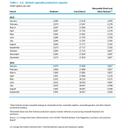
U.S. ethanol and biodiesel capacity held steady in September, while renewable diesel capacity fell slightly, according to data released by the U.S. EIA on Nov. 29. Feedstock consumption was down when compared to the previous month.

The Renewable Fuels Association is urging the California Air Resources Board to do more to ensure the integrity of imported used cooking oil (UCO) and tallow for biomass-based diesel production under the state’s Low Carbon Fuel Standard.

A recent study presents exciting breakthroughs in bioengineering cyanobacteria for ethanol production. Utilizing genetic and metabolic modifications, the researchers achieved significant improvements in ethanol yields.
UNICA, the Brazilian sugarcane industry association, has announced sugarcane processing during the second half of October was down significantly as rain disrupted harvest activities. Ethanol production was down, but sales were up.
The USDA recently released its Grain Crushings and Co-Products Production report for November, reporting that corn use for fuel ethanol production in September was up 3% when compared to the same month of last year.

Rep. Randy Feenstra, R-Iowa, and five of his colleagues on the U.S. House Ways and Means Committee on Nov. 18 announced they are seeking additional information from relevant stakeholders on biofuel tax policy. Reponses must be submitted by Dec. 13.

While the actions U.S. ethanol producers are taking to decarbonize, from backing low-carbon farming to investing in CCUS, are almost entirely driven by domestic policy incentives, their benefits will be global.

Growth Energy recently worked with the Energy Futures Initiative Foundation, led by former U.S. Secretary of Energy Ernest J. Moniz, on new research detailing pathways to further decarbonize bioethanol.
The USDA National Agricultural Statistics Service on Nov. 8 slightly reduced its forecasts for 2024 corn production and yield. Even with those reductions, corn yields are expected to set a record at 183.1 bushels per harvested acre.
The USDA maintained its forecast for 2024-’25 corn use in ethanol production in its latest World Agricultural Supply and Demand Estimates report, released Nov. 8. The agency increased its estimate for 2023-’24 corn use in ethanol.
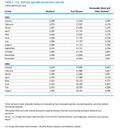
U.S. operable biofuels capacity was at 24.9 billion gallons per year in August, down slightly from the previous month, according to data released by the U.S EIA. Feedstock consumption was up when compared to the previous year.

EcoEngineers hosted two webinars in October on reducing ethanol plant emissions. Ultimately, getting into the high-value, low-CI ethanol market is now as much about climate-smart farming as energy-efficient production.

Missouri Attorney General Andrew Bailey on Nov. 1 sent a letter to the California Air Resources Board demanding the agency rescind proposed changes to its LCFS. CARB is expected to vote to adopt proposed LCFS amendments on Nov. 8.
UNICA, the Brazilian sugarcane industry association, has announced sugarcane processing was up during the first half of October. Ethanol production and sales were also up when compared to the same period of last year.
The USDA recently released its Grain Crushings and Co-Products Production report for October, reporting that corn use for fuel ethanol production in August was up significantly when compared to the same month of last year.

SAF offers a significant opportunity for growth in the biofuel sector and a new revenue stream for farmers, but realizing that potential will depend on the establishment of favorable policies and adequate incentives, according to CoBank.

New Energy Risk, a wholly owned division of Paragon Insurance Group, and Ecostrat on Oct. 22 announced a partnership to develop Feedstock Supply Insurance, an insurance offering that aims to mitigate risk in biomass feedstock supply chains.
UNICA, the Brazilian sugarcane industry association, has announced sugarcane processing was down in late September but still trending higher than last year. Ethanol production and sales are up when compared to last year.

American Farm Bureau President Zippy Duvall on Oct. 15 urged the administration to prioritize American-grown crops in the production of sustainable fuels during a meeting at the White House organized by the AFBF.
Advertisement

@ Copyright 2026 - BBI International - All rights reserved.