

The U.S. EPA has published a new final rule, qualifying additional fuel pathways under the renewable fuel standard (RFS). The rulemaking covers two new feedstocks, camelina and energy cane. It also qualifies new renewable gasoline pathways.

U.S. EPA has issued long-awaited approval for new feedstocks and biofuel processes under the renewable fuel standard (RFS), including those for camelina and energy cane. The rule was first proposed in January 2012.
Three Purdue University scientists will use a $1 million grant to develop genomic tools needed to improve sorghum. The researchers will identify sorghum gene functions, especially those that play a role in crop yield, digestion and others.
Three Purdue University scientists will use a $1 million grant to develop genomic tools needed to improve sorghum. The researchers will identify sorghum gene functions, especially those that play a role in crop yield, protein, and others.

Chromatin Inc.and Aemetis Inc. have announced that they have entered into a multi-year agreement to source locally-grown grain sorghum. Under the agreement, Chromatin will engage local growers to plant its hybrid grain sorghum on up to 30,000 acres.

Researchers with the Geographic Information Science Center of Excellence at South Dakota State University in Brookings used USDA satellite land cover data to put some numbers behind those observations and map the conversion of grass-dominated land.

The U.K. Department for Environment, Food and Rural Affairs recently published experimental statistics on biofuel crops. U.K. farmers planted an estimated 1.939 million hectares of wheat in 2010, with 75 hectares used for ethanol production.

Comparing last year's corn yields to the trend yielded an interesting map of the drought of 2012. "The U.S. dodged a bullet with the 2012 drought," wrote University of Illinois ag economist Gary Schnitkey in the FarmDocDaily.

A termite's own biology with help from microorganisms called protists, are keys to the insect's digestion of woody material, according to a Purdue University scientist.

Sorghum developer Chromatin Inc. has signed a multi-year agreement with Pacific Ethanol Inc. to supply the California ethanol producer with locally-grown grain sorghum, with an eventual goal of 30,000 acres.

MIT chemical engineers and biologists have devised a way to dramatically boost isobutanol production in yeast, which naturally make it in small amounts. They engineered yeast so that isobutanol synthesis takes place entirely within mitochondria.

The Canadian government has announced investments in two projects that will benefit the biofuel and biorefining industries, including one to expand the use of beets as feedstock, and one to install pilot-scale short path distillation equipment.
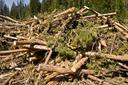
Legislation pending in the Washington State Legislature aims to extend the existing sales and use tax exemption for wood waste and residue used to produce electricity, steam, heat or biofuel through June 30, 2024.
The USDA has released two reports that outline the impact of climate change on agriculture and forestry. The reports provide a framework for understanding how climate change could affect the ability to meet demands for food, feed, fiber and fuel.
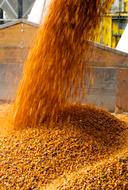
On Feb. 11 the USDA released a report detailing its agricultural projections for the next 10-year period. According to the paper, titled "USDA Agricultural Projections to 2022."

When Li Tan approached his colleagues at the University of Georgia with some unusual data he had collected, they initially seemed convinced that his experiment had become contaminated; what he was seeing simply didn't make any sense.

Driven by aggressive biofuel mandates, rapid growth will cause great strain on biomass by 2030, according to Lux Research. Feedstock innovation will be needed to keep growing biomass's market share.

NEAtech, a new energy alternatives company, is searching for financing to further test and commercialize its patented distillers grain-to-cellulosic ethanol process.The consulting company received the patent in October.
Corn crop residues are often left on harvested fields to protect soil quality, but USDA research indicates that soil quality would not decline if post-harvest corn cob residues were removed from fields.
The Renewable Fuels Association has submitted comments disputing a draft study on biofuels and food security published by the U.N. Committee on World Food and Security (CFS).

Scientists have developed a way to grow iron-oxidizing bacteria using electricity instead of iron, an advance that will allow them to better study the organisms and could one day be used to turn electricity into fuel.
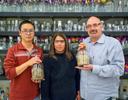
Research has shown that an ionic liquid proven to be effective for pre-treating individual biofuel feedstocks is also effective at pre-treating multiple different feedstocks that have been mixed and densified into a blend.

The Bundesverband der deutschen Bioethanolwirtschaft (BDBe), a German ethanol trade organization, has released production statistics for 2012. According to the organization, German ethanol production increased by 7.4 percent last year.

A research team in England has discovered that differences in the ease with which sugars can be extracted from willow can be explained by differences in their wood composition in response to conditions that induce growth stress.
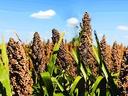
Chromatin Inc. will host a meeting on Feb. 5 at the Doubletree by Hilton in Modesto, Calif., to introduce production opportunities for grain sorghum in California. The grower meeting will provide details on the Chromatin 2013 Grain Sorghum Program.

Pacific Ethanol Inc. has contracted to install Edeniq Inc.'s Cellunator technology at its 60 MMgy Stockton, Calif., ethanol plant. The company also announced it has increased its ownership in the four plants it operates.

The Renewable Fuels Association is urging the California Air Resources Board to revise indirect land use change (ILUC) penalties assigned to certain biofuels under the state's low carbon fuel standard (LCFS).
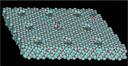
In a case of the Goldilocks story retold at the molecular level, scientists at the U.S. DOE's Argonne National Laboratory and Northwestern University have discovered a new path to the development of more stable and efficient catalysts.

A two-year research project aims to crack the lignin question by engineering a microbe to break down the byproduct into a lipid, or fat, and then into biodiesel. The research has the potential to make cellulosic ethanol refineries more profitable.
Advertisement

@ Copyright 2026 - BBI International - All rights reserved.