


Growth Energy has filed comments with the California Air Resources Board outlining its opposition to CARB's proposed amendments to the Low Carbon Fuel Standard and a proposed regulation on the commercialization of alternative diesel fuels.
UAI, EFC urge recognition of ethanol as a way to reduce carbon

By The Energy Future Coalition, Urban Air Initiative
February 18, 2015
The California Air Resources Board was urged to enhance its efforts to require low carbon fuels by supporting the increased use of clean burning ethanol as a means of displacing aromatics in gasoline to reduce carbon and protect public health.
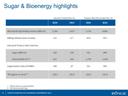
Bunge has released fourth quarter and 2014 financial results, reporting improved quarterly performance for its sugarcane milling and biofuels segment. The segment reported an adjusted EBIT $9 million loss, an improvement over the same period of 2013.

Only a handful of ethanol plants were approved under the original petition process used by EPA to determined if those grandfathered plants were achieving GHG reductions better than 20 percent compared to baseline gasoline.

An Ethanol Producer Magazine survey provides a snapshot of the new crop.Â

USGC survey shows overall quality of corn crop is high, with good kernel filling and maturation.

The USDA has released new 10-year projections for the food and agricultural sector, reporting that approximately 35 percent of total corn use is projected to go to ethanol production through 2024.

Even while taking advantage of recent export opportunity to China, the U.S. sorghum industry continues developing long-term markets, like supplying California's ethanol plants with bigger volumes of feedstock.

Researchers at the University of Georgia have developed a "super strain" of yeast that can efficiently ferment ethanol from pretreated pine, one of the most common species of trees in Georgia and the U.S.

A new sorghum plant developed by scientists at the USDA Agricultural Research Service Cropping Systems Research Laboratory can produce 30 to 40 percent more seeds than conventional varieties currently grown by farmers.

USDA put a number to a projected increase in ethanol use in its Feb. 10, supply/demand report. Based on the higher forecasts for 2015 gasoline consumption, the USDA raised expected corn use for ethanol production by 75 million bushels.

The Roundtable on Sustainable Biomaterials has opened a 60-day comment period on a revision of the RSB Principles & Criteria. Comments gathered will inform discussions among RSB members over the forthcoming Version 3.0 of the P&Cs.

Syngenta has released 2014 financial results, reporting integrated sales were up 6 percent last year at constant exchange rates, while fourth quarter sales were up 12 percent. EBITDA was $2.9 billion, up 1 percent from 2013.

Archer Daniels Midland Co. reported adjusted earnings per share for the calendar year 2014 of $3.20, up 37 percent compared to the prior year. That was in spite of total revenues being down from the previous year at $81.2 billion.

Louisiana State University AgCenter researchers continue to evaluate energycane varieties planted in north Louisiana as a possible new crop for producers to grow as a biofuel feedstock. Energycane is a cross between sugarcane and its wild relatives.

Representatives of the ethanol industry have spoken out to criticize a World Resources Institute paper written by Tim Searchinger and Ralph Heimlich that rehashes previously debunked theories related to food versus fuel and indirect land use change.

The U.S. Department of Energy's Advanced Research Projects Agency - Energy is accepting public comments on an environmental impact statement related to proposed confined field trials of engineered high-energy crops for use in bioenergy applications.

In late 2014, the U.S. EPA invited the public to nominate scientific experts to be considered for appointment to its Science Advisory Board's Agricultural Science Committee. The deadline for submitting those nominations has been extended to March 30.

Since launching the renewable fuels report in the Agriculture Marketing Resource Center in 2008, retired Iowa State University ag economist Don Hofstrand has followed the swings in ethanol profitability through a model Iowa-based ethanol plant.

A report recently filed with the USDA Foreign Agricultural Service's Global Information Network estimates China's fuel ethanol production reached 2.8 billion liters (739.68 million gallons) last year, up 6 percent from 2013.

The U.S. Department of Energy's Advanced Research Projects Agency - Energy has announced plans to award up to $125 million in support of transformational energy projects. The solicitation is the third open funding opportunity announced by ARPA-E.

A new version of an online tool created by the U.S. Department of Energy's Argonne National Laboratory will help biofuels developers gain a detailed understanding of water consumption of various types of feedstocks.

Iowa Gov. Terry Branstad has announced a new campaign to promote the renewable fuel standard (RFS) during the 2016 Iowa presidential caucuses. The multimillion dollar effort will aim to educate both candidates and caucus-goers on the RFS.

The February issue of Ethanol Producer Magazine has an exports theme and includes stories about trade missions overseas to build global markets for U.S. ethanol as well as the biggest export markets for U.S. DDGS and ethanol, writes Tom Bryan.

Algenol and Reliance Industries Ltd. have successfully deployed India's first Algenol algae production platform. The demonstration module is located near the Reliance Jamnagar Refinery. Construction on the project was complete in November.

Agriculture has been one of the greatest success stories, writes Mike Bryan of BBI International. And, through the ethanol industry, the ag industry has has played a role in reducing our dependence on foreign oil and improving our environment.

The USDA released the final January supply/demand estimates for the 2014/15 corn crop and a surprising fact was that the national corn yield was lowered from 173.4 to 171. This was the largest yield drop from November to final since 1993.

The Global Renewable Fuels Alliance has applauded United Nations Food and Agriculture Organization Director-General Jose Graziano da Silva for his support of biofuels as a key part of the global agriculture complex.

BBI International has announced the agenda for the technical sessions of the 8th annual International Biomass Conference & Expo, North America's largest and fastest growing biomass conference, taking place April 20-22 in Minneapolis.

Ceres Inc. has released financial results for the first quarter of fiscal year 2015, reporting progress with its breeding and genetic technologies. During an investor call, the company detailed planting of its sorghum hybrids in Brazil.
Advertisement

@ Copyright 2026 - BBI International - All rights reserved.