


The USDA recently released its Grain Crushings and Co-Products Production report for August, reporting that corn use for fuel ethanol production in June was up slightly when compared to the same month of last year.

UNICA, the Brazilian sugarcane industry association, has announced sugarcane processing in the south-central region of the country was down slightly in late July. Ethanol production and sales were both up during the two-week period.

Brazil-based renewable energy company Be8 on Aug. 14 announced it has broken ground on a wheat-to-ethanol plant in Brazil. The 220-million-liter-per-year (58.12 MMgy) facility is currently scheduled to begin operations in 2026.

On Aug. 6, the Michigan Milk Producers Association and Canadian Dairy Distillery broke ground on a 2.2-million-gallon-per-year ethanol plant that is designed to turn a dairy byproduct into low carbon fuel.

The California Air Resources Board on Aug. 12 published a notice outlining modifications to its proposed LCFS amendments, including those related annual carbon intensity (CI) targets, biomass-based diesel feedstocks, and SAF.

The 2024 North American SAF Conference & Expo will consist of panels that describe the newest developments in the SAF Industry. Topics such as biofuel crops, federal policies, the increase of SAF usage worldwide, and more will be presented.

Experts in the fields of biomass and agricultural economics are setting the record straight on the environmental benefits of biofuels and the Renewable Fuel Standard.

The USDA maintained its forecast for 2024-’25 corn use in ethanol production in WASDE report, released Aug. 12. The agency increased its forecast for corn production and revised down its outlook for corn prices.

U.S. corn production for 2024 is currently forecast at 15.1 billion bushels, down 1% from last year, according to the Crop Production report issued by the USDA’s National Agricultural Statistics Service on Aug. 12.

Michigan Milk Producers Association and Canadian Dairy Distillery on Aug. 6 celebrated the groundbreaking of their innovative $41 million ethanol plant in Constantine, Michigan. The 2.2 MMgy facility will take in milk permeate as feedstock.

Biofuel generated from logging residues could make switching to sustainable aviation fuel (SAF) more cost-efficient and carbon friendly than previously thought, according to new research from the University of Georgia.

Farmers who want to gain a better understanding of their carbon intensity score can take advantage of a simple calculator developed by an economist with Iowa State University Extension and Outreach.
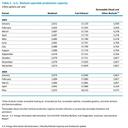
Operable U.S. biofuel capacity expanded in May, with gains for ethanol, biodiesel and renewable diesel, according to data released by the U.S. Energy Information Administration on July 31. Feedstock consumption was down.
UNICA, the Brazilian sugarcane industry association, has reported that sugarcane processing during the first half of July was negatively impacted by rain. Ethanol production was down during the two-week period, but sales were up.

Recently, nearly 100 industry stakeholders gathered for the U.S. Grains Council’s (USGC’s) 2024 Corn and Ethanol Conference in Tokyo, Japan. The event enhanced relationships between U.S. producers and agribusinesses and Japanese importers.

The RFA on July 25 submitted comments urging the USDA to implement the use of a “book-and-claim” accounting framework for tracking and transferring the GHG benefits of climate-smart agriculture (CSA) practices through the biofuels supply chain.

Researchers analyzed the financial and environmental costs and benefits of four biofuels crops used to produce SAF in the U.S. They found that each feedstock performed best in a specific region of the rainfed United States.

The American Coalition for Ethanol has filed comments with the USDA on climate-smart agriculture related to biofuel feedstock production, encouraging the USDA and other federal agencies to rely on the U.S. Department of Energy’s GREET model.

Growth Energy has filed comments on climate smart agriculture (CSA) with the USDA emphasizing the importance of giving farmers flexibility that allows them to get credit for all of the CSA practices they deploy.

The Sustainable Aviation Fuel (SAF) Coalition responds to USDA request for information on biofuel feedstocks, encouraging the agency to ensure federal policies are science-based and technology and feedstock neutral.
The USDA recently released its Grain Crushings and Co-Products Production report for July, reporting that corn use for fuel ethanol production in May was up when compared to both the previous month and May 2023.
UNICA, the Brazilian sugarcane industry association, has announced that sugarcane processing and ethanol production were both up during the second half of June. Ethanol sales were also up for the full month.

Corn growers were responsible for a $151 billion boost to the U.S. economy in 2023, according to a new report released in July by the NCGA. The report looked at a number of ways in which corn growers shaped the economy.

The DOE has announced its intent to fund partnerships between industry stakeholders and Feedstock-Conversion Interface Consortium researchers. The partnerships will address the cost and risk impacts of feedstock and process variability.

U.S. farm groups are urging the Biden administration to maximize the benefits of the 45Z clean fuels production tax credit by ensuring only fuels made using domestically produced feedstocks are eligible and improving climate-smart ag provisions.

Ethanol holds promise as an SAF feedstock, due in no small part to its availability of supply relative to lipid feedstocks, which are feeling global pressure.

Advised by several former CEOs from big-name companies, Avina Clean Hydrogen is on an ambitious lateral pursuit in Illinois: sustainable aviation fuel production via ETJ.

A new U.S. DOE report helps answer a basic—but big—question about the future of the U.S. SAF industry: Is there enough biomass feedstock to meet the nation’s goals?
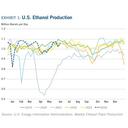
CoBank maintained its positive outlook for U.S. ethanol production in its latest Quarterly Research Report, released July 11, with higher margins and a strong export market continuing to benefit ethanol producers.

CF Industries Holdings Inc. and POET LLC on July 15 announced a collaboration to pilot the use of low-carbon ammonia fertilizer to reduce the carbon intensity of corn production and ethanol. The project is expected to kick off this fall.
Advertisement

@ Copyright 2026 - BBI International - All rights reserved.