


The U.S. exported 187.6 million gallons of ethanol and 946,804 metric tons of distillers grains in November, according to data released by the USDA on Jan. 7. Exports of both products were up when compared to November 2023.
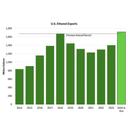
According to data released Jan. 7 by the Census Bureau, U.S. ethanol exports for 2024 totaled 1.72 billion gallons just through November, already surpassing the previous annual record of 1.67 billion gallons set in 2018.

In December, the U.S. Grains Council welcomed reporters from Japan’s key nationwide news groups to visit with and interview ethanol stakeholders to gain perspective on the future of Japan’s ethanol market.

In November, the USGC’s Latin America office hosted a team of aquaculture nutritionists from Ecuador and Panama in the U.S. as a means of promoting sustainable practices for DDGS and corn fermented proteins within the aquaculture space.

CropEnergies AG, Mannheim, is putting on hold the planned investment in a plant for the production of EnPro high protein animal feed at the production site of its subsidiary Ensus UK Ltd. in Wilton, U.K.

The USDA recently released its Grain Crushings and Co-Products Production report for December, reporting that corn use for fuel ethanol production in October was up 3% when compared to the previous month.

The USGC recently sponsored AFRAQ 2024, a World Aquaculture Organization’s annual exhibition in the continent and held a training workshop during the event in Hammamet, Tunisia, that attracted participants from 11 countries.

The USGC’s Europe, Middle East and Africa (EMEA) office recently conducted a series of site visits and meetings with key customers in the animal feed production and industrial starch sectors in the Kingdom of Saudi Arabia.
The U.S. exported 143.47 million gallons of ethanol and 1.11 million metric tons of distillers grains in October, according to data released by the USDA on Dec. 5. Exports of both products were up when compared to the same month of 2023.

Germany-based Verbio overcomes challenges in applying its novel ethanol and RNG coproduction process in the U.S.

Dakota Spirit has announced the successful installation and operation of Alfa Laval's Prodec Oil Plus centrifuge technology, designed to optimize oil recovery at the plant. The system is achieving a 25% increase in oil recovery yield.

Approximately 968,030 metric tons (MT) of U.S. corn, sorghum and their co-products worth $242 million were sold as a direct result of Export Exchange’s networking opportunities. DDGS was the most popular commodity, with 472,230 MT purchased.
The USDA recently released its Grain Crushings and Co-Products Production report for November, reporting that corn use for fuel ethanol production in September was up 3% when compared to the same month of last year.

Summit Carbon Solutions on Nov. 15 announced that the North Dakota PUC has granted it a Route Permit, a significant milestone in advancing Summit’s CO2 pipeline project. More than 82% of the easements for the North Dakota route have been secured.

The U.S. Grains Council in November co-organized a training course for aquaculture producers at Aydin Adnan Menderes University (ADU) in Turkey as a result of a memorandum of understanding (MOU) signed between the Council and the university.

ICM has signed an EPC agreement to provide Absolute Energy LLC, with its patented FOT Oil Recovery technology, which enhances oil production while reducing natural gas consumption and improving the facility’s overall energy efficiency.

Green Plains Inc. released Q3 financial results on Oct. 31, reporting improved ethanol margins. Company officials discussed the successful startup of Green Plains’ Clean Sugar Technology facility and the planned retirement of CFO Jim Stark.

The USGC’s regional office in Tunis, Tunisia used a USDA Section 108 grant to organize a training program for Moroccan aquaculture farmers and potential industry investors to learn how to optimize their operations through high-yield tilapia farms.
The USDA recently released its Grain Crushings and Co-Products Production report for October, reporting that corn use for fuel ethanol production in August was up significantly when compared to the same month of last year.

The USGC recently released a set of infographics designed to share the environmental and financial benefits of ethanol, the carbon reduction assessment models for SAF and a map displaying ethanol blending policies around the world.
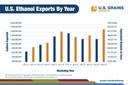
Export data for marketing year (2023/2024 has been released by the USDA and sales of U.S. grains in all forms (GIAF) increased to more than $48 billion, bolstered by a record 1.75 billion gallons of ethanol sold internationally.

IFF, an industry leader in food, beverage, health, biosciences, and scent, on Oct. 21 announced the launch of its OPTIMASH F200 and OPTIMASH AX enzyme solutions in combination to maximize corn oil recovery at fuel ethanol plants.
Alto Ingredients Inc. has announced its Magic Valley facility in Idaho is operating at full capacity. The facility has installed Harvesting Technology’s patented system to capture its high protein and corn oil products.

ICM Inc. has announced the successful startup and commissioning of its FOT Oil Recovery system at Elite Octane LLC’s ethanol facility in Atlantic, Iowa. The newly installed system is exceeding anticipated oil recovery and performance targets.

LanzaTech Global Inc. has announced its plans to expand its biorefining platform capabilities to include operations that produce LanzaTech Nutritional Protein (LNP) as the primary product via its proprietary gas fermentation process.

EPM has collected information on 120 U.S. ethanol plants that are capturing their fermentation carbon dioxide—or intend to—for one of three principal purposes: conventional utilization, sequestration or next-gen transformation.
The U.S. exported 141.19 million gallons of ethanol and 1.12 million metric tons of distillers grains during August, according to data released by the USDA on Oct. 8. Exports of both products were up when compared to the previous year.

POET is deploying ImagoAI’s Galaxy mycotoxins testing technology across approximately 30% of its fleet. This new addition to POET’s testing regime will significantly reduce plastic and packaging waste and enhance the sustainability of its operations.
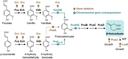
National Renewable Energy Laboratory scientists engineered a process for making β-ketoadipic acid from lignin for $2 per kilogram, approaching cost-competitiveness with petroleum-based chemicals used for making nylon today.
The USDA recently released its Grain Crushings and Co-Products Production report for September, reporting that corn use for fuel ethanol production in July was up when compared to both the previous month and July of last year.
Advertisement

@ Copyright 2026 - BBI International - All rights reserved.