


Students from Ridgewater College’s Animal Nutrition class toured the Chippewa Valley Ethanol Co. (CVEC) plant in Benson, Minnesota, on Mar 27. During the tour, the students learned about the various stages of ethanol production.
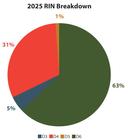
In 2025, 23.25 billion RINs were distributed under the RFS. One standout data point included a significant increase in D3 RINs coming from cellulosic ethanol—93% over the 2024 total.

USGBC leadership traveled to El Salvador and Guatemala to join a USDA Trade Reciprocity for U.S. Manufacturers and Producers Mission to bolster trade relationships for exports of U.S. corn and its co-products including ethanol and DDGS.

The U.S. EPA on March 27 announced the RFS cellulosic waiver credit (CWC) price for 2025 has been set at $1.91, up from $1.61 for 2024. The CWCs are being made available due to the agency’s decision to reduce the 2025 cellulosic RVO.

The Civil Aviation Authority of Singapore on March 25 announced it will delay implementation of the sustainable aviation fuel (SAF) levy due to “the impact of the ongoing conflict in the Middle East on airlines and passengers.”

The U.K. Department of Energy Security and Net Zero on March 23 opened a public comment period seeking stakeholder input on options for the treatment of sustainable aviation fuel (SAF) under the U.K. Emissions Trading Scheme.

Gevo Inc. on March 30 announced that it is developing plans for a potential expansion at the site of its facility in Richardton, North Dakota, by adding a second ethanol production facility with targeted production capacity of up to 75 MMgy.

Growth Energy welcomed a contingent of farmers and biofuel producers to Washington, D.C. to attend the White House’s National Ag Week celebration on March 27.
How Corn Kernel Fiber Ethanol Reshaped the Industry
At the recent CMA Shipping conference in Stamford, the U.S. Grains & BioProducts Council engaged with stakeholders across the alcohol fuels ecosystem, including the Methanol Institute, to explore opportunities for collaboration.
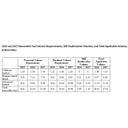
The U.S. EPA on March 27 finalized the 2026 and 2027 RFS RVOs at levels higher than originally proposed. The increase is attributed to the decision delay implementation of provisions penalizing imported fuels and feedstocks until 2028 or later.

As demand for renewable products and energy security rises globally, ethanol is finding a home in on-road transportation, sustainable aviation fuel, clean chemicals, household energy and maritime fuels

USGBC Senior Manager of Global Ethanol Export Development Ankit Chandra spoke at the Sustainable Aviation Futures Latin America in São Paulo, Brazil, highlighting ethanol’s expanding role in global SAF value chains.
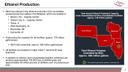
Rex American Resources Corp. on March 26 confirmed the expansion project at its One Earth Energy facility in Illinois is nearing completion. The company also reported record-high ethanol sales volumes for fiscal year 2025.

Corn use for fuel ethanol production in January 2026 was down when compared to both the previous month and January 2025, according to the USDA’s latest Grain Crushings and Co-Products Production report.
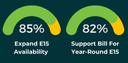
Amid higher prices at the pump and volatile world energy markets, an overwhelming majority of registered voters support expansion of the lower-cost E15 fuel blend and legislation to make the fuel permanently available year-round and nationwide.

The newly announced trade agreement between the EU and Australia is the latest blow to Europe’s renewable ethanol industry and agriculture sector at large, who are already reeling from the EU-Mercosur deal.

Evos Rotterdam has commenced the realization of a major expansion project for low-carbon methanol and ethanol storage, following a signing ceremony held at the Port of Rotterdam. The project is expected to become operational early 2028.
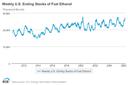
U.S. fuel ethanol production expanded by more than 2% the week ending March 20, according to data released by the U.S. Energy Information Administration on March 25. Stocks of fuel ethanol were up 3% and exports were down 32%.

The RFA, Growth Energy, Clean Fuels Alliance America and the SAF Coalition on March 25 joined more 20 state and national ag groups in urging the Trump Administration to make the upcoming 45Z regulations workable for farmers.

The U.S. EPA on March 25 issued a temporary fuel waiver to allow nationwide sales of E15 to continue through the summer driving season. The agency issued similar waivers in 2022, 2023, 2024 and 2025.

On March 24, U.S. Senator Joni Ernst, R-Iowa, was recognized with Growth Energy’s America’s Fuel Award for her work promoting renewable fuels to increase U.S. energy independence and lower prices at the pump.
Gevo Inc. on March 24 highlighted the strategic value of its intellectual property portfolio. and reference potential growth opportunities created by its proprietary technology platform for SAF, other renewable hydrocarbons and chemicals.
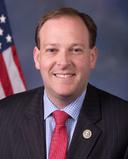
U.S. EPA Administrator Lee Zeldin on March 24 confirmed the agency will release a final rule setting 2026 and 2027 Renewable Fuel Standard renewable volume obligations (RVOs) before the end of March.

The U.S. government is advocating against the adoption of the UN International Maritime Organization’s proposed Net Zero Framework, stating it “would have dire economic consequences for the shipping industry, energy producers, and global consumers.”

The USGBC held a Trade Policy Academy event in Austin, Minnesota, for farmers and other agricultural sector stakeholders to learn about the latest developments in international trade and how it affects the markets for their products.

Iowa Secretary of Agriculture Mike Naig announced on March 20 that the Iowa Renewable Fuels Infrastructure Program board has approved 33 ethanol infrastructure grants, supporting projects at fuel retailers in 25 counties across Iowa.

The U.S. EPA on March 19 proposed to approve the state of Colorado’s request for primacy over Class VI wells. If approved, the primacy application could help expedite the development of ethanol CCS projects within the state.

U.S. Trade Representative Jamieson Greer and Ecuadorian Minister of Production, Foreign Trade and Investment Luis Alberto Jaramillo on March 13 signed the U.S.-Ecuador Agreement on Reciprocal Trade, which includes a tariff rate quota for ethanol.

The USGBC’s 2025 Annual Report is now available. The document features events and programs USGBC staff in its 10 offices around the world organized to deliver wins for U.S. producers of barley, corn, sorghum and their co-products.
Advertisement

@ Copyright 2026 - BBI International - All rights reserved.