

UNICA: Monthly ethanol sales reach 4-year high in January

By Erin Voegele
February 21, 2024
UNICA, the Brazilian sugarcane industry association, has announced that sugarcane processing and ethanol production were both up during the second half of January. Ethanol sales for the full month were also up.

At the National Ethanol Conference in San Diego, the Renewable Fuels Association presented its 2024 Award of Excellence to Dr. Michael Wang, an Argonne National Laboratory distinguished fellow and senior scientist.

European renewable ethanol producers have launched a new legal challenge, now directed to the EU’s RefuelEU Aviation Regulation, charging that it improperly excludes crop-based biofuels from the effort to reduce GHG emissions from air transport.

South Dakota Gov. Kristi Noem on Feb. 15 signed legislation that allows fuel retailers within the state to claim a fuel tax refund of up to 5 cents per gallon of E15 sold. The tax refund can be claimed for calendar years 2025 through 2029.

At the National Ethanol Conference in San Diego, Renewable Fuels Association President and CEO Geoff Cooper told nearly 1,000 attendees that 2024 will be “one of the most pivotal and consequential years the ethanol industry has ever experienced.”

At the National Ethanol Conference in San Diego, the RFA presented its 2024 Industry Award to U.S. Agriculture Secretary Tom Vilsack, in recognition of his many years championing renewable fuels both in Washington and at home in Iowa.

Growth Energy on Feb. 20 submitted comments to CARB regarding the board’s proposed changes to California’s LCFS, noting that the proposed changes ignore plant-based fuel options that could immediately help the state reach its climate goals.

In comments submitted to CARB on proposed amendments to that state’s LCFS, the RFA expressed concerns about a previously undiscussed sustainability certification program and the state’s continued delay in allowing sales of E15.

ACE has submitted comments to CARB regarding its 2024 proposed amendments to the LCFS. The comments focused on proposed “sustainability criteria” for crop-based biofuels, the need to approve E15 in California and the importance of E85 and FFVs.

During its first quarter meeting, the American Coalition for Ethanol board of directors elected its executive committee for 2024.

The Renewable Fuels Association on Feb. 14 welcomed Lucas E3, Aon Risk Services, Ocean Park, Cereal Process Technologies, and StormFisher Hydrogen as its newest associate members.

The RFA is hosting four “train the trainer” webinars in 2024 for emergency response professionals who are interested in learning how to train their colleagues and others on proper responses to emergencies involving ethanol.

More than 1.89 billion renewable identification numbers (RINs) were generated under the Renewable Fuel Standard in January, up from 1.76 billion generated during the same month of 2023, according to a data released by the U.S. EPA on Feb. 15.
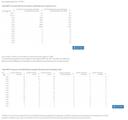
The U.S. EPA has published updated SRE data, reporting that 35 SRE petitions are now pending, up from 15 that were pending as of mid-January. No new SRE petitions were filed, but 20 previously denied petitions are being reconsidered by the agency.

Cardinal Colwich LLC, a wholly owned subsidiary of Cardinal Ethanol LLC, has completed the acquisition of Element LLC, a 70 MMgy corn ethanol plant located in Colwich, Kansas, that was previously owned by a JV of ICM Inc. and The Andersons Inc.

The Renewable Fuels Association released its 2024 Ethanol Industry Outlook and Pocket Guide today as a kickoff to the 29th annual National Ethanol Conference, taking place this week in San Diego.
ACE announces project to unlock ethanol’s access to new markets and tax credits

By American Coalition for Ethanol
February 19, 2024
The USDA recently approved a $25 million investment in the ACE-led Regional Conservation Partnership Program expansion that builds on a successful South Dakota-based project to unlock corn ethanol access to clean fuel markets and new tax incentives.
As inflationary pressures eased and demand boomed for low-carbon ethanol and its co-products, the ethanol industry’s contribution to the U.S. economy remained strong in 2023, according to an annual economic impact analysis conducted by ABF Economics.

Growth Energy commended a large bipartisan, bicameral group of lawmakers on Feb. 15 for urging the Biden administration to finalize its revisions to the U.S. DOE’s Greenhouse Gases, Regulated Emissions and Energy Use in Technologies (GREET) model.

As part of the RFA’s Veterans for Renewable Fuels initiative, the association and Pearson Fuels will be offering free fill-ups of E85 fuel to military veterans, active-duty servicemembers and spouses with an ID on Feb. 19.

Growth Energy continued to urge the Internal Revenue Service to follow the science, and the law, when developing GHG lifecycle analysis models used to assess eligibility for tax incentives under the biofuels provisions of the IRA.
The RFA on Feb. 15 thanked a bipartisan group of 43 lawmakers who sent a letter to the Sustainable Aviation Fuels Lifecycle Analysis Interagency Working Group, asking them to meet their March 1 deadline for updates to the GREET model.

Georgia Tech researchers have engineered one of the world’s first yeast cells able to harness energy from light, expanding our understanding of the evolution of this trait — and paving the way for advancements in biofuel production and cellular aging.
Companies Set to Pitch to Panel of Investors at International Biomass Conference & Expo

By Biomass Magazine
February 16, 2024
Biomass Magazine announced this week the six companies selected to pitch to a group of angel investors and venture capital firms at the 17th Annual International Biomass Conference & Expo, taking place March 4-6, 2024, in Richmond, Virginia.

A team of USDA ARS, university and industry scientists has spotted a new genetic vulnerability to tolpyralate herbicide in 49 varieties of corn, marking the first report of the weed control posing a danger to the staple crop.

The U.S. Department of Energy Bioenergy Technologies Office announced $29 million in funding to drive research, development, and demonstration of low-carbon-intensity, purpose-grown energy crops critical to accelerating a clean energy economy.
Doing What’s Possible While Waiting for What’s Next

February 15, 2024
The latest issue of Ethanol Producer Magazine addresses sustainable aviation fuel (SAF), carbon intensity (CI) reducitons, and carbon capture and utilization (CCU).

New Mexico will be the fourth state in the U.S. to pass a clean fuel standard.

Research from Lawrence Berkeley National Laboratory, Lawrence Livermore National Laboratory, and UC Davis sheds new light on how to access the sugars locked up in plants to produce petroleum-free fuels, chemicals, and medicines.

Life cycle carbon assessments (LCA) are used in clean fuels policy. They are also key tool that can help investors and companies decide where to invest their money, but LCA integrity must be a priority.
Advertisement

@ Copyright 2026 - BBI International - All rights reserved.