


Elected officials are adopting decarbonization policies. To future-proof our industry, steps must be taken to reduce greenhouse gas (GHG) emissions.

More than three dozen members of the U.S. House of Representatives are urging the U.S. Treasury Department to ensure only fuels manufactured from domestically sourced feedstocks qualify for the upcoming 45Z Clean Fuel Production Credit.

Growth Energy has filed two petitions for rehearing with the U.S. Court of Appeals for the D.C. Circuit regarding the Court’s decision – unsealed in August – on small refinery exemptions (SREs) under the Renewable Fuel Standard.
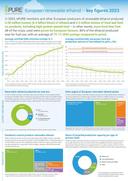
European Union ethanol biorefineries produced more food and animal feed than fuel in 2023, according to audited data released on Sept. 5 by ePURE, the European renewable ethanol association.

Will the European Union continue to bet on only one method of reducing emissions from road transport, or will it adopt a more common-sense, hybrid approach?

Fluid Quip Technologies has announced strong results from their cutting-edge Low Energy Distillation (LED) and Grain Neutral Spirits (GNS) technologies after 12 months in operation at the Three Rivers Energy facility in Coshocton, Ohio.

In August, the U.S. Grains Council and the American Institute in Taiwan jointly organized a conference on the use applications and sustainability benefits of ethanol in the transportation sector.
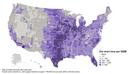
The Bioenergy Knowledge Discovery Framework is the nation’s premier source of information on biomass potential, providing high-quality data that can guide investments in support of a robust bioeconomy for sustainable, low-carbon energy sources.
Pushing Data Boundaries

September 06, 2024
CTE Global is helping ethanol producers more effectively harness plant data to maximize process efficiency and solve problems.
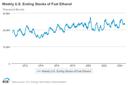
U.S. fuel ethanol production was down nearly 1% the week ending Aug. 30, according to data released by the U.S. Energy Information Administration on Sept. 5. Stocks of fuel ethanol were also down 1% while exports fell by 37%.

UNICA, the Brazilian sugarcane industry association, has released data showing sugarcane processing was down during the first half of August. The production of corn ethanol continued to grow, and overall ethanol sales were up for the two-week period.
Blue Biofuels Inc. has been awarded a $1.15 million Phase 2 Small Business Innovation Research grant from the U.S. Department of Energy. The funding will support the final stages of scaling the company’s patented cellulose-to-sugar (CTS) process.

The Sustainable Aviation Fuel (SAF) Coalition submitted comments in response to requests for stakeholder comments on energy credits and incentives from the Supply Chain Tax Team of the U.S. House of Representatives’ Committee on Ways and Means.

The U.S. DOE has awarded Small Business Innovation Research and Small Business Technology Transfer Phase II funding to six bioenergy projects, including those focused on low-carbon liquid biofuels for aviation, marine and rail transportation.

No longer just an intriguing concept, ethanol is now being used in place of diesel, and along with it, to power everything from over-the-road tractor trailers to mining trucks with 290-ton payloads.

The U.S. exported 135.99 million gallons of ethanol and 1.09 million metric tons of distillers grains in July, according to data released by the USDA FAS on Sept. 4. Exports of both products were up when compared to July 2023.
Blue Biofuels Inc. has announced another significant advancement of its proprietary cellulose-to-sugar (CTS) technology. The company has successfully produced cellulosic ethanol in high yields from multiple biomass feedstocks.

The U.S. Department of Energy Bioenergy Technologies Office (BETO) is overseeing a call for industry partnerships to connect industry stakeholders with the capabilities of the Feedstock-Conversion Interface Consortium.

Technology development, government investment and partnerships are coalescing for substantive on-farm emissions reduction via low-CI fertilizers.
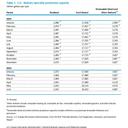
Operable U.S. biofuels production capacity increased in June, with gains for both ethanol and renewable diesel, according to data released by the U.S. Energy Information Administration on Aug. 30. Feedstock consumption was up for the month.

LanzaTech Global Inc. has signed a master license agreement with SEKISUI CHEMICAL CO. LTD. to deploy, at commercial scale, a jointly developed platform that converts syngas derived from MSW and industrial solid waste into ethanol.

Raízen and Vertoro have signed a joint development agreement (JDA) to enhance the value of lignin produced as a coproduct of cellulosic ethanol production by transforming it into advanced, sustainable biofuels, chemicals, and materials.

Filtering through vast amounts of information and scenarios continuously, AI-powered dashboards help ethanol plants detect, diagnose and more quickly resolve issues.

Researchers break down the potential of in-situ cellulosic ethanol production and their analytical solution to determining the amount of cellulosic ethanol produced in-situ.

New research from the University of Illinois Urbana-Champaign demonstrates that near-infrared (NIR) spectroscopy and machine learning can provide quick, accurate, and cost-effective product analysis of corn kernels and sorghum biomass.
USGC connects Philippines government officials to US ethanol industry following voluntary E20 decree

In June, the Philippines began allowing fuel retailers to blend gasoline with up to 20% ethanol. The USGC is working to strengthen ties between the U.S. ethanol industry and the Philippines in anticipation of increased demand.
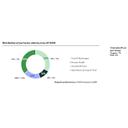
Novonesis, formerly Novozymes, on Aug. 27 released second quarter financial results, reporting that sales in its agriculture, energy and tech segment were up 9%, supported by ethanol capacity expansion in Latin America.

Rex American Resources Inc. released fiscal second quarter financial results on Aug. 27, reporting improved margins. Rex also detailed progress with its CCS project and capacity expansion, which are both underway at One Earth Energy in Illinois.

SAFFiRE Renewables LLC broke ground on its pilot plant at Conestoga Energy’s Arkalon Energy facility in Liberal, Kansas, marking a significant step in SAFFiRE’s journey to transform corn stover into an abundant low carbon feedstock for SAF.

The Iowa Utilities Commission on Aug. 28 found that Summit Carbon Solutions LLC has substantially complied with the requirements of its June order regarding the company's application for a hazardous liquid pipeline permit.
Advertisement

@ Copyright 2026 - BBI International - All rights reserved.