

The U.S. EPA has published a new final rule, qualifying additional fuel pathways under the renewable fuel standard (RFS). The rulemaking covers two new feedstocks, camelina and energy cane. It also qualifies new renewable gasoline pathways.
The U.S. EPA has published a new final rule, qualifying additional fuel pathways under the renewable fuel standard (RFS). The rulemaking covers two new feedstocks, camelina and energy cane. It also qualifies new renewable gasoline pathways.

A Feb. 26 hearing featured testimony of three E15 critics, including a representative of the Coordinating Research Council, which has authored research reports concluding E15 could damage engine valves and fuel system components.

Several companies combined produced about 20,000 gallons of cellulosic biofuels at commercial-scale facilities in late 2012. This output could grow to more than 5 million gallons in 2013, as operations ramp up at several plants.

Two auction liquidators got a deal when they successfully bid $2.5 million for the 102 MMgy New Energy Corp. ethanol plant in a bankruptcy auction Jan. 31. Locals are hoping there is a chance that they will arrange for a new operator.
American Ethanol enhances sponsorship of Richard Childress Racing

By National Corn Growers Association
February 25, 2013
American Ethanol plans to enhance its partnership with Richard Childress Racing and driver Austin Dillon for the 2013 NASCAR season. American Ethanol was launched by Growth Energy and National Corn Growers Association to expand awareness of ethanol.
Ethanol industry responds to witness list for E15 hearing

February 25, 2013
The U.S. House of Representatives Committee on Science, Space and Technology's Subcommittee on Environment is scheduled to hold a hearing on mid-level ethanol blends on Feb. 26. Only ethanol critics have been selected to provide verbal testimony.
U.S. EPA has issued long-awaited approval for new feedstocks and biofuel processes under the renewable fuel standard (RFS), including those for camelina and energy cane. The rule was first proposed in January 2012.
Fuels America is redoubling its efforts to point the finger at the real beneficiaries should the RFS be weakened and E15 smeared and it's not consumers or the environment.
You may have noticed a few changes at ethanolproduer.com. It's not your imagination.
Three Purdue University scientists will use a $1 million grant to develop genomic tools needed to improve sorghum. The researchers will identify sorghum gene functions, especially those that play a role in crop yield, digestion and others.
Three Purdue University scientists will use a $1 million grant to develop genomic tools needed to improve sorghum. The researchers will identify sorghum gene functions, especially those that play a role in crop yield, protein, and others.

Chromatin Inc.and Aemetis Inc. have announced that they have entered into a multi-year agreement to source locally-grown grain sorghum. Under the agreement, Chromatin will engage local growers to plant its hybrid grain sorghum on up to 30,000 acres.

The Renewable Fuels Association has released a state-by-state update to the "Contribution of the Ethanol Industry to the Economy of the United States," an economic impact analysis performed by Cardno ENTRIX.

A 32-page report by Lux Research picks winners and losers in 2012 among alternative fuel developers. The state of the market report, which is provided only to clients, also predicts that many companies will generate real revenue in 2013.

The EU Council published today a regulation imposing an anti-dumping duty on US bioethanol exports to the EU. As of tomorrow, a 62.9 euro per metric ton duty will be applied to all imports of ethanol from the US for the next five years.

Renewable identification numbers (RINs) for renewable fuels, such as corn ethanol, are up significantly. The RINs, which have traditionally gone for about 2 cents a gallon starting reached 46 cents for 2013 RINs on Feb. 21.

The American Petroleum Institute and other organizations have filed an appeal with the U.S. Supreme Court, challenging the D.C. Circuit Court's decision to reject its challenge U.S. EPA's decision to grant partial waiver for the use of E15.

Biofuel Energy Corp. has announced that it has reduced staffing at its 110 MMgy Fairmont, Minn., ethanol facility, resulting in the elimination of approximately 40 full-time positions. The plant was idled in September 2012.

Researchers with the Geographic Information Science Center of Excellence at South Dakota State University in Brookings used USDA satellite land cover data to put some numbers behind those observations and map the conversion of grass-dominated land.

The U.K. Department for Environment, Food and Rural Affairs recently published experimental statistics on biofuel crops. U.K. farmers planted an estimated 1.939 million hectares of wheat in 2010, with 75 hectares used for ethanol production.

Comparing last year's corn yields to the trend yielded an interesting map of the drought of 2012. "The U.S. dodged a bullet with the 2012 drought," wrote University of Illinois ag economist Gary Schnitkey in the FarmDocDaily.

A termite's own biology with help from microorganisms called protists, are keys to the insect's digestion of woody material, according to a Purdue University scientist.

The European Commission is officially imposing an $83.03 per metric ton tariff on U.S. ethanol entering the European Union. The Renewable Fuels Association and Growth Energy intend to challenge the policy in every manner possible.

Sorghum developer Chromatin Inc. has signed a multi-year agreement with Pacific Ethanol Inc. to supply the California ethanol producer with locally-grown grain sorghum, with an eventual goal of 30,000 acres.
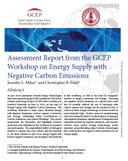
Stanford University's Global Climate and Energy Project has released a report highlighting the potential to combine bioenergy production with carbon capture and storage techniques to enable carbon-negative energy production.
Blizzard stories
February 18, 2013
The camaraderie of epic storms includes telling your story.

MIT chemical engineers and biologists have devised a way to dramatically boost isobutanol production in yeast, which naturally make it in small amounts. They engineered yeast so that isobutanol synthesis takes place entirely within mitochondria.
Pending legislation in the U.S. House of Representatives aims to limit the ability of the U.S. EPA to increase the cellulosic biofuel requirements its sets each year under the renewable fuel standard (RFS).
Advertisement

@ Copyright 2026 - BBI International - All rights reserved.