


RFA has joined dozens of other associations in seeking an exemption for agricultural exports from both newly proposed fees on Chinese vessels and graduated sourcing requirements for U.S. built and flagged vessels.

Universal Fuel Technologies (Unifuel) has completed a successful five-month SAF pilot project. The campaign demonstrated the effectiveness and viability of the company’s Flexiforming technology in producing SAF from various renewable feedstocks.

A recent policy change announced by the government of the Philippines could allow for an expansion of molasses ethanol production capacity, according to a report filed with the USDA FAS’s Global Agricultural Information Network.

Growth Energy on March 24 submitted comments to the U.S. Trade Representative, urging the agency to change course and either revise or remove new recently-proposed rules aimed at combating China’s efforts to dominate global shipping.

COAMO Agroindustrial Cooperativa has selected ICM Tecnologia em Biocombustíveis Ltda. to provide professional services and equipment for a new dry-mill grain ethanol production facility at the COAMO industrial site in Campo Mourão, Paraná.

Growth Energy on March 21 announced it has bestowed its highest honor – the America’s Fuel Award – on Dan Sanders, the immediate past chair and current vice chairman of the Growth Energy Board and the CEO of Front Range Energy.

The International Air Transport Association has enhanced its IATA CO2 Connect emissions calculator to account for carbon emissions reductions related to the usage of sustainable aviation fuel (SAF).

Murex LLC, a leading energy marketing and logistics company, on March 14 announced it has been awarded an exclusive ethanol marketing contract by Tharaldson Ethanol, a North Dakota-based ethanol producer.

The U.S. Grains Council organized a clean cooking symposium in Nairobi, Kenya, to connect with local industry leaders and policymakers about the environmental and human health benefits of cooking with biofuels.

Aemetis Inc. on March 19 announced the Stanislaus County Board of Supervisors approved an extension of the county’s C-PACE program, which can help private industry finance energy efficiency and renewable energy projects.

Nearly 1.52 billion RINs were generated under the RFS in February, down more than 25% when compared to the 2.04 billion that were generated during the same month of last year, according to data released by the U.S. EPA on March 20.
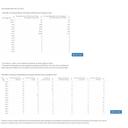
The U.S. EPA on March 20 published updated SRE data showing that four new SRE petitions have been filed under the RFS in the past month. According to the agency, 156 SRE petitions are currently pending.

Brazil’s Ministry of Mines and Energy on March 17 announced that tests conducted by Mauá Institute of Technology have demonstrated the technical viability of adopting an E30 blend of fuel. The country’s current blend is E27.

Growth Energy CEO Emily Skor kicked off the16th annual Executive Leadership Conference with a keynote speech exploring the current political landscape, highlighting policy priorities, and outlining an industry game plan for 2025.

Growth Energy announced the winners of the 2025 TOBI awards at the 2025 Executive Leadership Conference. The TOBI Award is named for Johan Tobias Lowitz, a chemist who created ethanol in 1796 and is considered the “father of fuel ethanol.”
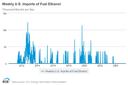
U.S. fuel ethanol production expanded by 4% the week ending March 14, according to data released by the U.S. Energy Information Administration on March 19. Stocks of fuel ethanol were down 3% and exports were down 31%.

Rep. Randy Feenstra, R-Iowa, on March 18 reintroduced the COST Act, which aims to compel the federal government to compare the financial and environmental costs of electric vehicles and E85 capable flex-fuel vehicles (FFVs).
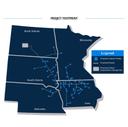
The Iowa House Judiciary Committee on March 6 voted 20 to 1 to approve a bill that aims to ban the use of eminent domain on agricultural land for the development of carbon dioxide (CO2) pipeline projects.

Growth Energy on March 19 announced it has welcomed John Deere as its newest member. John Deere is a global leader in the production of agricultural, construction, forestry, and turf equipment and solutions.

Airbus, Japan Airlines, Nippon Paper Industries, Sumitomo Corp., and Green Earth Institute have signed a MOU to collaborate on the realization of sustainable aviation fuel (SAF) using bioethanol derived from domestic wood.

UNICA, the Brazilian sugarcane industry association, has released data showing sugarcane processing continued to trend lower in late February. Corn ethanol production and ethanol sales, however, continued to grow during the two-week period.

President Donald Trump, Ag Secretary Brooke Rollins and EPA Administrator Lee Zeldin on March 18 celebrated National Agriculture Day by honoring America’s farmers, ranchers and producers who provide the world with food, fuel and clothing.

ACE on March 18 provided feedback on the USDA’s technical guidelines for quantifying, reporting, and verifying GHG emissions associated with agricultural production of biofuel feedstock and the Department’s Feedstock Carbon Intensity Calculator.

The Renewable Fuels Association on March 18 submitted formal comments to the USDA’s Office of Energy and Environmental Policy regarding the interim rule on Technical Guidelines for Climate-Smart Agriculture Crops Used as Biofuel Feedstocks.
The USDA predicts FY 2025 U.S. ethanol export volumes will reach a record 1.85 billion gallons, according to the agency’s latest quarterly trade outlook. The forecast is up slightly when compared to the previous quarterly outlook.

Growth Energy on March 17 shared recommendations with the USDA on how to improve and implement interim guidelines on climate-smart agriculture (CSA) practices. The agency is currently reviewing its interim rule on CSA crops used as biofuel feedstock.

Green Plains Inc. on March 17 announced that construction has commenced on the compression infrastructure for its CCS initiative in Nebraska. The company also announced that it will temporarily idle operations at its CST facility in Iowa.
Preliminary agenda announced for 2025 International Fuel Ethanol Workshop & Expo

By BBI International
March 17, 2025
Ethanol Producer Magazine announced this week the preliminary agenda for the 2025 International Fuel Ethanol Workshop & Expo (FEW) taking place June 9-11, 2025 at the CHI Health Center in Omaha, Nebraska.

Representatives of the RFA, USGC and Growth Energy on March 13 signed a quadripartite MOU with Vietnam-based Petrolimex that recognizes the economic, environmental, health and energy security benefits of increased ethanol use.

Minnesota’s ethanol industry produced 1.4 billion gallons of ethanol and contributed $2.1 billion to the state’s gross domestic product in 2024, according to a new study by the University of Minnesota Extension.
Advertisement

@ Copyright 2026 - BBI International - All rights reserved.