


Gevo Inc. has entered into a definitive agreement to sell Agri-Energy LLC, a wholly owned subsidiary of Gevo, to A.E. Innovation LLC for $7 million. The transaction includes Agri’s 18 MMgy ethanol production facility located in Luverne, Minnesota.

Biomass Magazine has announced the dates for the 19th annual International Biomass Conference & Expo. The event is scheduled to be held March 31-April 2, 2026, in Nashville, Tennessee, at the Gaylord Opryland Resort & Convention Center.

Iowa state lawmakers in May approved tax legislation that, in part, aims to create a tax credit to incentivize sustainable aviation fuel (SAF) production within the state. The bill is now under consideration by Iowa Gov. Kim Reynolds.
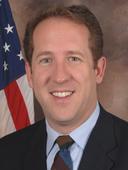
The Congressional Biofuels Caucus on May 22 launched for the 119th Congress. Caucus members recognize that biofuels are key to American energy independence and advocate for policies that support biofuel producers.

The Illinois House of Representatives on May 20 voted 91 to 19 in favor of a bill that could impact the siting of proposed CCS projects within the state. The Illinois Senate unanimously approved the legislation in April.

During the past six weeks, 10 taxis in Monterrey, Mexico converted to flex fuel technology and traveled more than 43,000 miles, using in excess of 1,500 gallons of E85. The trial resulted in reduced operating costs and emissions.

Virgin Australia and Boeing on May 22 released a report by Pollination on the challenges and opportunities of an International Book and Claim system for sustainable aviation fuel (SAF) accounting.

The U.S. House of Representatives early on May 22 narrowly passed a reconciliation bill that includes provisions updating and extending the 45Z clean fuel production tax credit. The bill, H.R. 1, will now be considered by the U.S. Senate.

U.S. EPA Administrator Lee Zeldin on May 21 stressed the agency is working “as fast as humanly possible” to finalize a rulemaking setting 2026 RFS RVOs during a hearing held by the U.S. Senate Committee on Environment and Public Works.

USGC Multilateral Ethanol Policy Manager Linda Schmid attended the International Energy Agency’s Fuels Workshop in Paris to engage in discussions on the challenges and areas that call for greater policy attention to energy production and demand.
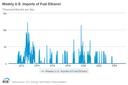
U.S. fuel ethanol production expanded by 4% the week ending May 16, according to data released by the U.S. Energy Information Administration on May 21. Stocks of fuel ethanol were down 2% and exports fell by nearly 18%.

Oklahoma-based Victory Energy, a supplier of vertically integrated boiler, burner and heat recovery solutions, has added Luis A Sauceda G. and Carlos Ramirez Ángeles to its team as regional sales representatives.

May 21 marks the official launch of the American Alliance for Biomanufacturing (AAB), a new coalition of industry leaders committed to advancing U.S. leadership in biomanufacturing innovation, competitiveness, and resilience.

In April, U.S. Grains Council staff traveled to Antalya, Turkey, to participate in the Seventh International Poultry Meat Congress and identify opportunities to increase sales of U.S. CFP and DDGS to the country.

A group of 28 House members on May 16 sent a letter to President Donald Trump urging his administration to adopt timely, robust Renewable Fuel Standard renewable volume obligations (RVOs) for 2026 and beyond.

UNICA, the sugarcane industry association, has reported that sugarcane harvesting during the second half of April was impacted by rains. Sugarcane ethanol production was down, but corn ethanol production continued to expand.

American drivers could collectively save more than $110 million this Memorial Day weekend if they filled up with E15—a more affordable fuel option made with 15% ethanol—instead of ordinary fuel, according to Growth Energy.
Washington governor signs bill to update the state’s Clean Fuel Standard

By Erin Voegele
May 20, 2025
Washington Gov. Bob Ferguson on May 17 signed a bill that sets more ambitious targets for the state’s Clean Fuel Standard. The new law requires a 45% reduction in greenhouse gas emissions by 2038 when compared to a 2017 baseline.

A bill to formally adopt a revenue certainty mechanism to support the production of SAF was introduced in the U.K. Parliament on May 14. The proposed scheme is in the form of a guaranteed strike price.

In April, the USGC’s regional offices in Kuala Lumpur, Malaysia and Tunis, Tunisia collaborated to host the Council’s third International Aquaculture Conference in Cairo, Egypt to promote the use of U.S. CFP and DDGS in aquaculture diets.
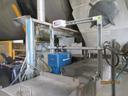
MoistTech Corp. has announced the company will showcase its IR3000 Series Moisture Sensors at the FEW Expo, Booth #1205, June 9–11, 2025, in Omaha, Nebraska. The IR3000 features advanced Near Infrared (NIR) technology.

Delta Air Lines on May 7 announced its strong support for new bipartisan, bicameral legislation that will accelerate the growth of sustainable aviation fuel (SAF) in Michigan. The bill aims to create a SAF tax credit of up to $2 per gallon.

The U.S. EPA on May 14 delivered two RFS rulemakings to the White House OMB, beginning the interagency review process. One rule focuses on RFS RVOs and the other focuses on a partial waiver of the 2024 cellulosic RVO.

U.S. EPA Administrator Lee Zeldin on May 15 told members of the House Appropriations Committee that the agency is working as quickly as it can to take action on the backlog of RFS small refinery exemption (SRE) petitions.

The U.S. EPA on May 15 released data showing nearly 1.79 billion RINs were generated under the RFS in April, down from 2.09 million generated during the same month of last year. Total RIN generation for the first four months of 2025 was 7.12 billion.
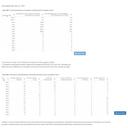
The U.S. EPA on May 15 published data that shows eight new small refinery exemption (SRE) petitions have been filed under the RFS in the past month. According to the agency, 169 SRE petitions are now pending.
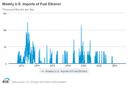
U.S. fuel ethanol production fell by nearly 3% the week ending May 9, according to data released by the U.S. Energy Information Administration on May 14. Stocks of fuel ethanol were up 1% and exports were down 12%.

The House Ways and Means Committee on May 14 advanced its portion of President Trump’s “big, beautiful” tax bill. The draft legislation amends and extends the 45Z clean fuel production credit but repeals several other clean energy tax credits..

U.S. EPA Administrator Lee Zeldin on May 14 confirmed the agency will “over the next few months” be completing a rulemaking process to set new Renewable Fuel Standard renewable volume obligations (RVOs).
Gevo Inc. CEO Patrick Gruber discussed plans for a proposed 30 MMgy alcohol-to-jet (ATJ) project in North Dakota during the company’s first quarter earnings call, held May 13. The company has not disclosed a timeline for development of the project.
Advertisement

@ Copyright 2026 - BBI International - All rights reserved.