

UAI, EFC urge recognition of ethanol as a way to reduce carbon

By The Energy Future Coalition, Urban Air Initiative
February 18, 2015
The California Air Resources Board was urged to enhance its efforts to require low carbon fuels by supporting the increased use of clean burning ethanol as a means of displacing aromatics in gasoline to reduce carbon and protect public health.

Lincolnway Energy LLC announced its unaudited financial results for the three months ended Dec. 31, reporting net income of $1.7 million, or $41.00 per unit, compared to a net loss of $300,000, or $6.39 per unit, for the same period of 2013.
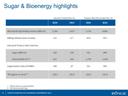
Bunge has released fourth quarter and 2014 financial results, reporting improved quarterly performance for its sugarcane milling and biofuels segment. The segment reported an adjusted EBIT $9 million loss, an improvement over the same period of 2013.

Proving greenhouse gas reduction to the U.S. EPA now boils down to four numbers.

Only a handful of ethanol plants were approved under the original petition process used by EPA to determined if those grandfathered plants were achieving GHG reductions better than 20 percent compared to baseline gasoline.

The recent fall in oil prices makes an even stronger case for all forms of domestic energy, both renewable and nonrenewable, writes Mike Bryan. In fact, the current situation makes a strong case for greater energy independence in general.

The Renewable Fuels Association submitted comments to the California Air Resources Board asking for the Low Carbon Fuel Standard re-adoption proposal to reflect recent scientific advances and new empirical data regarding indirect land use change.

Sustainable energy production has entered a new era in California as a consortium of American companies recently joined together with state energy officials to launch the Calgren Ethanol Biodigester, which utilizes waste from dairy farms.

Southwest Iowa Renewable Energy LLC has announced unaudited financial results for the first quarter of fiscal 2015, reporting net income of $9.8 million or $737.45 per unit for the three months ended Dec. 31.

Golden Grain Energy LLC has reached a new milestone, with 1 billion gallons of ethanol produced. The 120 MMgy plant, located in Mason City, Iowa, broke ground in 2003. Members of the ethanol industry have spoken out to applaud the achievement.

The future is bright as hundreds of E15 stations are in the works with many expected to open, writes Bob Dinneen of RFA. It's still early in the game for E15 and it will take time for E15 to work its way across the country, just as it did for E10.

Valicor Separation Technologies LLC and Purina Animal Nutrition LLC have signed a letter of intent to work together on developing a high protein coproduct market. This move compliments the company's Valicor Stillage Fractionation Technology.
Taking Power Back From Big Oil

By Tom Buis
February 16, 2015
Reaching out to members of Congress and the administration will help us make sure that the renewable fuels industry and rural America are at the top of their minds and agendas, writes Tom Buis, encouraging people to call, write or set up a meeting.

A consortium of organizations from the recreational marine industry have completed more than four years of testing on Gevo Inc.'s renewable isobutanol. Results show isobutanol blends of up to 16.1 percent can be successfully used in marine engines.

Murphy USA Inc. has announced plans to bring E15 to consumers in the suburbs of Chicago and Houston this year. According to the company, the decision to expand E15 availability was made after several successful introductions of E15 in Iowa.

An Ethanol Producer Magazine survey provides a snapshot of the new crop.Â

USGC survey shows overall quality of corn crop is high, with good kernel filling and maturation.
I really enjoy learning more about the history of the ethanol industry and, from what I can tell, the readers of our magazine do too.

The Washington Department of Ecology recently published a discussion document to jumpstart dialogue on a potential rulemaking for a state clean fuel standard. The program would be similar to the California and Oregon low carbon fuel standards.

Ascendant Partners Inc. has announced the addition of Lincolnland Agri-Energy and Western Plains Energy to the ethanol performance improvement initiative, which is a group of independent ethanol companies that seek to improve shareholder value.

The USDA has released new 10-year projections for the food and agricultural sector, reporting that approximately 35 percent of total corn use is projected to go to ethanol production through 2024.

Bio-Process Innovation Inc. has announced the completion of the construction of its 1-ton pilot plant and successful operation of its low temperature steep delignification (LTSD) pretreatment process at its facility in Otterbein, Indiana.

Even while taking advantage of recent export opportunity to China, the U.S. sorghum industry continues developing long-term markets, like supplying California's ethanol plants with bigger volumes of feedstock.

One of the primary ways ACE has highlighted the benefits of the RFS is through our annual Biofuels Beltway March fly-in to Washington, D.C. The goal, writes Brian Jennings, is to demonstrate the breadth and depth of grassroots support for biofuels.

Poet-DSM Advanced Biofuels' commercial activities will be moving forward under the leadership of the joint venture's first president, Dan Cummings. He joins Poet-DSM after serving as president and director of INEOS New Planet BioEnergy.
E Energy Adams to upgrade plant with ICM technologies

By ICM Inc.
February 12, 2015
E Energy Adams LLC has selected ICM Inc. as its partner for a technology and capacity upgrade at its Adams, Nebraska, plant. The upgrade will will include installation of ICM's Selective Milling Technology and Fiber Separation Technology.

The International Renewable Energy Agency has published a report that highlights the realistic potential for higher renewable uptake in all sectors of the U.S. energy system, including power, industry, building and the transportation sector.

The Andersons Inc. reported record earnings in 2014 with the ethanol group delivering full-year operating income of $92.3 million, far exceeding its prior best year of $40.6 million. The company also achieved record ethanol production and yields.

The Canadian industry has innovative producers pursuing the opportunities in the broader bioeconomy, writes Andrea Kent of the Canadian Renewable Fuels Association. Canada is well positioned to become a leader in advanced biofuels and bioproducts.

Researchers at the University of Georgia have developed a "super strain" of yeast that can efficiently ferment ethanol from pretreated pine, one of the most common species of trees in Georgia and the U.S.
Advertisement

@ Copyright 2026 - BBI International - All rights reserved.