


The U.S. EPA on Aug. 13 announced the relaunch of EPA’s Guidance Portal, a streamlined website for accessing important guidance documents related to air quality, water protection, hazardous waste management, and more.

The current issue of Ethanol Producer Magazine focuses on the future of the industry.

The USDA increased its forecast for 2025-’26 corn use in ethanol in its latest World Agricultural Supply and Demand Estimates report, released Aug. 12. The estimate for 2024-’25 corn use in ethanol was revised down.

U.S. corn production is expected to reach 16.7 billion bushels this year, up 13% when compared to last year, according to the USDA National Agricultural Statistics Service’s latest monthly Crop Production report, released Aug. 12.
Alto Ingredients Inc. on Aug. 6 released Q2 financial results, reporting improved adjusted EBITDA. President and CEO Bryon McGregor detailed the impact of improvement projects and discussed the value of 45Z credits the company expects to claim.

The USDA on Aug. 12 announced that U.S. farmers are expected to harvest a record high 16.7 billion bushels of corn this fall. According to the RFA, the report clearly highlights the need to remove regulatory barriers undercutting demand for ethanol.

As the industry celebrates the 20 year anniversary of the RFS, Growth Energy CEO Emily Skor calls policymakers to recommit to the promise of the program.
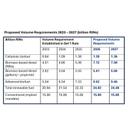
The public comment period on the U.S. EPA’s proposed rule to set 2026 and 2027 RFS RVOs and revise RFS regulations closed Aug. 8. Biofuel groups have largely expressed support for the proposal but also outlined several ways to improve the rulemaking.

Sen. Joni Ernst, R-Iowa, on July 31 introduced the Ethanol for America Act, a bill that aims to make it easier for Americans to fuel their vehicles with E15. Companion legislation was introduced the following day by Rep. Adrian Smith, R-Neb.

The U.S. renewable fuels industry on Aug. 8 celebrated the 20th anniversary of the Renewable Fuel Standard. Federal lawmakers also marked the occasion with resolutions introduced in the House and Senate earlier this month.

Biofuel policy and trade have become inextricably linked. Success on both sides of the U.S.-Canadian border requires understanding this new dimension while preserving the shared values that unite both country's ethanol industries.

Ethanol-to-jet volumes are expected to eventually match or surpass HEFA, but more incentives—even stacked together—are needed to make alcohol-based SAF profitable.

Returning to Omaha, the ethanol industry’s largest, longest-running event offered producers and exhibitors an opportunity to connect and learn.

BASF’s xarvio BioEnergy – Setting the Standard for Verified Low-Carbon Intensity Feedstocks.

University of Illinois researchers caution that the USDA’s plan to move the Maize Genetics Cooperation Stock Center and the National Soybean Germplasm Collection to a new location could damage seeds that represent important genetic variation.

Robert Lundeen impacted his family, business associates and the ethanol industry in a way that lives on today.

Your approach to evaporator CIP needs to be next-level proactive. Here’s why.

The National Corn Growers Association and Ag Data Transparent announced on July 23 a new partnership to bring clarity to farmers interested in carbon market contracts. The first phase of the project will launch this fall.
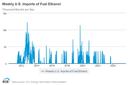
U.S. fuel ethanol production fell by more than 1% the week ending Aug. 1, according to data released by the U.S. Energy Information Administration on Aug. 6. Stocks of fuel ethanol were down nearly 4% and exports were down 25%.

With little to no efficiency gains remaining in the ethanol production process, AgVault has developed a next generation fermentation technology solution designed to significantly improve the profitability of existing ethanol production facilities.

The Renewable Transport Fuels Association on Aug. 4 issued a statement calling for the U.K.’s SAF mandate to be amended to make British bioethanol eligible. It should fall within the HEFA cap, according to the RTFA.

Sens. Amy Klobuchar, D-Minn., and Jerry Moran, R-Kan., on July 31 announced the introduction of the Ag BIO Act. The legislation aims to update the USDA’s loan guarantee program to better support biorefining projects.

How one ethanol producer scaled AI from a fermenter to the plant level to improve production efficiency and yield.

The Andersons Inc. on Aug. 4 announced it has acquired the full ownership interest in The Andersons Marathon Holdings LLC, which operates four ethanol plants. TAMH has been renamed The Andersons Renewables LLC.

ADM on Aug. 5 announced second quarter earnings for its ethanol operations were essentially unchanged when compared to the previous year, with higher volumes and improved risk management largely offset by lower margins.

The U.S. exported 173.67 million gallons of ethanol and 917,307 metric tons of distillers grains in June, according to data released by the USDA on Aug. 5. Exports of both products were down slightly from the previous month.

On Aug. 1 at the 65th Annual Board of Delegates Meeting, U.S. Grains Council members voted and passed an organizational name amendment to change from the U.S. Grains Council to the U.S. Grains & BioProducts Council (USGBC).

Growth Energy on Aug. 4 welcomed news that the Senate had approved the nomination of Luke Lindberg as the Under Secretary for Trade and Foreign Agricultural Affairs at the U.S. Department of Agriculture.
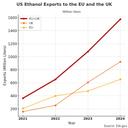
The EU’s commitment to safeguarding its strategically important renewable ethanol industry in the trade deal with the U.S. is especially important given the recent rise in U.S. ethanol exports to the EU and U.K., according to ePURE.

U.S. Secretary of Agriculture Brooke L. Rollins on Aug. 1 announced the opening of a 30-day public comment period for stakeholders to provide feedback on the department’s reorganization plan, as outlined in the memorandum released July 24.
Advertisement

@ Copyright 2026 - BBI International - All rights reserved.