


ICM Inc. has signed a professional services and equipment purchase agreement with FS Indústria de Etanol S.A. to design and supply a new greenfield dry-mill grain ethanol production facility near Campo Novo do Parecis, Mato Grosso, Brazil.

In August, a USGBC Council delegation, led by USGBC Deputy Regional Director for Africa Mohamed Salah Bouthour, traveled to Nigeria to meet with leading breweries and feed industry players to expand market share for U.S. DDGS and sorghum.

IFF leverages advanced tools and constant innovation to help its customers maximize ethanol and DCO yields.

David Carpintero, director general of ePURE, highlights five ways policymakers around the world can help spur growth in renewable energy.

The U.S. EPA on Sept. 12 released a proposed rule to end the Greenhouse Gas Reporting Program. If finalized, the proposal would remove reporting obligations for most large facilities, all fuel and industrial gas suppliers, and CO2 injection sites.

The Coalition for Renewable Natural Gas and American Fuel & Petrochemical Manufacturers in September filed separate lawsuits challenging the U.S. EPA’s final rule to partially waive 2024 cellulosic blending obligations under the RFS.

A new economic study released on Sept. 15 by the NGA and the RFA shows that expanding year-round, nationwide consumer access to fuels with a 15% ethanol blend would provide a boon to the American economy.

The Sept. 12 crop report from the USDA confirmed that farmers are expected to harvest a record corn crop of 16.8 billion bushels (an increase over August's estimate) and prices are projected to fall to six-year lows.

Ethanol producers are collecting, storing and analyzing more lab and process data than ever before. Integrating it all—and removing information silos—may be the real difference maker.

The USDA maintained its 2025-’26 outlook for corn use in ethanol in its latest World Agricultural Supply and Demand Estimates report, released Sept. 12. The estimate for 2024-’25 corn use in ethanol was revised down.

The USDA increased its forecast for 2025 corn production to 16.8 billion bushels in its latest Crop Production report, released Sept. 12. If realized, this would be the highest gain production on record for the U.S.

Offering standards and testing under one roof, sister companies Axion and Soliton operate jointly to help ethanol producers achieve optimal results.

Sen. Chuck Grassley on Sept. 10 called the U.S. Treasury Department’s planned May 2026 release of proposed 45Z clean fuel production credit regulations “unacceptable” and stressed the importance of timely 45Z guidance to two Treasury nominees.

Since E85’s introduction to California nearly 20 years ago, consumers have saved more than $1 billion at the fuel pump by choosing E85 instead of unleaded gasoline, according to a Sept. 10 announcement from Pearson Fuels.

Southwest Iowa Renewable Energy on Sept. 10 announced that CEO Mike Jerke will retire at the end of 2025 after seven years of leadership. He will remain with the company through 2026 to support a smooth transition.

On Sept. 9, Nebraska Gov. Jim Pillen wrapped up a highly productive trade mission to Japan. The mission included opportunities to promote Nebraska-made biofuels and high-level discussions to strengthen the state’s ties to Japan.

As the enhanced 45Z tax credit rolls out excluding non-USMCA fuels and feedstocks, the EPA is proposing a similar RIN value advantage for U.S.-made—and sourced—biofuels.
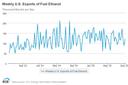
U.S. fuel ethanol production was up 3% the week ending Sept. 5, according to data released by the U.S. Energy Information Administration on Sept. 10. Stocks of fuel ethanol were up 1% and exports expanded by 36%.

The U.S. Department of Energy on Aug. 29 awarded funding to two SAF research projects, including a project that aims produce SAF from bio-derived methanol and a project that aims to use distillers grains with solubles (DGS) as a SAF feedstock.

More than 40 members of Congress on Sept. 9 sent a letter to U.S. EPA Administrator Lee Zeldin urging the agency to reduce proposed RFS RVOs for 2026 and 2027, block reallocation of SRE volumes, and scrap plans to boost domestic biofuel production.

Aemetis Inc. on Sept. 9 announced that its Keyes plant subsidiary has signed an EPC contract with NPL Construction Co., a subsidiary of Centuri Holdings Inc. to install a MVR system at the company’s 65 MMgy ethanol production facility.

ACE has awarded scholarships to Sam Cederburg, Julia Trygstad, and Hailey Vandenbosch. Each student receives a $1,000 scholarship through ACE’s Scholarship Program to help further their collegiate education.

Some ethanol industry leaders see a window of opportunity under the Trump administration to stop a questionable federal requirement that’s over a century old.

Sen. Mike Lee, R-Utah, on Sept. 9 introduced the Protect Consumers from Reallocation Costs Act, which aims to block the U.S. EPA from reallocating RFS renewable volume obligations (RVOs) waived via the small refinery exemption (SRE) program.

The U.S. Energy Information Administration maintained its outlook for 2025 and 2026 fuel ethanol production in its latest Short-Term Energy Outlook, released Sept. 9. The forecasts for 2025 and 2026 fuel ethanol exports were also unchanged.

UNICA, the Brazilian sugarcane industry association, has announced sugarcane processing trended higher during the first half of August. The production of sugarcane ethanol is down when compared to the previous harvest season.

Growth Energy on Sept. 9 kicked off its annual Growth Energy Biofuels Summit in Washington, D.C., hosting more than 100 association members for panel discussions, and meetings with top lawmakers to remind them of the benefits of ethanol.
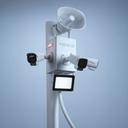
Modern security solutions offer ethanol producers enhanced protection, site surveillance and peace of mind.

The White House on Sept. 4 released additional details about the U.S.-Japan trade deal, which was first announced in July. The details confirm that Japan plans to import U.S. ethanol, including for use in sustainable aviation fuel (SAF).
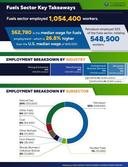
The U.S. Department of Energy’s 2025 U.S. Energy and Employment Report indicates that nearly 112,000 workers were employed by the U.S. renewable fuels industry last year, accounting for roughly 10% of total U.S. employment in the fuels sector.
Advertisement

@ Copyright 2026 - BBI International - All rights reserved.