


According to the U.S. Grains & BioProducts Council’s 2025/2026 Corn Harvest Quality Report, the 2025 U.S. corn crop is projected to be the largest on record, coming in a 425.53 million metric tons (16,752 bushels).
New initiative promotes US biofuels for maritime market

By American Biogas Council and the Renewable Fuels Association,
December 11, 2025
The American Biofuels Maritime Initiative, a unified group of bioenergy stakeholders co-chaired by the American Biogas Council and the Renewable Fuels Association, announced its official launch on Dec. 11
IATA: SAF production growth rate is slowing down, essential to correct course ahead of e-SAF mandates

By International Air Transport Association
December 11, 2025
In 2025, SAF output is expected to reach 1.9 million metric tons (Mt) (2.4 billion liters), double the 1 Mt produced in 2024, according to the IATA. However, in 2026, SAF production growth is projected to slow down and reach 2.4 Mt.
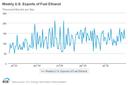
U.S. fuel ethanol production was down 2% the week ending Dec. 5, according to data released by the U.S. Energy Information Administration on Dec. 10. Weekly ending stocks of fuel ethanol were essentially unchanged while exports were down 26%.

The U.S. Energy Information Administration increased its forecast for 2026 fuel ethanol production in its latest Short-Term Energy Outlook, released Dec. 9. The agency’s outlook for 2026 ethanol exports was also revised up.

UNICA, the Brazilian sugarcane industry association, has released data showing that both sugarcane processing and ethanol production were up during the first half of November. Ethanol sales were down during the two-week period.

A group of five oil state senators on Dec. 8 sent a letter to U.S. EPA Administrator Lee Zeldin asking the agency to scrap plans to reallocate RFS renewable volume obligations (RVOs) waived via the small refinery exemption (SRE) program.

Green Plains Inc. on Dec. 8 announced that biogenic carbon dioxide from all three of its Nebraska facilities, Central City, Wood River, and York, is now being captured, transported on the Trailblazer pipeline and permanently sequestered in Wyoming.

On Dec. 9, Nebraska Gov. Jim Pillen celebrated the tremendous progress made during his administration to clean up the solid and liquid waste left in the aftermath of the shutdown of the AltEn facility site in Mead, Nebraska.

The U.S. Court of Appeals for the D.C. Circuit on Dec. 8 ordered the U.S. EPA to provide an update regarding the current status of its proposal to set 2026 RFS RVOs. The update must be filed with the court within seven days.

Reps. Sharice Davids, D-Kan.; Mike Flood, R-Neb.; Troy Carter, D-La.; and Tracey Mann, R-Kan., on Dec. 9 introduced legislation that aims to reinstate the 45Z clean fuel production credit premium for SAF and extend the 45Z credit through 2033.

The USDA maintained its outlook for 2025-’26 corn use in ethanol production in its latest World Agricultural Supply and Demand Estimates report, released Dec. 9. The outlook for corn prices was also unchanged.

Recent policy changes in Malaysia and Vietnam have opened significant market opportunities for U.S. producers, underscoring the region’s support for ethanol’s utility as a clean, affordable energy source.

The USDA on Dec. 8 announced it will make $12 billion available in one time bridge payments to U.S. farmers in response to temporary trade market disruptions and increased production costs. The payments are expected to be released by Feb. 28, 2026.

U.S. corn use for fuel ethanol production in August was down approximately 3% when the same month of last year, according to the USDA National Agricultural Statistics Service’s latest Grain Crushings and Co-Products Production report.

Growth Energy on Dec. 5 called on the California Air Resources Board to update the way the agency assesses the environmental impact of crop-based biofuels like ethanol under the state’s Low Carbon Fuel Standard.

U.S. Secretary of Energy Chris Wright launched a new chapter to secure American leadership in autonomous biological discovery on Dec. 4 alongside scientists and private partners at Pacific Northwest National Laboratory.

The January issue of Ethanol Producer Magazine focuses on fermentation, policy, flex-fuel vehicles and solar energy.

California Gov. Gavin Newsom in October signed a bill allowing E15 sales within the state. The California Air Resources Board's implementation process needs to move forward with more urgency.

USGBC Director of Global Sustainability Carlos Suárez and USGBC Multilateral Policy Manager Linda Schmid recently attended the UN’s annual climate summit to share the carbon-reduction capabilities of biofuels.

Thanks to the commitment of all E85 fuel distributors in France, the milestone of 4,000 E85 filling stations nationwide has just been reached. Today, nearly 42% of French service stations are equipped with E85.

Rex American Resources Corp. on Dec. 4 confirmed the capacity expansion project at its One Earth Energy plant in Gibson City, Illinois, is on schedule to be complete in 2026. A final decision on a Class VI injection well is also expected next year.

A district judge in North Dakota on Dec. 2 ruled that a portion of North Dakota law related to underground carbon storage is unconstitutional. The decision could impact the development of CCS projects within the state.

Growth Energy on Dec. 4 joined liquid fuels groups representing ethanol producers, oil refiners, fuel marketers, travel plazas, truck stops and convenience store retailers to express the need for long-term policy certainty.

New research show using agricultural biomass for bioenergy and biobased materials increases food security while enhancing resilient and competitive agriculture.
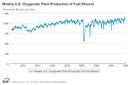
U.S. fuel ethanol production hit a record 1.126 million barrels per day the week ending Nov. 28, according to data released by the U.S. EIA on Dec. 3. Production was up 1% from the previous week, stocks were up 2% and exports were up 39%.

Novonesis has introduced Innova Nitro, which engineered for maximum throughput and efficiency in ethanol plants seeking high ethanol titers in short fermentations – less than 52 hours and the opportunity to achieve high ethanol concentrations of 16%.

Global energy and commodity price reporting agency Argus has launched the world's first assessed price for U.K. sustainable aviation fuel (SAF) certificates, expanding its coverage of the northwest European SAF market.

At Fluid Quip Technologies approaches corn oil recovery with a modular, integrated strategy, deploying technologies that complement each other across the ethanol production process.

Yeast providers across the ethanol industry reflect on the impact of glucoamylase-expressing yeast on yield maximization.
Advertisement

@ Copyright 2026 - BBI International - All rights reserved.