


Whitefox Technologies on Jan. 15 announced the successful installation of its Whitefox ICE Plus membrane dehydration system at Redfield Energy LLC, marking the first ICE Plus installation in the United States.

Iowa Secretary of Agriculture Mike Naig on Jan. 14 recognized Karde’s Convenience Store and Pilot Travel Centers for their outstanding leadership in expanding access to renewable fuels and strengthening Iowa’s ethanol and biodiesel markets.

The U.S. EPA on Jan. 15 released data showing nearly 23.25 billion renewable identification numbers (RINs) were generated under the Renewable Fuel Standard in 2025, down more than 8% when compared to 2024.
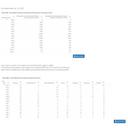
The U.S. EPA on Jan. 15 released new data showing one new small refinery exemption (SRE) petition was filed under RFS during the past month. A total of 26 SRE petitions are currently pending, up from 25 that were pending as of mid-December.

In comments submitted on Jan. 15 to Environment and Climate Change Canada, the RFA expressed strong support for Canada’s Clean Fuel Regulations and shared its view on potential amendments to the program.

Fluid Quip Technologies has announced the commercial deployment of its patented Low Energy Distillation system at United Ethanol in Milton, Wisconsin. The next-generation distillation platform can help lower operating costs and improve IC scores.

ASTM International has developed a standard (E3503) that will address a specific need in the ethanol industry: measuring corn kernel fiber conversion for various applications, including regulatory pathways.
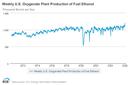
U.S. fuel ethanol production expanded by 9%, reaching a record high 1.196 million barrels per day the week ending Jan. 9, according to data released by the U.S, EIA on Jan. 14. Stocks of fuel ethanol expanded by more than 3% and exports were up 5%.

Sen. Charles Grassley, R-Iowa, on Jan. 14 sent a letter to the U.S. EPA and three other federal agencies seeking an update on actions they have taken to respond to serious concerns regarding Renewable Fuel Standard refinery exemptions.

Gevo Inc. has been awarded U.S. Patent No. 12,486,207 B2. The patent broadens protections for different catalyst combinations and explicitly protects the use of ethanol-to-olefins (ETO) technology to produce fuels.

The USDA’s Commodity Credit Corp. on Dec. 31 announced it does not expect to purchase and sell sugar under the Feedstock Flexibility Program for crop year 2025, which runs from Oct. 1, 2025, to Sept. 30, 2026.

Radicle Growth has launched The Radicle Corn Challenge sponsored by U.S. Corn Farmers, a global call for startups developing technologies that create new, durable demand for corn through innovative products, materials, and value chains.

The February issue of Ethanol Producer Magazine focuses on the Trailblazer CO2 pipeline project, the latest in mycotoxin testing, silo and bin cleaning, the MVR system installed by Aemetis in California, and the history of the ethanol industry.

The U.S. EIA currently expects U.S. ethanol production volumes to expand in 2027, according to the agency’s latest Short-Term Energy Outlook. The agency, however, revised down its forecast for 2026 ethanol production.

The USDA on Dec. 31 announced the per-acre payment rates for $11 billion of the $12 billion farm aid package announced in December. U.S. corn, soybean and sorghum farmers will receive respective per-acre payments of $44.36, $30.88, and $48.11.

California Gov. Gavin Newsom on Jan. 9 released a proposed 2026-27 state budget. Details published by the California Senate Committee on Budget and Fiscal Review indicate the proposed budget includes provisions for a new SAF tax credit.

Iowa’s ethanol plants produced 4.6 billion gallons of ethanol in 2025, matching its output level from the past two years, according to the Iowa Renewable Fuels Association. Total U.S. ethanol production, however, continued to grow.

As 2026 begins, several promising trends are emerging that give the RFA strong confidence in ethanol’s future.

The USDA maintained its forecast for 2025-’26 corn use in ethanol production in its latest World Agricultural Supply and Demand Estimates report, released Jan. 12. The agency increased its forecast for season-average corn prices.

The USDA on Jan. 12 confirmed U.S. farmers produced a record 17 billion bushels of corn in 2025, up 14% when compared to the 2024 estimate. Grain sorghum production was also up significantly when compared to the previous year.
The USDA on Jan. 12 confirmed that farmers harvested a record-large corn crop in 2025, estimated at more than 17 billion bushels. At the same time, corn stockpiles are expected to climb to their highest level in eight years.

The U.S. EPA on Jan. 7 delivered a draft final rule to the White House Office of Management and Budget to repeal the agency’s 2009 Endangerment Finding and tailpipe greenhouse gas regulations for motor vehicles and engines.

Washington State leaders, aviation industry partners, research institutions, Tribal representatives and sustainability advocates on Jan. 8 launched the Cascadia Sustainable Aviation Accelerator, an initiative that aims to accelerate SAF deployment.

The NCGA on Jan. 9 released its economic outlook for 2026 outlining six key forces expected to drive corn prices and farm margins in the year ahead. The forecast underscores the need for new and expanded markets for corn growers.

U.S. Secretary of Agriculture Brooke L. Rollins has announced the appointment of Justin Benavidez as USDA’s Chief Economist. Benavidez’s appointment follows the retirement of Seth Meyer, who served as USDA’s Chief Economist since 2021.

Bioethanol was showcased for use in on-road, aviation and maritime applications during COP30 in Brazil.

LanzaTech Global Inc. has announced successful operational results at the municipal solid waste (MSW) to ethanol pilot plant in Kuji City, Iwate, Japan owned and operated by longstanding partner, SEKISUI CHEMICAL CO. LTD.

Eleven Nebraska ethanol producers are in various stages of connection to a CO2 capture pipeline that has reshaped the American ethanol industry.

Advanced biofuels pioneer Haffner Energy and power-to-energy player IGNIS P2X kicked off their bio/e-SAF collaborative project AeroVerde. The companies are currently identifying the project’s first site’s precise location in Spain.

The U.S. exported 185.03 million gallons of ethanol and 1.07 million metric tons of distillers grains in October, according to date released by the USDA on Jan. 8. Exports of both products were up when compared to the previous month.
Advertisement

@ Copyright 2026 - BBI International - All rights reserved.