


The nation’s corn growers would benefit from increasing and creating new domestic demand for ethanol, Ohio farmer and NCGA President Jed Bower told the Senate Agriculture Committee during a March 10 hearing.

Clariant on March 3 announced a strategic collaboration with Vertimass LLC aiming to accelerate the development and commercialization of advanced zeolite catalysts for the catalytic conversion of biobased alcohols.
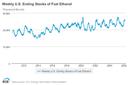
U.S. fuel ethanol production expanded by nearly 3% the week ending March 6, according to data released by the U.S Energy Information Administration on March 11. Stocks of fuel ethanol were down 3% and exports fell by 13%.

The U.S. Energy Information Administration increased its forecast for 2026 and 2027 fuel ethanol production in its latest Short-Term Energy Outlook, released March 10. The agency’s estimate for 2025 fuel ethanol production was also revised up.

A North Dakota court on March 10 voided permits for underground CO2 storage the North Dakota Industrial Commission approved for Summit Carbon Solutions in late 2024, ruling the NDIC’s action violated the state constitution.

RCM Thermal Kinetics has announced the successful completion of the first project under its NEXT (New Ethanol eXpansion Technology) engineering program, scaling a 40 MMgy ethanol plant in the Midwest to 105 MMgy.

U.S. EPA Administrator Lee Zeldin on March 9 announced the selection of new members to the Clean Air Scientific Advisory Committee. The newly appointed CASAC will consist of a chair and six new members.

The USDA maintained its forecast for 2025-’26 corn use in ethanol in its latest World Agricultural Supply and Demand Estimates report, released March 10. The outlook for 2025-’26 corn prices was also unchanged.

The Iowa Corn Growers Association has issued a statement in support of the U.S. Department of Justice’s investigation into the U.S. fertilizer industry to explore whether large fertilizer producers colluded to raise prices on American farmers.

Celtic Renewables has secured £16.23 million in public and private funding to scale its production of high-demand green chemicals. The company plans to develop a commercial-scale facility to produce bioacetone, biobutanol, and bioethanol.
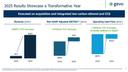
Gevo Inc. on March 5 announced plans to expand capacity at its North Dakota ethanol plant to 75 MMgy. The company also plans to make a final investment decision on the development of an adjacent SAF project later this year.

UNICA, the Brazilian sugarcane industry association, has announced ethanol production was up during the second half of January. More than 90% of the ethanol produced during the two-week period was manufactured from corn feedstock.

The RFA on March 9 urged the Trump administration to take immediate action allowing broader use of lower-cost, American-made ethanol in the U.S. fuel supply to help blunt the impacts of higher crude oil and gasoline prices.

In February, the U.S. Grains & BioProducts Council conducted a maritime fuels mission in Panama with a delegation of ethanol industry leaders and USGBC members including Hagan Rose of Eco-Energy, Doug Berven of POET and Mark Heckman of Edeniq.

The European Union Aviation Safety Agency has published the “2025 Aviation Fuels Reference Prices for ReFuelEU Aviation” briefing note, which provides key reference prices for SAF and other relevant aviation fuels for the European Union.

The war in the Middle East is another reminder of how important it is for Europe to end its dependence on imported fossil oil. Ethanol offers a ready-made, homegrown solution, but EU policies need to be better at unleashing its potential.

A newly released independent economic impact study finds that biomanufacturing projects located in Biofuel Development Opportunity (BDO) Zones generate substantial and repeatable economic benefits.

The House Agriculture Committee on March 5 voted 34 to 17 to advance the Farm, Food and National Security Act of 2026, commonly known as the 2026 Farm Bill. The vote followed a two-day markup session that spanned roughly 25 hours.
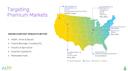
Alto Ingredients on March 4 released fourth quarter financial results, reporting improved profits on increased ethanol margins, strong ethanol export sales and benefits associated with the 45Z clean fuel production credit.
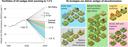
Two researchers at Imperial College London on March 5 published a paper that identifies 36 strategies with the highest potential to reduce global carbon emissions. Biofuels and BECCS are among the strategies identified by the researchers.
Supercharging SAF uptake: ISCC, OMV and Airbus strengthen credible book and claim approaches

By International Sustainability & Carbon Certification
March 05, 2026
Scaling sustainable aviation fuel (SAF) is one of the central challenges facing the aviation sector. Meeting this challenge requires collaboration across the value chain, supported by credible frameworks that enable new ways of bringing SAF to market.

The Carbon Capture Coalition has announced the launch of Carbon Capture Impact, an allied 501(c)(4) organization of the Carbon Capture Coalition that aims to amplify the voices of its broad, far-reaching network of advocates.
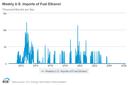
U.S. fuel ethanol production fell nearly 2% the week ending Feb. 27, according to data released by the U.S. Energy Information Administration on March 4. Stocks of fuel ethanol were up 3% and exports expanded by 54%.

Rep. Eric Sorensen, D-Ill., on March 4 attempted to amend the draft 2026 Farm Bill currently under consideration by the House Agriculture Committee to include language enabling year-round sales of E15. The amendment did not pass.

The U.S. EPA has issued a permit for One Carbon Partnership to inject and store CO2 underground at the Cardinal Ethanol facility in Randolph County, Indiana. The permit allows for the injection of 450,000 metric tons of CO2 annually for 30 years.

The Iowa Corn Growers Association and Iowa Renewable Fuels Association are calling on U.S. Secretary of Energy Chris Wright to recognize the E15 as a “no brainer” solution to offer immediate relief for high gas prices.

The current issue of Ethanol Producer Magazine illustrates evolution in the ethanol industry.

The USDA on Feb. 27 released its quarterly trade outlook report, announcing the agency now expects the value of fiscal year (FY) 2026 ethanol exports to reach $4.7 billion, up from the forecast of $4.6 billion made in December 2025.
The U.S. EPA on Feb. 27 issued a final rule delaying the 2025 reporting deadline for its Greenhouse Gas Reporting Program (GHGRP) from March 31, 2026, to Oct. 30, 2026. The agency continues to consider repeal of the GHGRP.

On Feb.11, to help expand export markets for U.S. food and ag products, the USDA’s Foreign Agricultural Service announced awarding more than $212 million through the Market Access Program and Foreign Market Development program.
Advertisement

@ Copyright 2026 - BBI International - All rights reserved.